Soft and Hard Biscuit Production Line

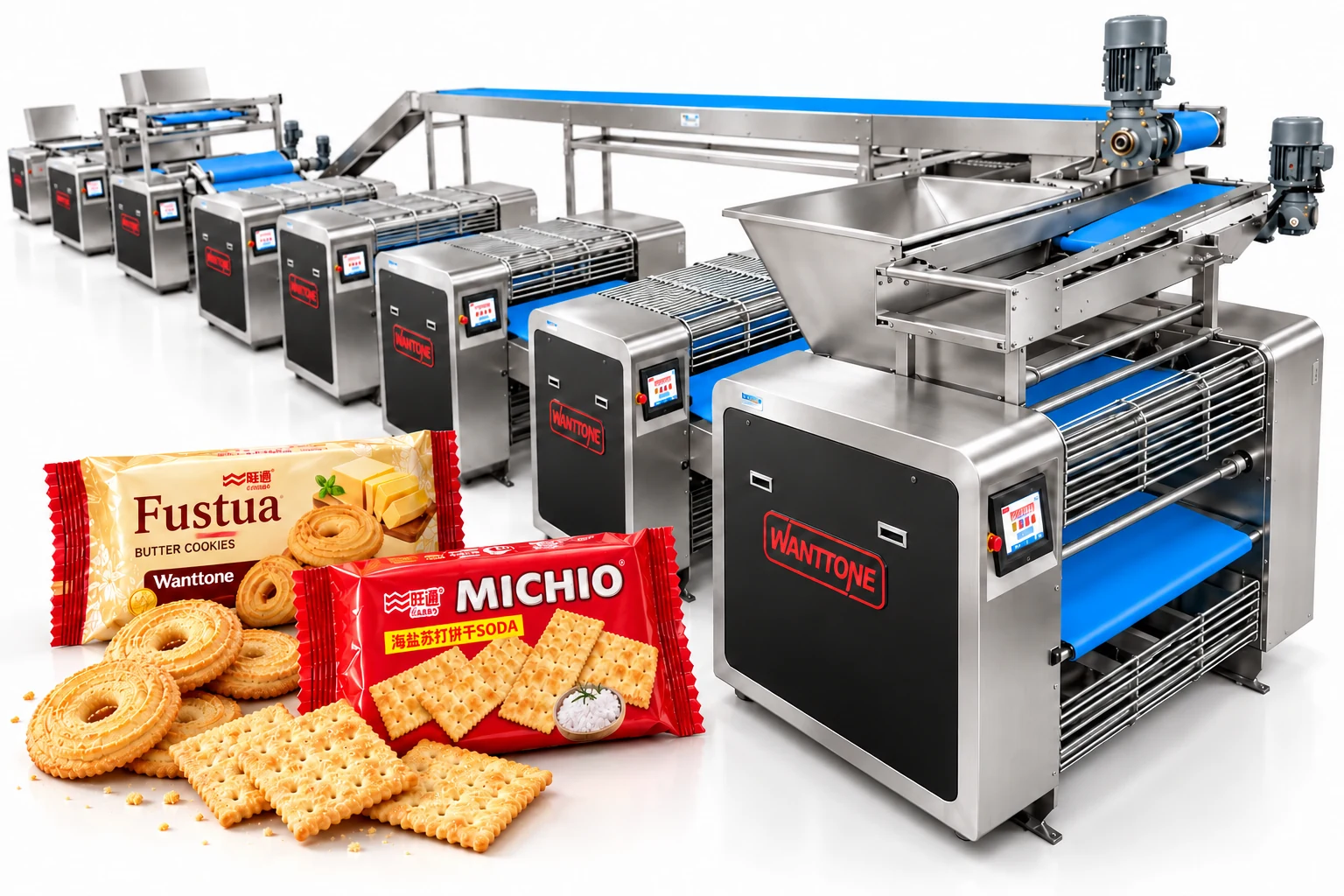
A soft and hard biscuit production line is a fully automated biscuit manufacturing system that produces both hard-dough biscuits (crackers, Marie, glucose biscuits) and soft-dough biscuits (shortbread, butter cookies) on a single line.

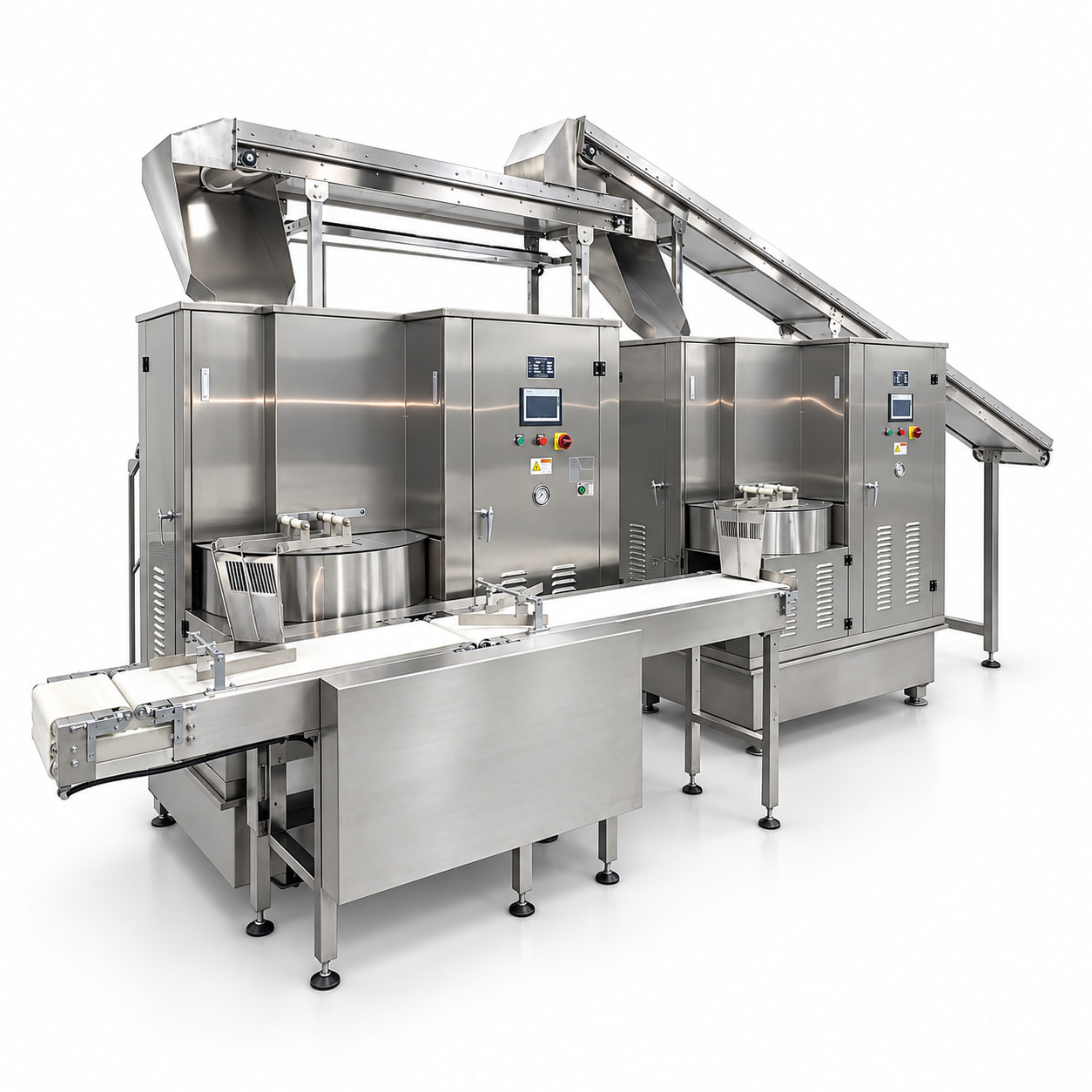
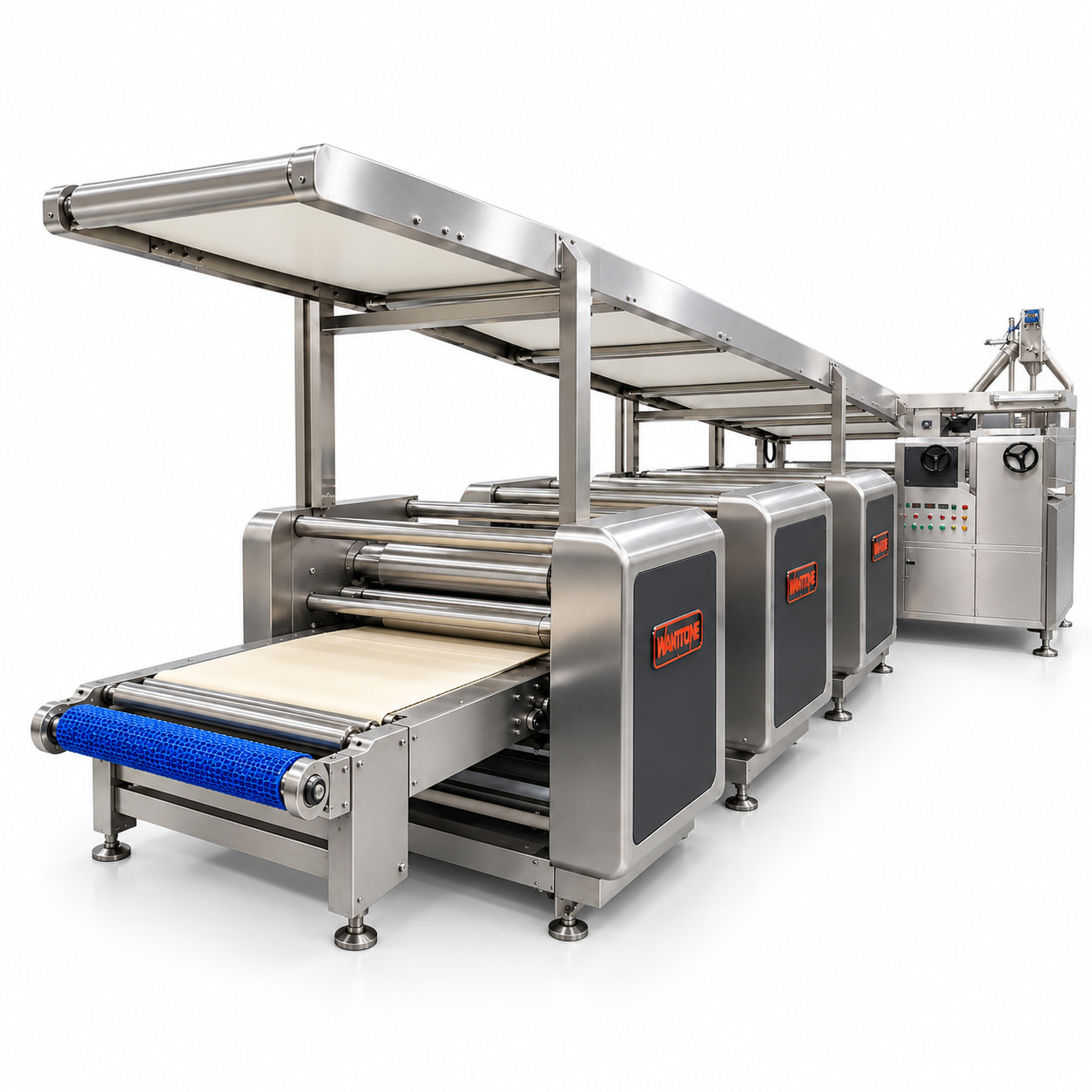
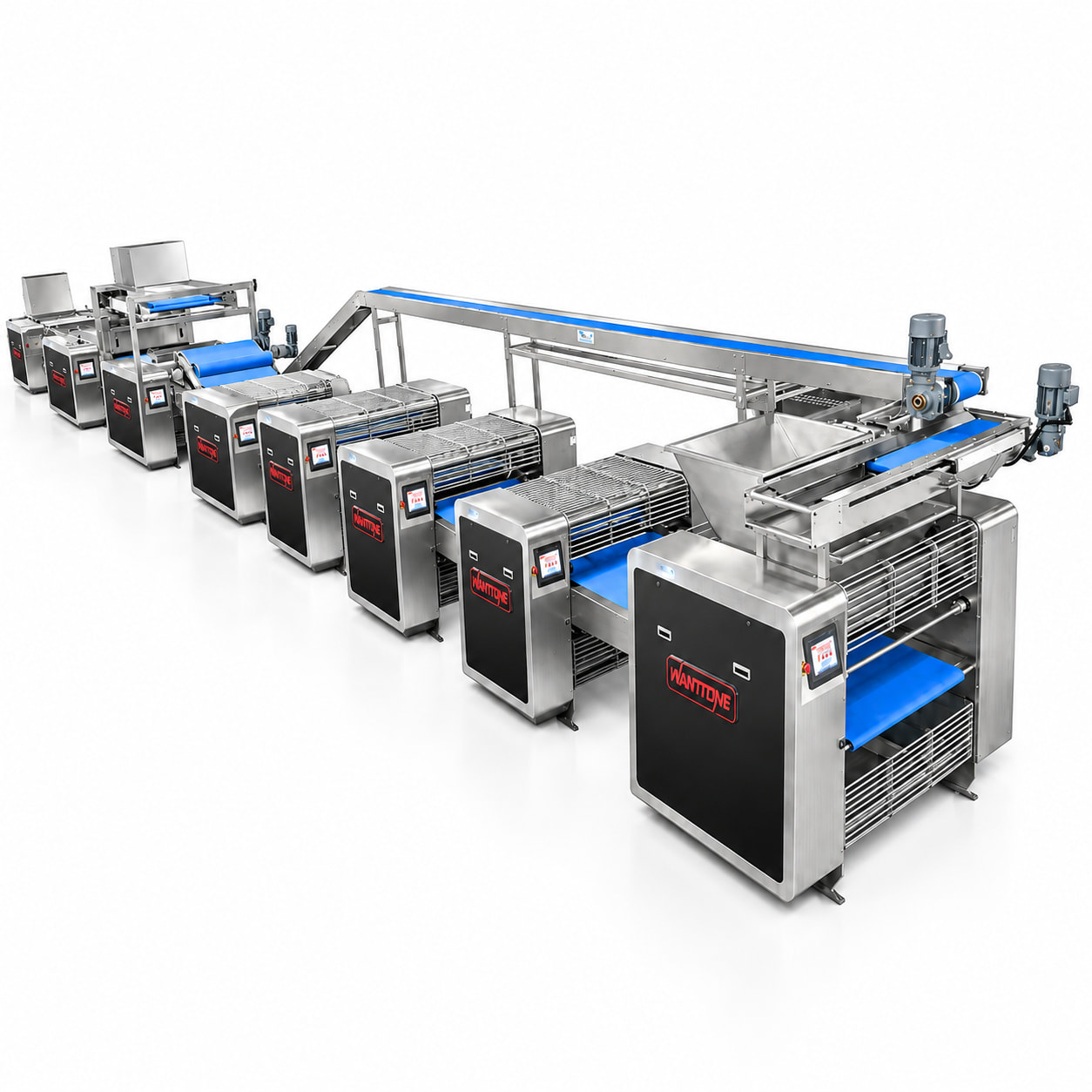
Reference illustration of Soft and Hard Biscuit Production Line equipment

Product Overview

It is built for biscuit factories and food manufacturers that need product variety without investing in two separate plants. Wanttone’s soft and hard biscuit production line covers every process from dough mixing and sheeting to forming, tunnel oven baking, oil spraying, cooling, stacking, and packaging, with capacities from 100 kg/h for startups up to 5,000 kg/h for industrial producers.

The line’s flexibility comes from its dual forming configuration: a three-roll sheeter, laminator, gauge rolls, and rotary cutter handle hard and laminated doughs, while a rotary moulder forms soft, high-fat doughs. Switching between biscuit types typically requires only a mold change and a recipe adjustment on the PLC touchscreen, so one investment serves a whole product portfolio — from soda crackers and cream sandwich biscuits to cookies and private-label specialties.

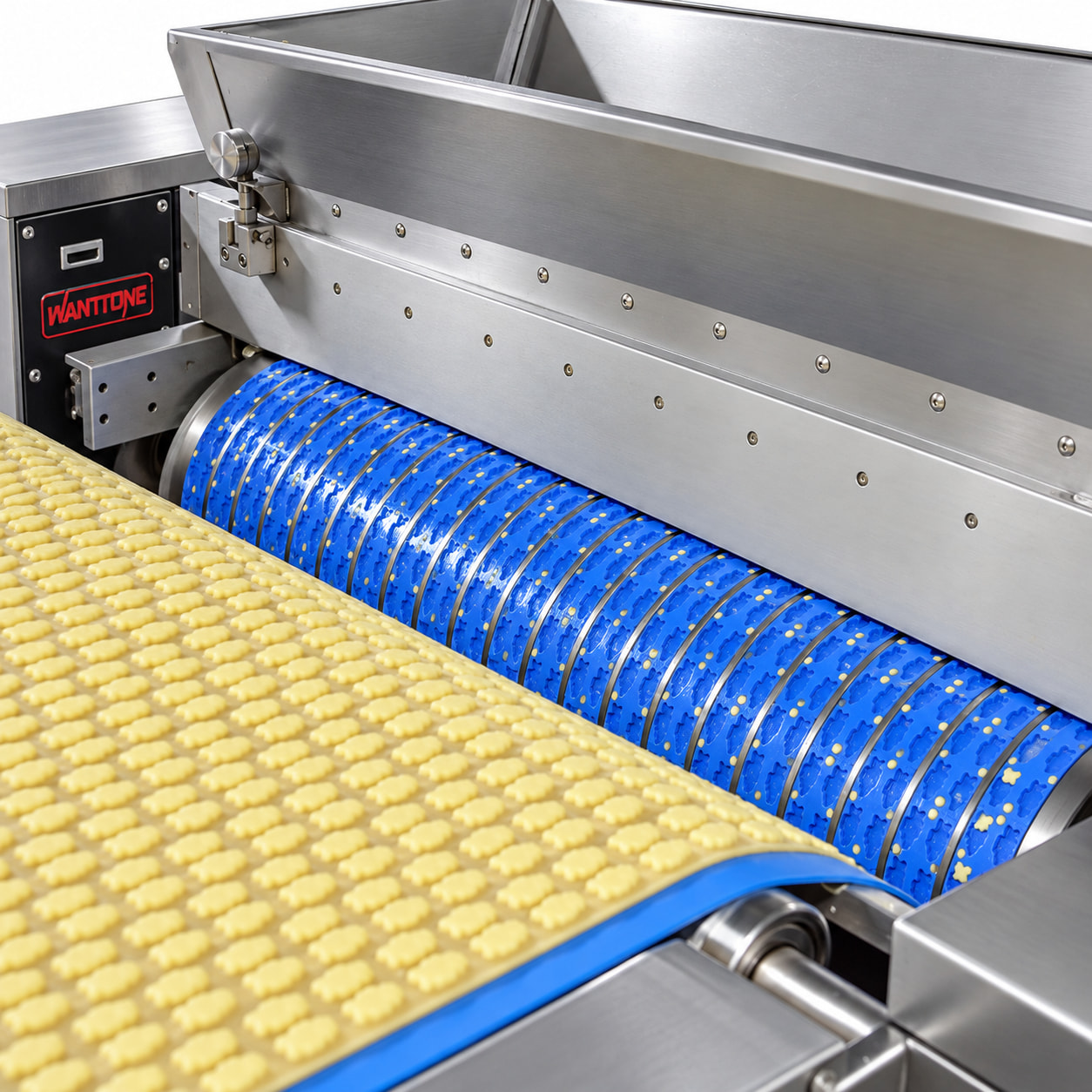
Dough feed and rotary moulding equipment in a biscuit line
Rotary moulding section
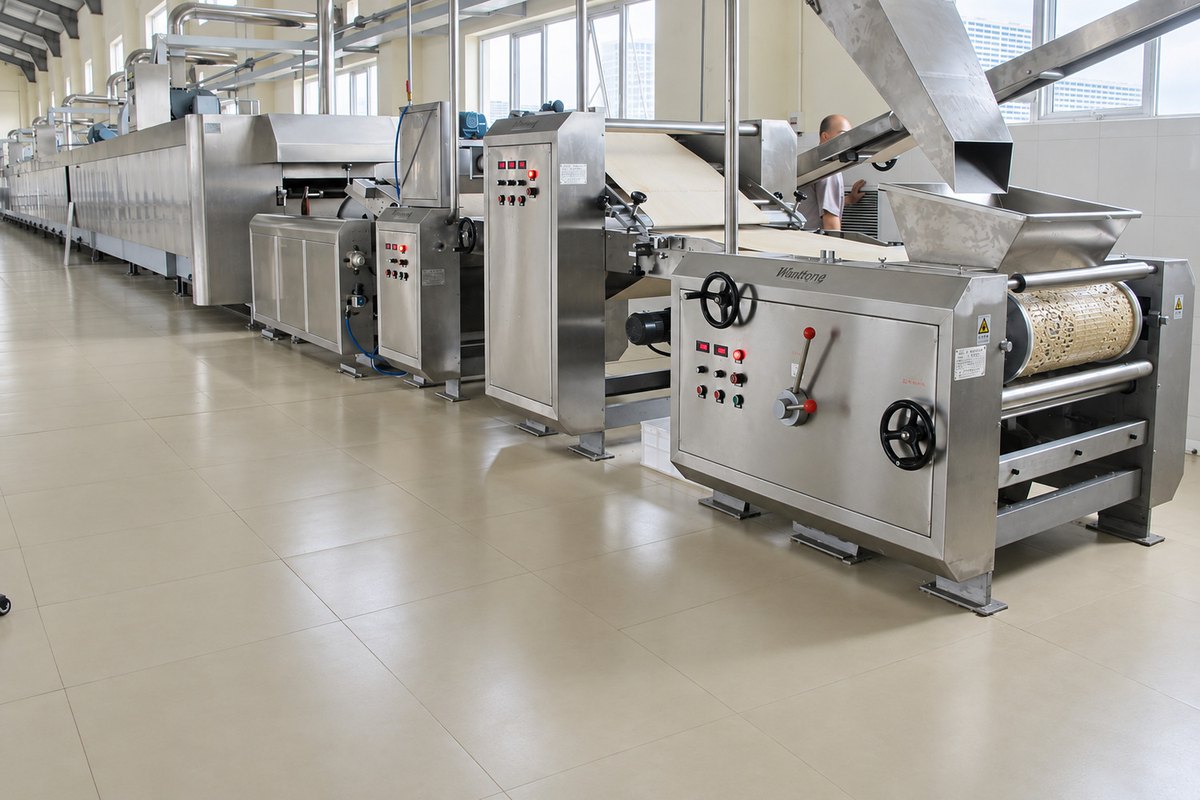
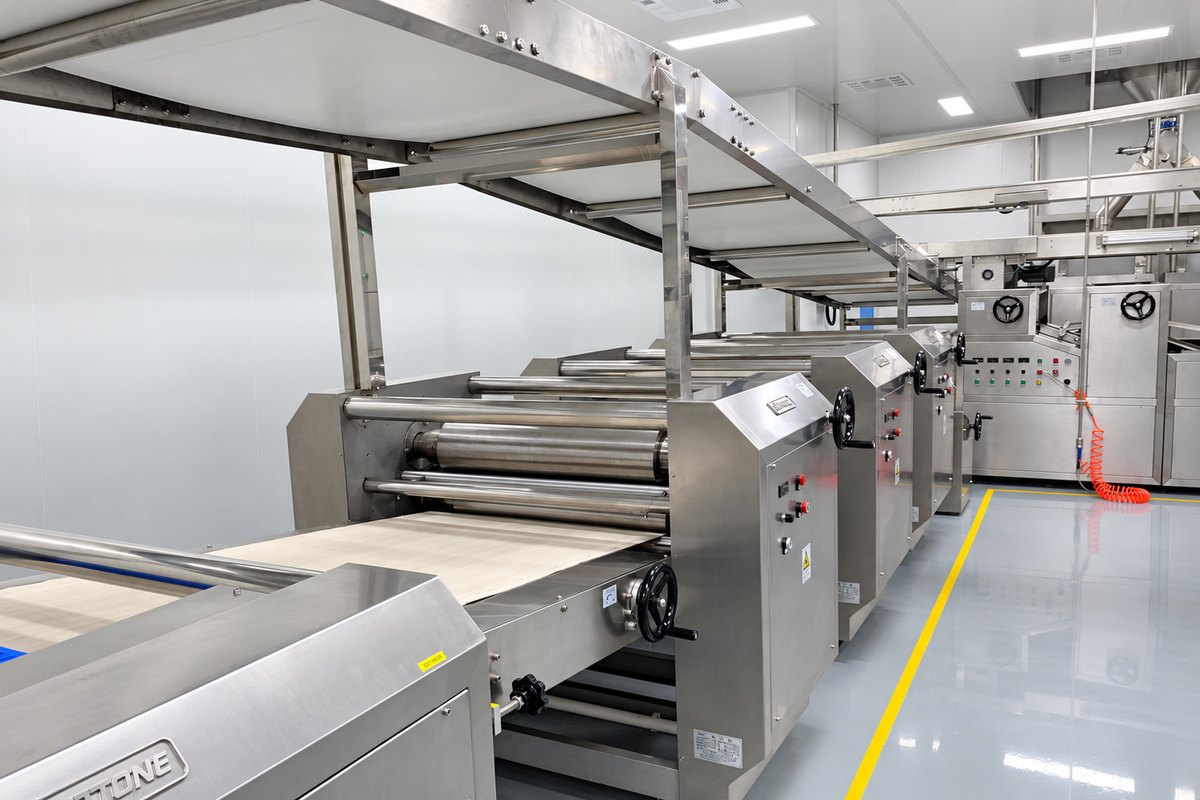
Connected dough sheeting and rotary cutting equipment for hard biscuits
Sheet forming and cutting

Capabilities & Applications

Key Features

  • One Line, Two Dough Technologies

    Produce hard biscuits, soda crackers, soft biscuits, and cookies on the same line by engaging the rotary cutter or the rotary moulder, maximizing equipment utilization and ROI.

  • Fast Product Changeover

    Quick-release forming rollers and PLC recipe memory let operators switch shapes and recipes in minutes, cutting downtime between production runs.

  • Labor-Saving Automation

    Automatic dough feeding, scrap recycling, in-line stacking, and synchronized speed control reduce manual handling across the entire line.

  • Consistent Baking Quality

    A multi-zone tunnel oven (gas, electric, or diesel) with precise temperature-field control delivers uniform color, moisture, and texture batch after batch.

  • Food-Grade Hygienic Design

    SUS304 stainless steel contact surfaces, no-dead-corner structures, and easy-clean frames support HACCP-compliant production.

  • Layout Customized to Your Workshop

    Straight, 90°, or 180° turning configurations adapt the line to your available floor space.

Applications

  • Hard biscuits (Marie, digestive, glucose), soda and cream crackers, laminated biscuits, soft biscuits, shortbread, butter cookies, and sandwich biscuit bases. Suitable for start-up bakeries scaling into industrial production, mid-sized biscuit factories expanding their SKU range, and large manufacturers running multi-product plants or private-label/OEM programs.

From Preparation to Packing

  1. Product Preparation

    Confirm the recipe, material condition and batch sequence required for stable production.

  2. Forming & Primary Processing

    Configure the product geometry and process conditions around the agreed finished product.

  3. Thermal or Main Process

    Coordinate time, temperature, energy and line speed with the target output and quality.

  4. Cooling & Finishing

    Stabilize and finish the product before downstream handling and packing.

  5. Packing Handover

    Deliver the product in the orientation, spacing and condition required by the agreed pack format.

Specifications & Configuration

Technical Parameters for Soft and Hard Biscuit Production Line
ItemSpecification
Models / Working width600 / 800 / 1000 / 1200 / 1500 / 1800 mm
Production capacity100–500 kg/h (small); 500–5,000 kg/h (industrial, depends on oven length and biscuit type)
Dough mixerHorizontal mixer 250 / 400 / 600 / 800 kg per batch; vertical mixer optional
Forming sectionThree-roll sheeter + laminator + gauge rolls + rotary cutter (hard); rotary moulder (soft)
Tunnel ovenGas / electric / diesel; length customized to capacity (typ. 30–80 m)
Control systemPLC + touchscreen, optional remote monitoring
MaterialSUS304 stainless steel food-contact parts
LayoutStraight or 90°/180° turning, customizable

The Wanttone Difference

Wanttone’s predecessor, Yangjiang Biscuit Equipment General Factory, built its first automated biscuit equipment in 1981 — making us one of China’s earliest biscuit machinery pioneers. What sets us apart is our dual strength: we do not only manufacture biscuit production lines; we also operate our own biscuit factory producing soft and hard biscuits under the Wanttone brand. Every line we ship is therefore validated in real production, not just drawings. Our ISO 9001 quality system governs materials, machining, and inspection, while our in-house Foodstuff Machinery Research Institute continuously refines forming and baking technology. From factory design and recipe development to commissioning, operator training, and lifetime after-sales service, Wanttone delivers a genuine one-stop partnership — trusted for years by leading Chinese biscuit groups.

Frequently Asked Questions

How do I choose the right capacity for my soft and hard biscuit line?

Capacity depends on your target SKUs, shift pattern, and market size. As a rule, 100–300 kg/h suits startups and regional brands, 500–1,000 kg/h suits mid-sized factories, and 1,500 kg/h or above suits industrial producers. Wanttone’s engineers will model your product mix and recommend the smallest line that meets demand with headroom to grow.

Can one line really make both hard biscuits and cookies?

Yes. The line carries two forming routes — sheeting, laminating, and rotary cutting for hard doughs, and rotary moulding for soft doughs. Changeover is a matter of switching the forming station and loading a new mold and recipe.

What energy options are available for the tunnel oven?

We offer natural gas/LPG, electric, and diesel-fired ovens, and can combine heating modes. The choice depends on your local energy prices and supply reliability; we calculate operating cost per kilogram of biscuit for each option during the proposal stage.

How much factory space and how many workers does the line need?

A typical 800 mm industrial line occupies roughly 60–100 m of length including cooling and packaging; turning layouts reduce the footprint. Depending on automation level, a full shift usually needs 6–10 operators including packing staff.

What after-sales support and spare parts service do you provide?

Wanttone provides on-site installation, commissioning, and operator training, plus lifetime technical support. Common wear parts (rollers, scrapers, belts, molds) are stocked for fast dispatch, and our technicians make regular overseas service visits.