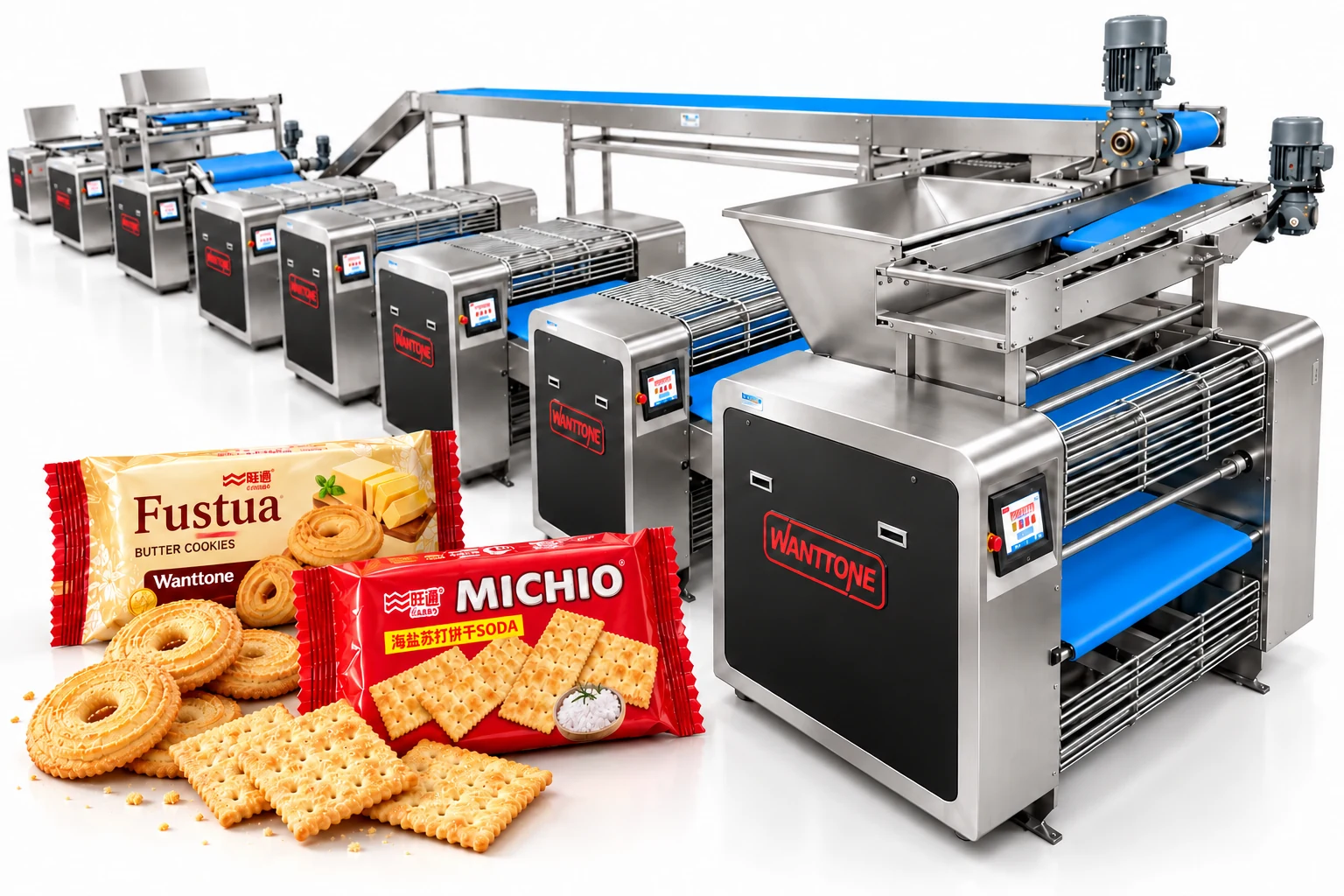
The Biscuit Defines the Line.
Recipe, piece weight, shape, texture, moisture and packaging direction are reviewed before the equipment route is fixed.
Why Wanttone
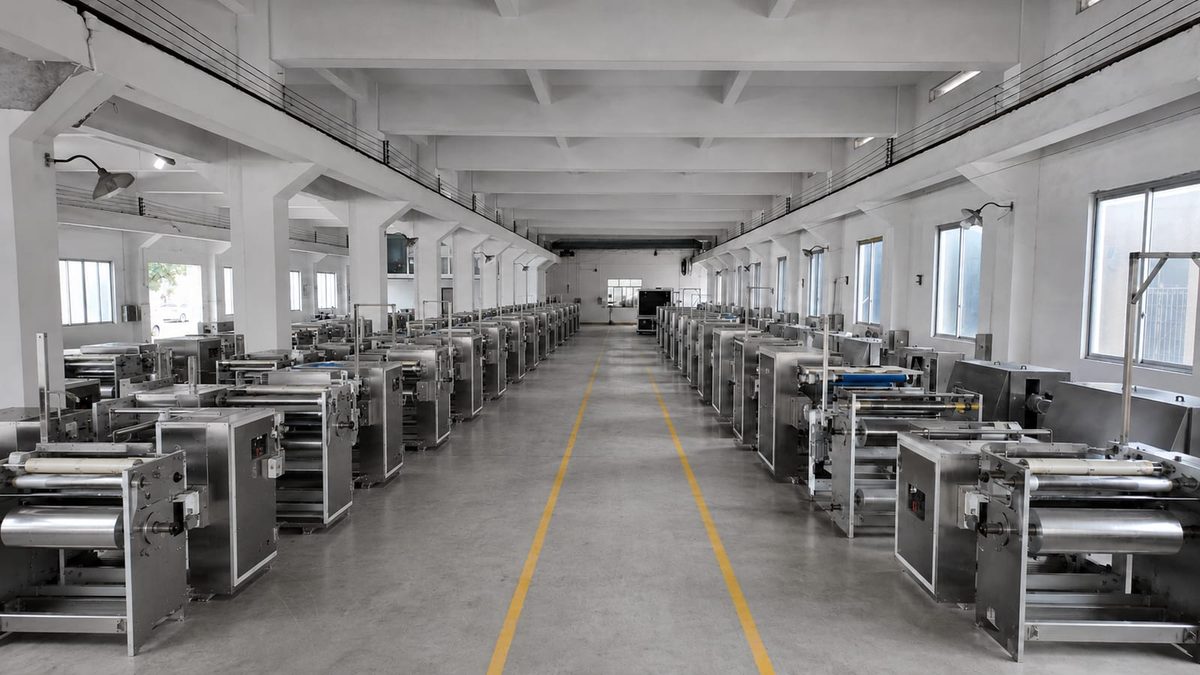
Wanttone connects machinery engineering with the realities of biscuit production, so each line is planned around what you need to make and how it must run.
The Wanttone Difference
A production line is not defined by capacity alone. Product behavior, factory conditions and the required handover all change what should be built.
Recipe, piece weight, shape, texture, moisture and packaging direction are reviewed before the equipment route is fixed.
Mixing, forming, baking, cooling, handling and packing are coordinated as one production system rather than isolated machines.
Available space, utilities, access, cleaning, operator movement and future expansion are considered with the process.
Inspection, installation, commissioning, training and technical handover are planned into the confirmed project scope.
Machinery × Biscuit Production
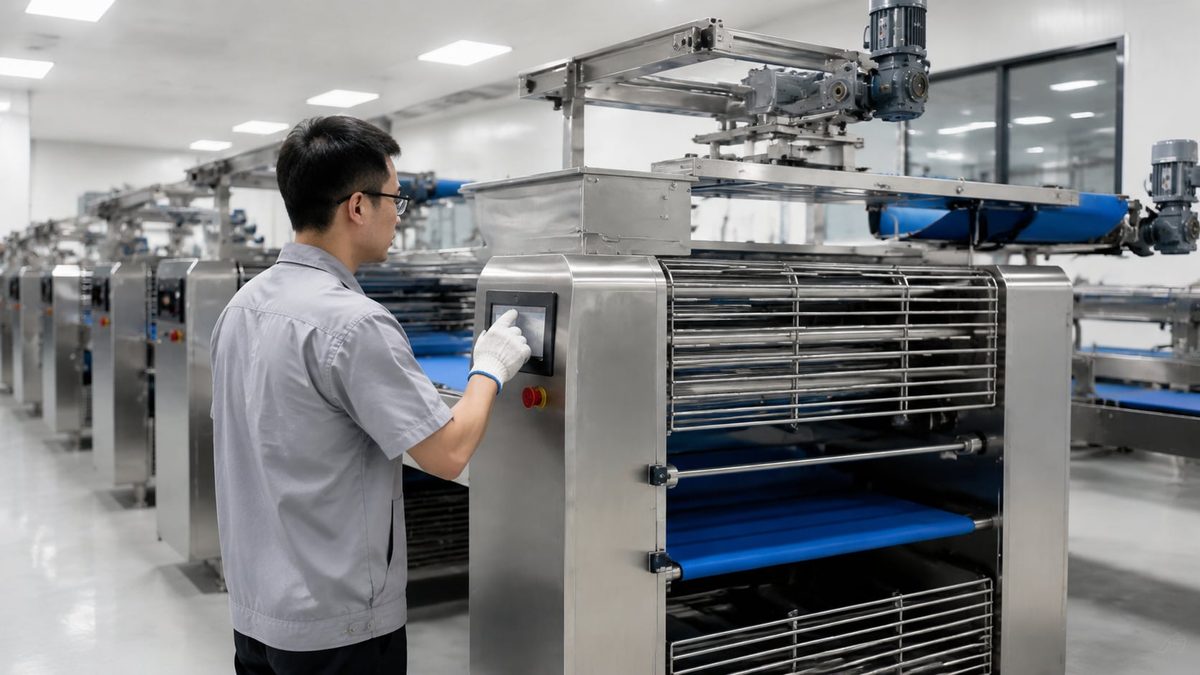
Operating a biscuit factory gives the engineering team direct contact with the conditions that do not appear in a machine catalogue. Those observations help turn a technical configuration into a workable production route.
How dough condition, thickness, cutting and depositing affect product consistency.
How heat, time, airflow and moisture shape color, texture and line balance.
How cleaning, changeovers, maintenance access and operator routines affect daily output.
How cooling, handling and packing interfaces protect the product after the oven.
Before the Proposal
The clearer the starting information, the more specific the process route, equipment configuration and project scope can become.
Reference product, recipe direction, format, dimensions, piece weight and quality target.
Required kg/h, operating hours, product range and the capacity that should remain available for growth.
Building dimensions, utilities, energy source, access, local standards and available operating space.
Layout, documentation, inspection, installation, commissioning, training and after-sales expectations.
From Brief to Production
Each stage carries the confirmed product and factory requirements forward, so the final equipment scope remains connected to the original production objective.
Confirm the product, required output, factory conditions and commercial priorities.
Develop the process route, equipment duty, layout, utilities and line interfaces.
Agree on inspection points, testing conditions and the acceptance basis for the project.
Coordinate installation, commissioning, operator training and production handover.
Tell us what you have in mind. Share your questions or project requirements, and leave your contact details so our team can respond.
ricky@wanttone.com(86)13926311528Yangjiang, Guangdong, China