Rotary Cutter

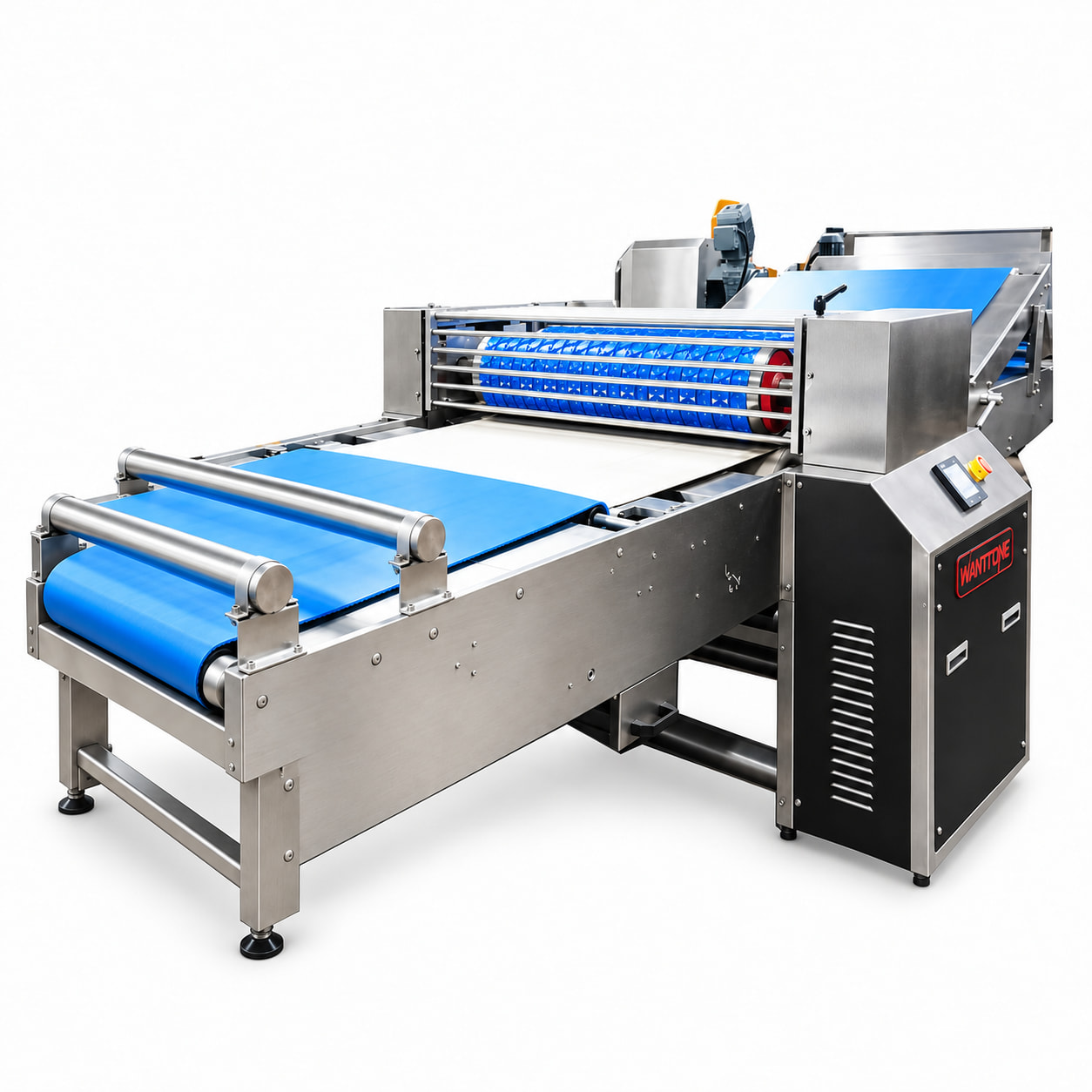
The Wanttone rotary cutter is the forming machine for hard biscuits and soda crackers, cutting the gauged dough sheet into individual biscuit shapes at full line speed.

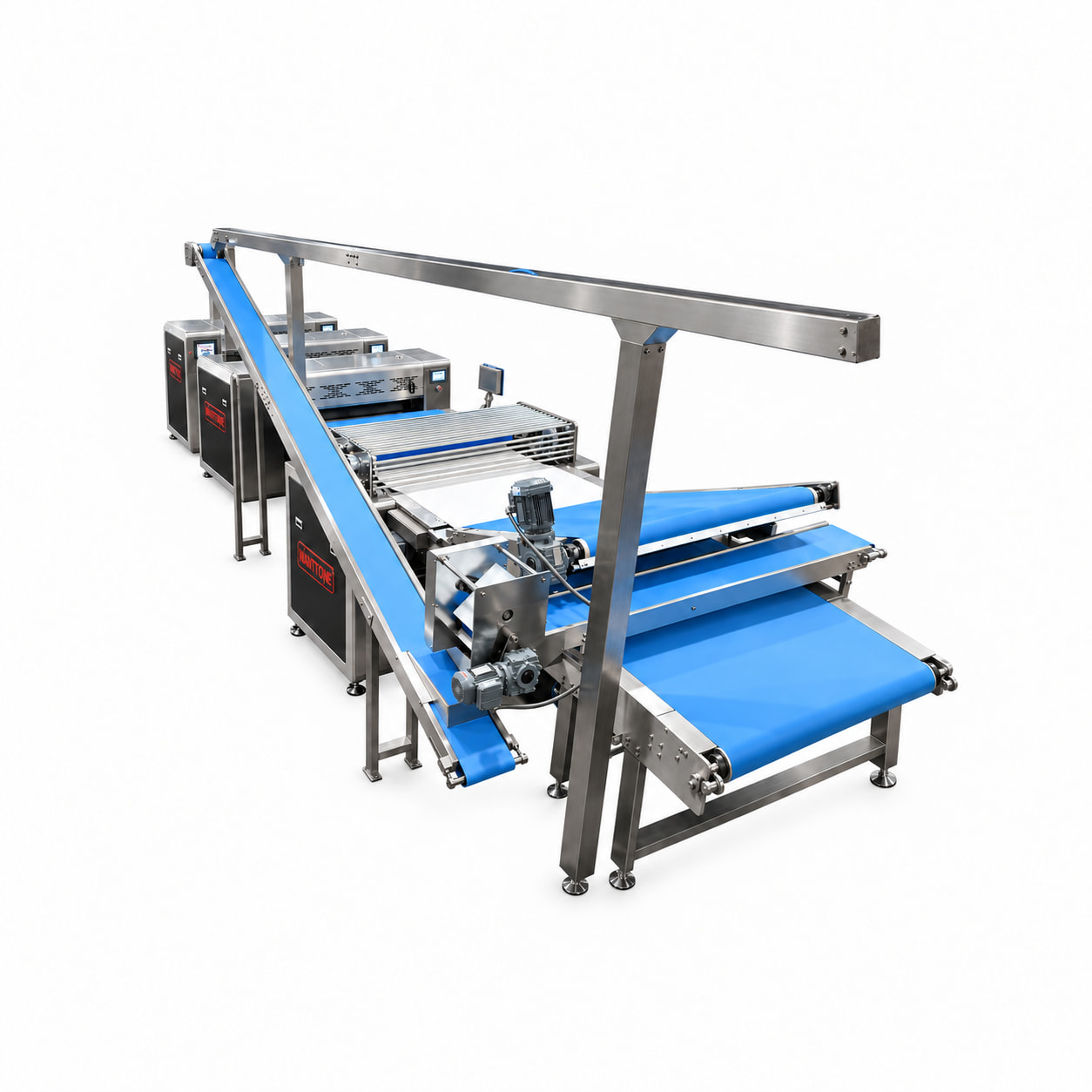
Reference illustration of Rotary Cutter

Product Overview

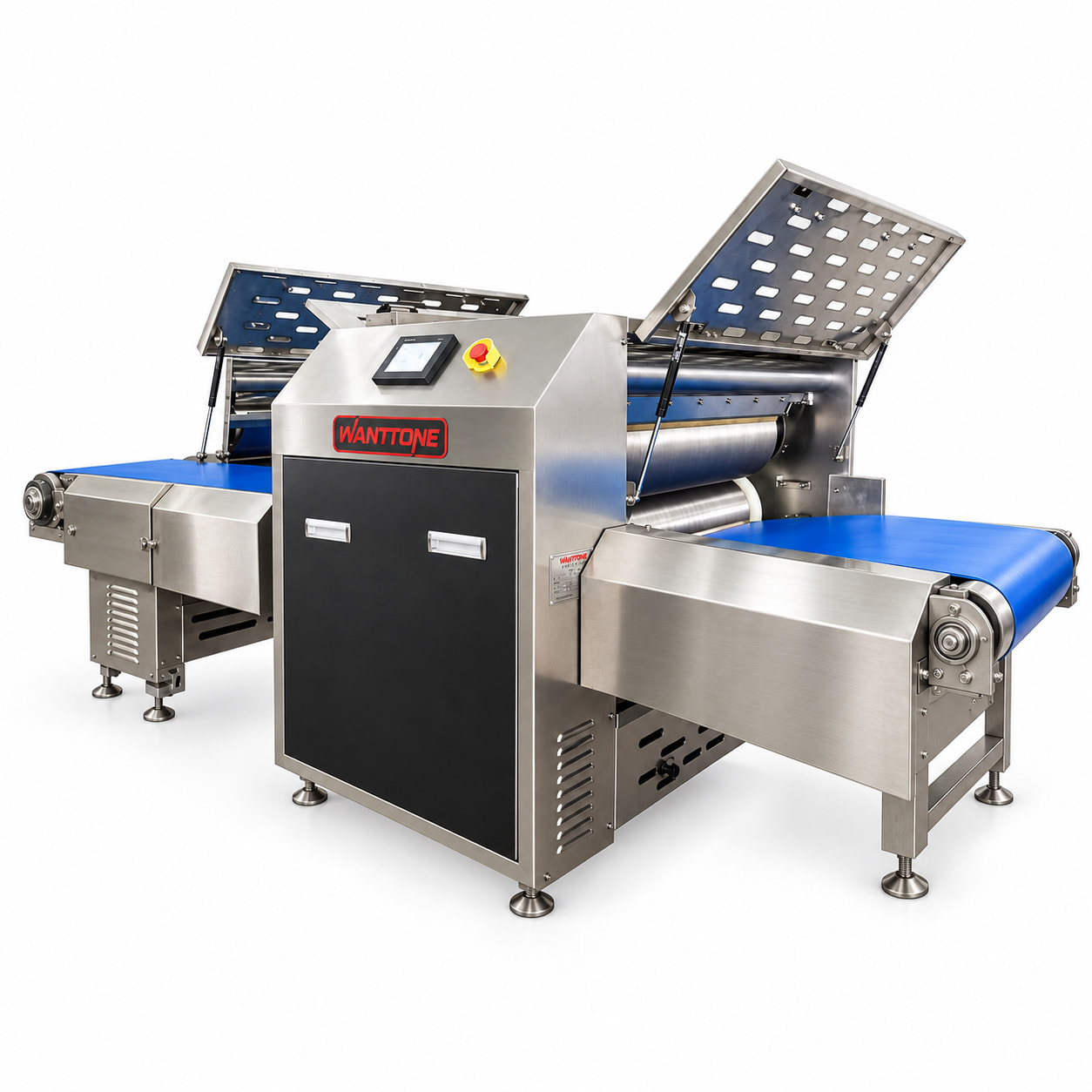
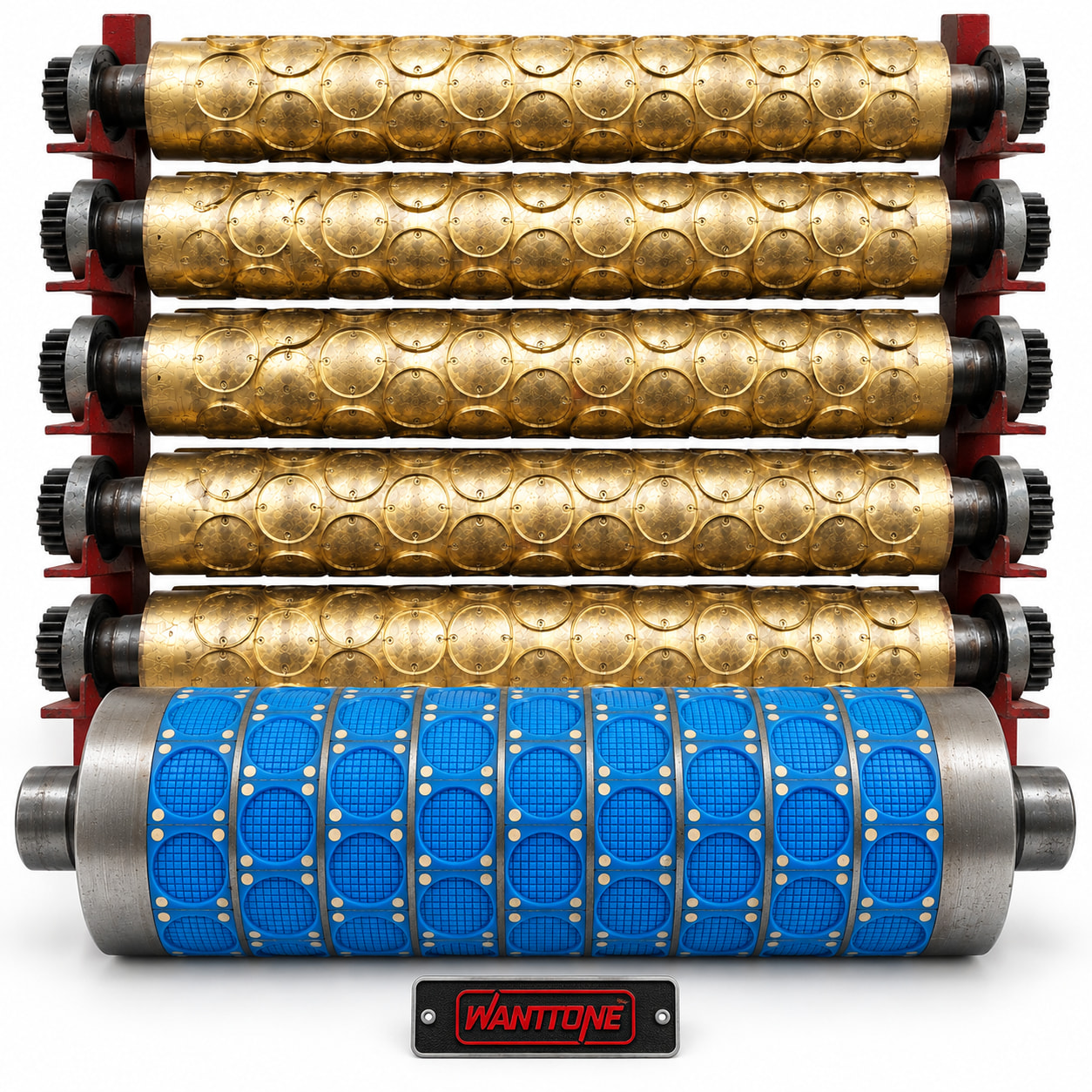
A hard-chrome-plated cutting roller — engraved with your custom biscuit design, dockering holes, and brand logo — works against a rubber pressure roller to produce clean-cut, precisely registered pieces, while the surrounding dough web is lifted away for scrap recycling. Mould pressure is detected by a displacement sensor with a digital display, and synchronization between cutting roller and conveyor is electrically adjusted, delivering sharp edges, uniform weight, and consistent shape across millions of cycles.

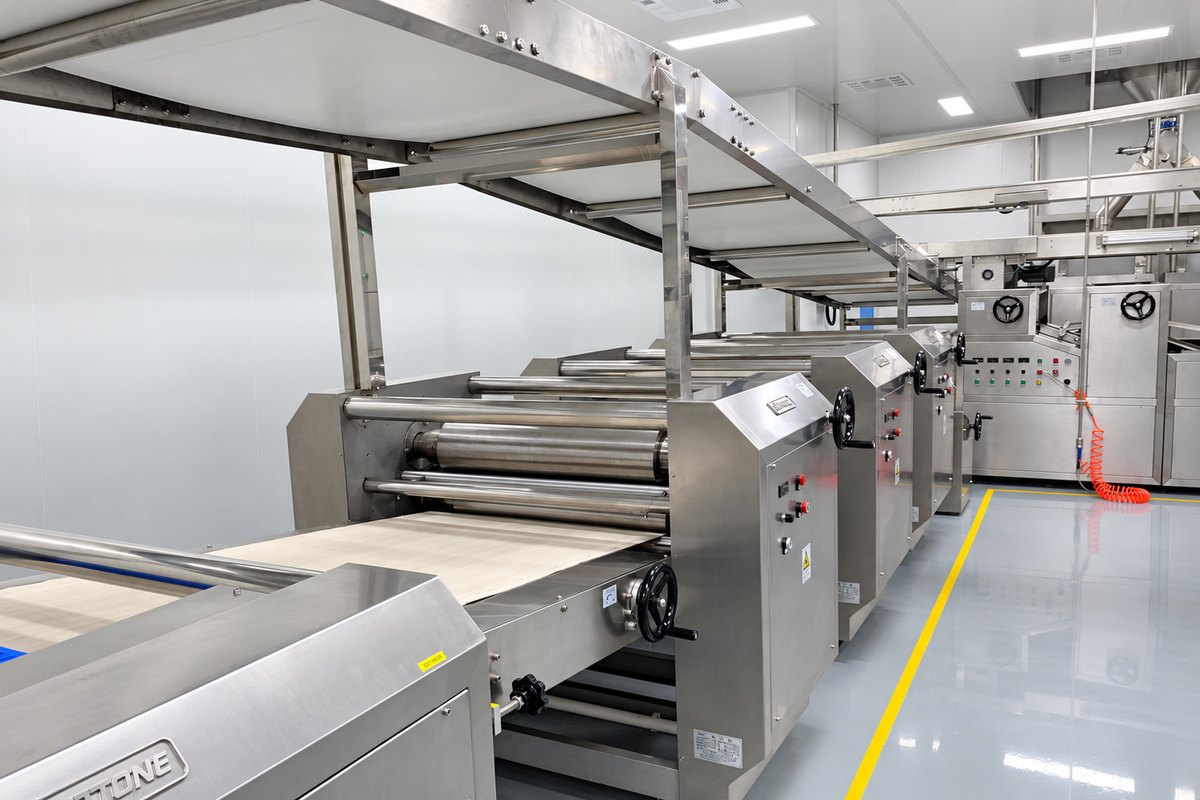
Connected dough sheeting and rotary cutting equipment for hard biscuits
Sheet forming and cutting
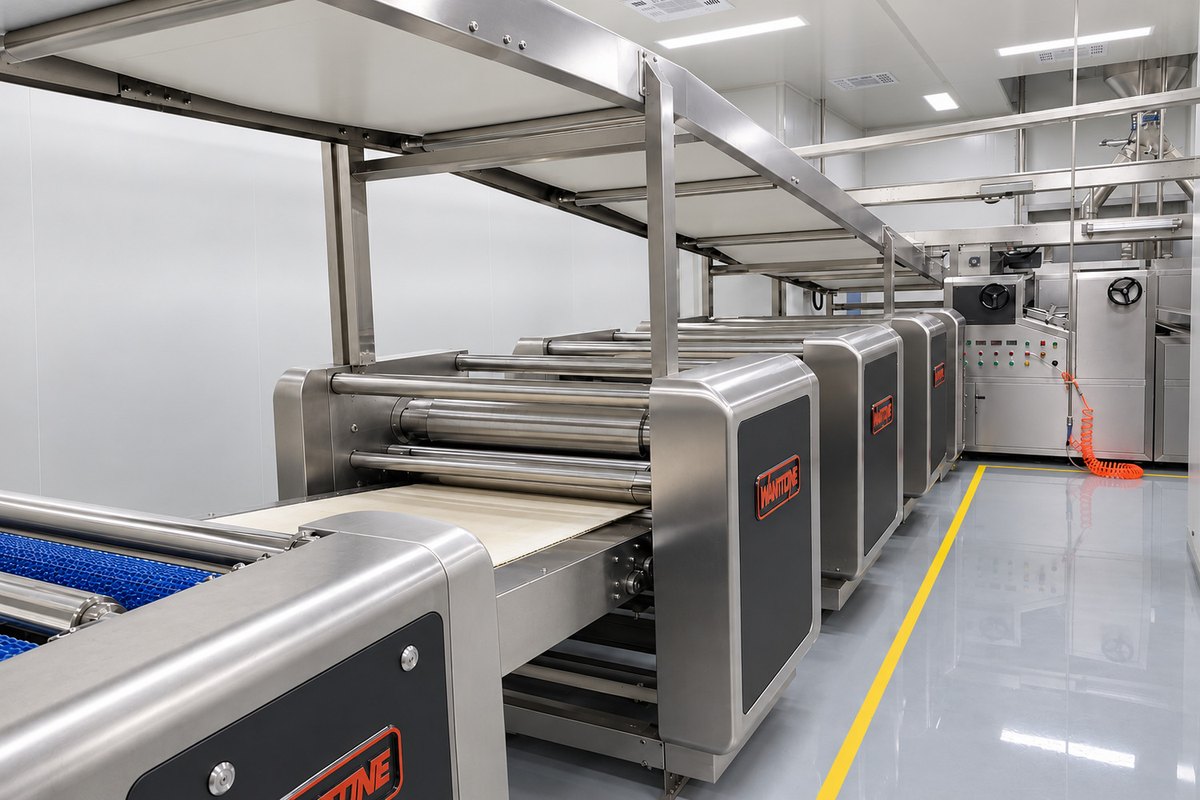
Rollers and conveyors in the Wanttone cracker sheet-forming section
Cracker sheet forming

Capabilities & Applications

Key Features

  • Clean, Accurate Cutting at High Speed

    A Ø260 mm cutting roller in 45# carbon steel with hard-chrome plating cuts sharp-edged shapes continuously, with electric synchronization adjustment and a digital display for perfect registration.

  • Custom Shapes, Dockering & Branding

    Cutting rollers are engraved to your design — any biscuit outline, docker pin pattern, and company logo — so shape, ventilation, and branding are formed in one step.

  • Sensor-Controlled Mould Pressure

    Displacement-sensor pressure detection with accurate digital readout and touch-screen gap/speed control keeps cutting depth consistent, protecting both product quality and roller life.

  • Durable Rubber Pressure Roller

    A Ø300 mm roller with 20 mm non-toxic, oil-resistant rubber coating (hardness A60) provides resilient, food-safe counter-pressure over long production runs.

  • Independent Drives, Easy Adjustment

    The cutting roller and conveyor belt run on separate motors with frequency conversion; premium European-brand gearmotors ensure reliable, synchronized operation.

  • Hygienic Stainless Structure

    1.5 mm 304 stainless-steel enclosure with a stainless tube safety cover, 304 pallets, and hard-chrome-plated (HRC58-62) frame plates for corrosion-resistant, easy-clean service.

Applications

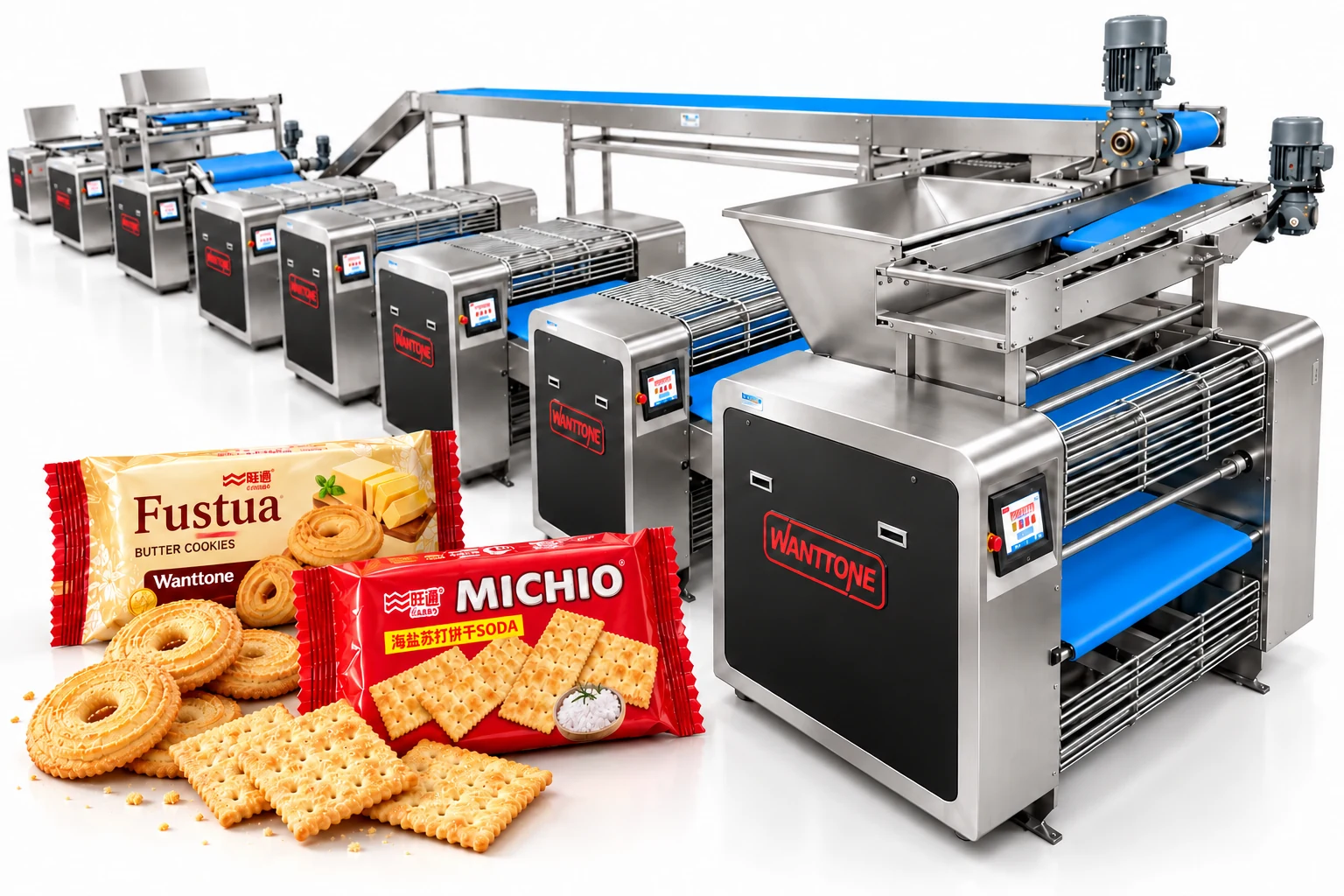
  • Positioned after the final gauge roll in hard biscuit, soda cracker, and laminated cracker lines, the rotary cutter defines the product’s final shape before the oven. It pairs with the scrap recycling system, which returns the trimmed dough web to the sheeter. Typical products: saltines, cream crackers, Marie-type hard biscuits, and printed tough biscuits.

A Defined Role in the Line

  1. Upstream Requirements

    Confirm the incoming material or product condition, target throughput, infeed height and available utilities.

  2. Core Machine Function

    A Ø260 mm cutting roller in 45# carbon steel with hard-chrome plating cuts sharp-edged shapes continuously, with electric synchronization adjustment and a digital display for perfect registration.

  3. Downstream Integration

    Match discharge height, line speed, control signals, guarding and cleaning access with the next operation.

Specifications & Configuration

Technical Parameters for Rotary Cutter
ConfigurationWorking WidthCutting RollerDimensions (L×W×H)Weight
Configuration 11000 mmØ260 mm, hard-chrome plated950×2070×1350 mm2.0 T
Configuration 21200 mmØ260 mm, hard-chrome plated950×2270×1350 mm2.3 T
Configuration 31500 mmØ260 mm, hard-chrome plated950×2700×1350 mm2.8 T

Rubber roller Ø300 mm, 20 mm coating, A60 hardness; custom-engraved cutting rollers to order.

The Wanttone Difference

A rotary cutter is only as good as its cutting roller — and Wanttone designs and validates forming rollers inside our own biscuit factory, where millions of crackers are cut every year on our own machines. That dual experience, rooted in the 1981 Yangjiang Biscuit Equipment General Factory and proven in a military-sponsored compressed biscuit line project where dimensional precision was mission-critical, means your engraved roller arrives with dockering depth, edge clearance, and release angles already optimized for real dough behavior. ISO 9001 manufacturing controls every step from steel selection to chrome plating, and our engineers support shape design, roller trials, installation, and lifetime service — one supplier accountable for both machine and mold.

Frequently Asked Questions

What is the difference between a rotary cutter and a rotary moulder?

A rotary cutter stamps shapes out of a pre-sheeted dough web (used for hard biscuits and crackers), leaving a scrap web that is recycled. A rotary moulder presses soft, high-fat dough into engraved cavities and extracts formed pieces — no scrap is produced.

Can I get a cutting roller with my own biscuit design and logo?

Yes. Send us your shape drawing, dimensions, and docker hole requirements; we design and engrave the roller, and can run dough trials before shipment. Multiple rollers can be ordered for fast product changeovers.

How quickly can cutting rollers be changed?

The roller is mounted for rapid removal, and synchronization is electrically adjusted with a digital display, so trained operators can swap rollers and re-register the cut in a short, planned stop.

How is cutting depth kept consistent across the belt width?

Mould pressure is measured by displacement sensors and shown digitally; operators set the gap precisely from the touch screen, eliminating uneven cutting between belt edges and center.

What happens to the dough web left after cutting?

The scrap web is lifted by the separator and returned to the sheeter via the dough scrap recycling system, keeping material waste close to zero.