Gauge Roll

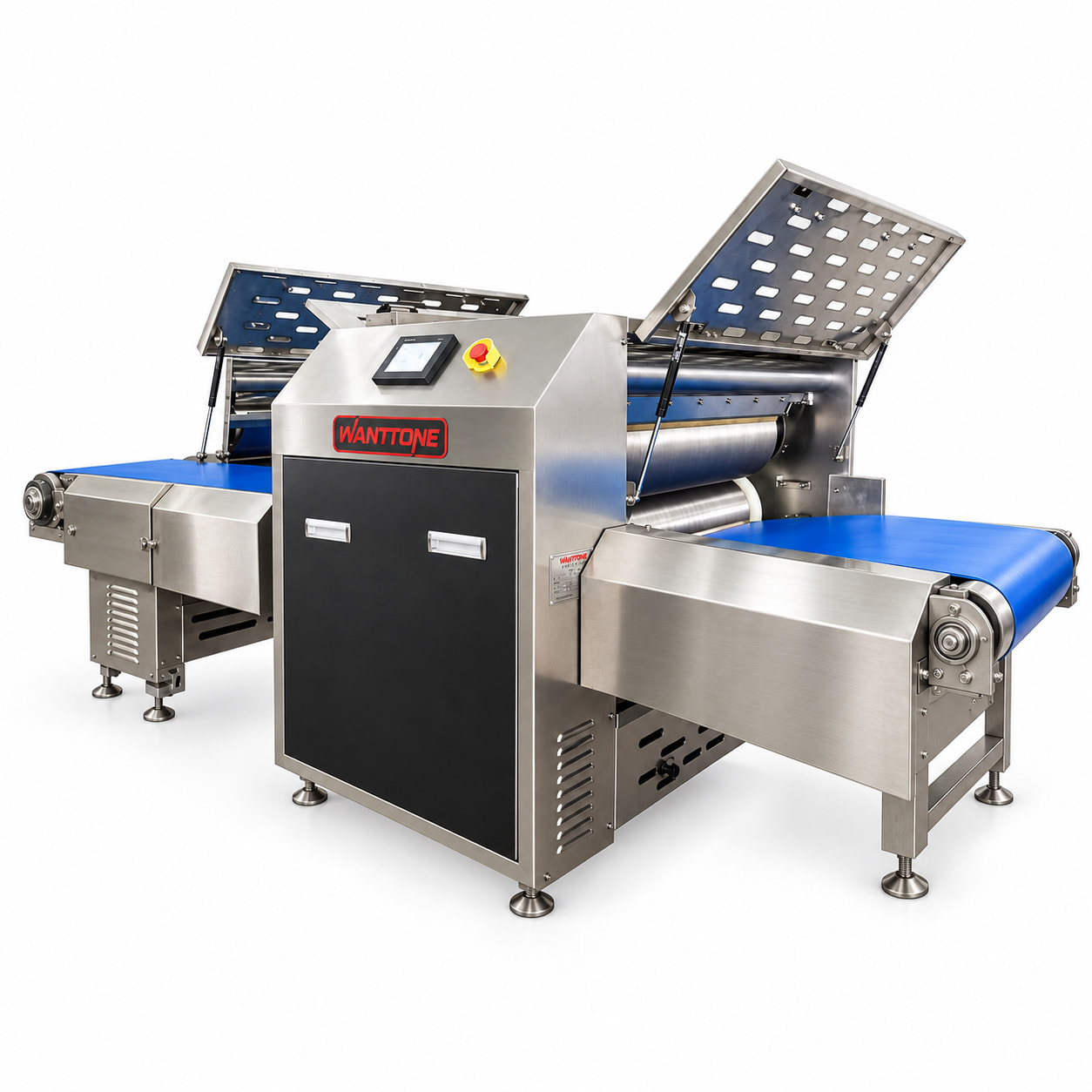
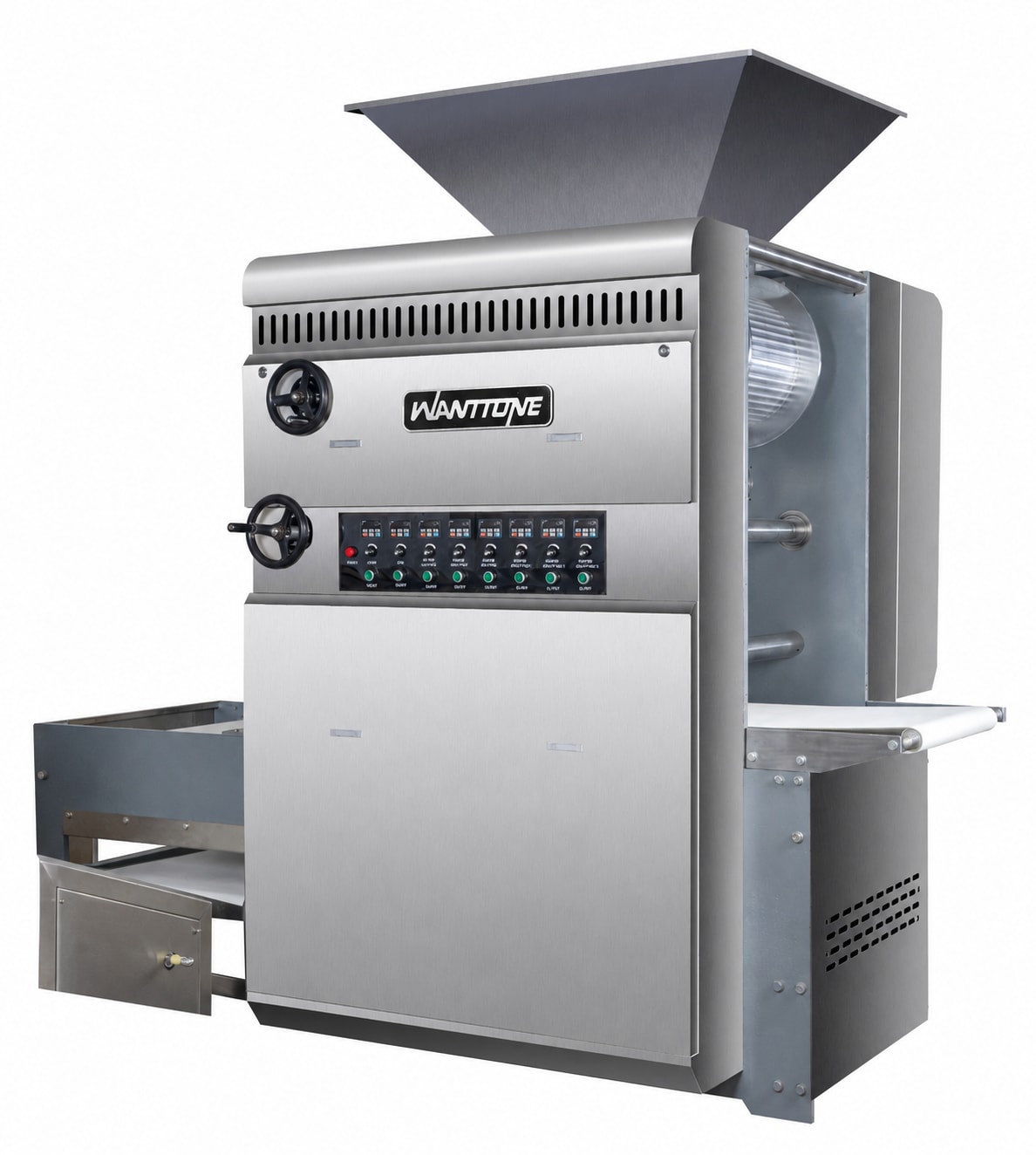
The Wanttone gauge roll (gauge roller / two-roll sheeter) performs the semi-pressing and final precision pressing of dough sheets on hard biscuit and soda cracker production lines.

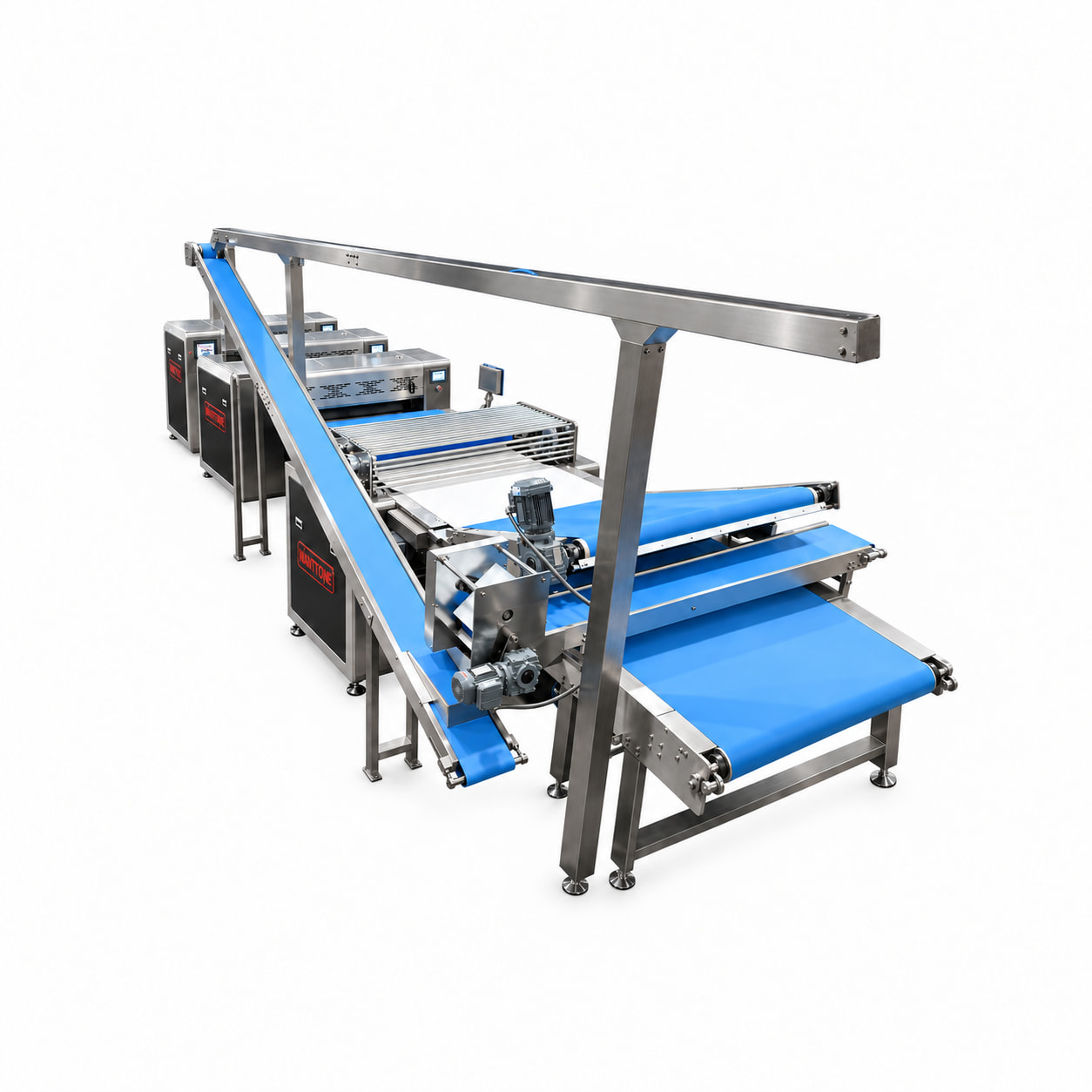
Reference illustration of Gauge Roll

Product Overview

Working in two- or three-stage cascades after the three-roll sheeter and laminator, each gauge roll reduces the dough sheet by a controlled ratio until it reaches the exact forming thickness — typically below 1 mm for crackers. Displacement-sensor gap detection with an accurate digital display, touch-screen speed and thickness control, and independent roller drives give operators repeatable, recipe-based thickness management that directly determines biscuit weight, texture, and baking behavior.

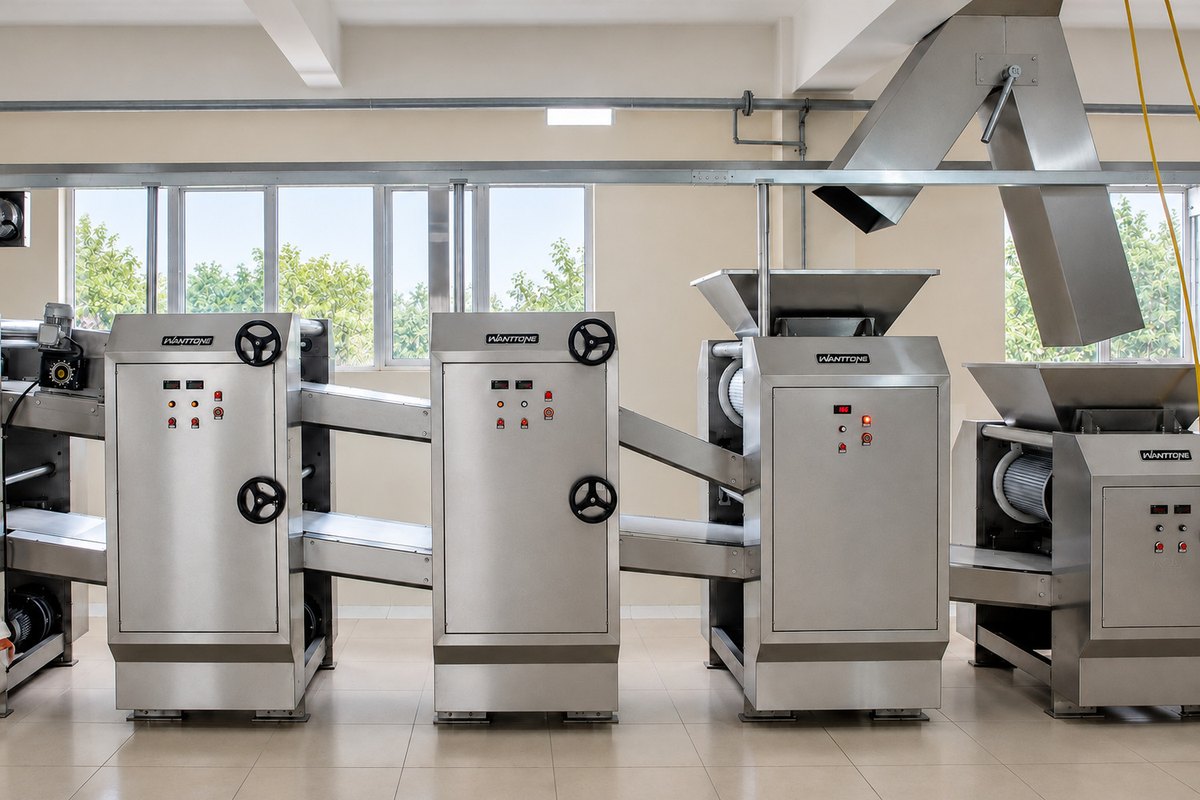
Connected dough sheeting and rotary cutting equipment for hard biscuits
Sheet forming and cutting
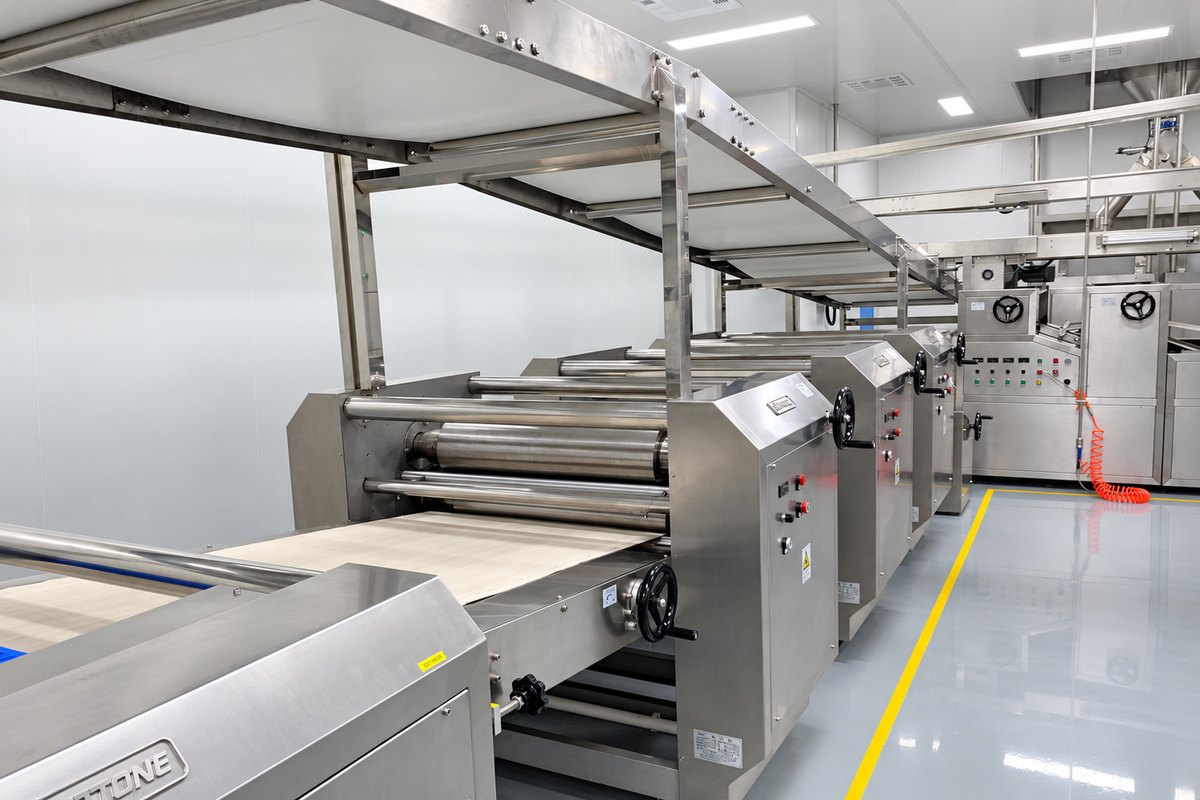
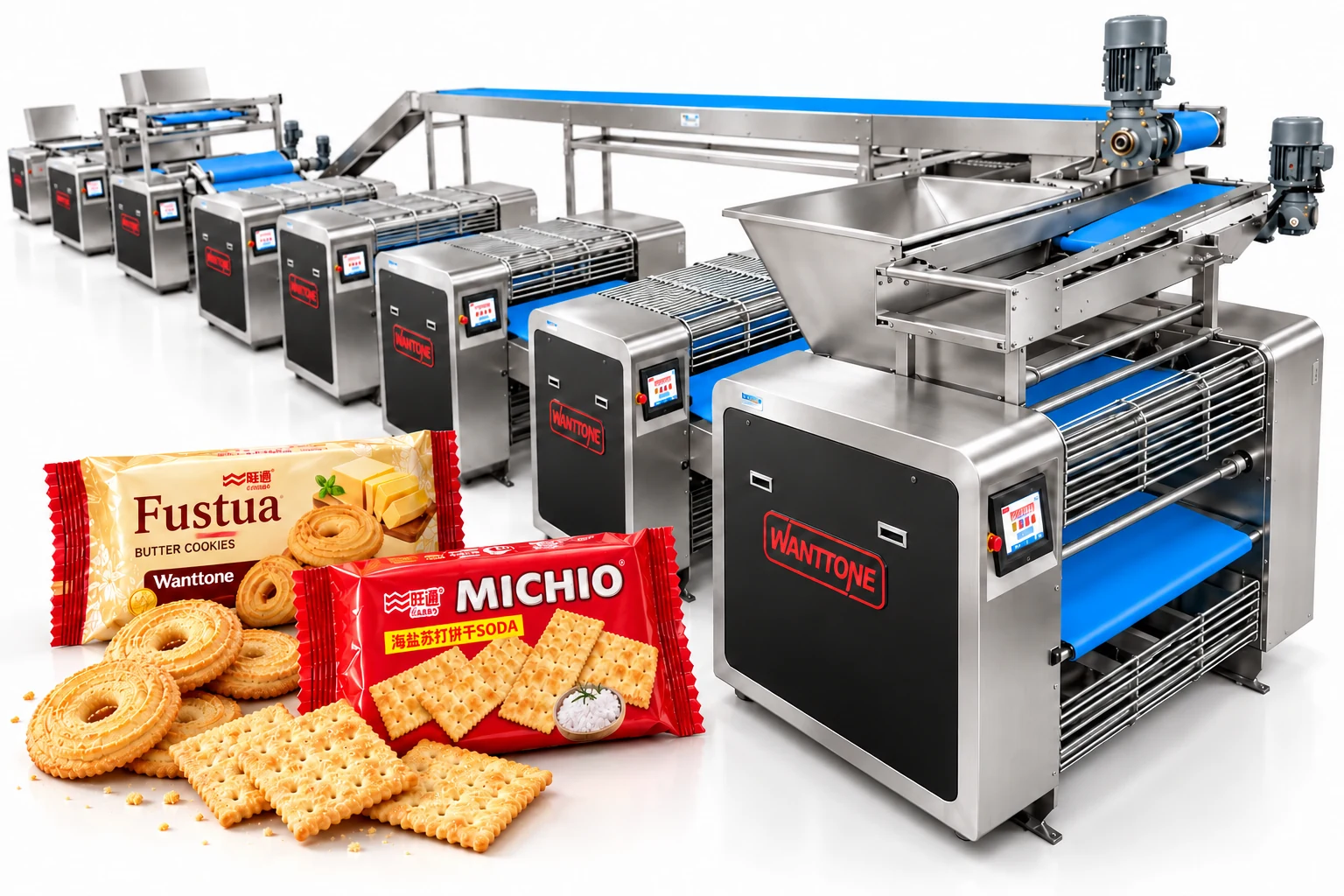
Dough sheeting system with successive rollers and connected conveyor belts
Sheeting line application

Capabilities & Applications

Key Features

  • Precise, Repeatable Thickness Control

    Roll gap is detected by a displacement sensor and shown on an accurate digital display, so every batch returns to exactly the same sheet thickness.

  • Touch-Screen Recipe Management

    Speed and thickness are set from the HMI; operators recall parameters per product instead of manual trial-and-error adjustment.

  • Independent Drive for Each Roller

    The roller and conveyor belt are controlled by separate motors with frequency conversion, enabling precise reduction ratios between cascading gauge rolls.

  • Roll-Friendly Scraping System

    A 2 mm blade scraper keeps the roller surface clean without scratching or damaging the chrome plating, extending roller service life.

  • Anti-Deviation Belt Guidance

    The conveyor belt runs on guide strips that prevent tracking drift, keeping the dough sheet centered into the rotary cutter.

  • Safety & Hygiene Built In

    Emergency stop switches, automatic alarms, a dead-angle-free hygienic structure, 304 stainless-steel pallets, and 1.5 mm 304 enclosures with pneumatic support rods for easy washdown access.

Applications

  • Gauge rolls are the thickness-control heart of hard biscuit, soda cracker, and laminated cracker lines, positioned between the laminator (or three-roll sheeter) and the rotary cutter. Multiple gauge roll stations are arranged in series, each reducing sheet thickness step by step to protect dough structure and achieve uniform final gauge.

A Defined Role in the Line

  1. Upstream Requirements

    Confirm the incoming material or product condition, target throughput, infeed height and available utilities.

  2. Core Machine Function

    Roll gap is detected by a displacement sensor and shown on an accurate digital display, so every batch returns to exactly the same sheet thickness.

  3. Downstream Integration

    Match discharge height, line speed, control signals, guarding and cleaning access with the next operation.

Specifications & Configuration

Technical Parameters for Gauge Roll
ConfigurationWorking WidthDimensions (L×W×H)Roller DriveControl
Configuration 1600 mmPer layoutIndependent motors + VFDDisplacement sensor, touch screen
Configuration 2800 mmPer layoutIndependent motors + VFDDisplacement sensor, touch screen
Configuration 3980–1020 mm800×2130×1450 mmIndependent motors + VFDDisplacement sensor, touch screen
Configuration 41180–1220 mm800×2330×1450 mmIndependent motors + VFDDisplacement sensor, touch screen
Configuration 51500 mmPer layoutIndependent motors + VFDDisplacement sensor, touch screen

Frames in hard-chrome-plated Q235 (HRC58-62); conveying roller Ø160 mm, rubber-covered; customizable to line width.

The Wanttone Difference

Thickness consistency is the single biggest driver of biscuit weight variation — and it is where Wanttone’s dual identity matters. As an ISO 9001-certified manufacturer that also operates its own biscuit plant, we tune gauge roll reduction ratios, roller hardness, and belt synchronization against real production data from our own hard biscuit and cracker lines, including long-term OEM production for major national brands. Our Foodstuff Machinery Research Institute engineers each gauge roll with sensor-based gap measurement and hygienic, washdown-friendly structures refined over four decades. Beyond the machine, we advise on the full sheeting cascade — sheeter, laminator, gauge rolls, and cutter — so your line achieves target thickness with minimal stress on the dough.

Frequently Asked Questions

How many gauge roll stations does a hard biscuit line need?

Most lines use two to three gauge roll stations in series. The number depends on the incoming sheet thickness and the final product thickness — keeping each reduction ratio gentle protects dough texture and layered structure.

What thickness accuracy can the gauge roll achieve?

With displacement-sensor gap detection and a digital display, the roll gap is set and held precisely; final sheet thickness is typically controlled within a tight tolerance suitable for consistent biscuit weight. Exact values depend on dough characteristics.

How is the roller kept clean during continuous running?

A 2 mm stainless blade scraper continuously cleans the roller surface. Its thickness and mounting are designed to remove dough residue effectively without scratching the hard-chrome plating.

Can gauge rolls handle both laminated and non-laminated dough?

Yes. They sheet laminated cracker dough after the laminator as well as plain hard-biscuit dough after the three-roll sheeter, with speed automatically synchronized to the line.

What maintenance does a gauge roll require?

Routine tasks are scraper blade inspection, belt tracking checks, and bearing lubrication. The pneumatically supported stainless enclosures open wide for fast cleaning and inspection, minimizing downtime.

Need Exact Thickness, Batch After Batch?

Send us your line width and target biscuit weight, and we will configure the gauge roll cascade to match. Email ricky@wanttone.com or message WhatsApp (86)13926311528 for specifications and pricing.