Dough Scrap Recycling System

The Wanttone dough scrap recycling system captures the trim web left after rotary cutting on hard biscuit and cracker lines and returns it continuously to the dough sheeter for reprocessing — turning what would be waste into a steady stream of reusable material.

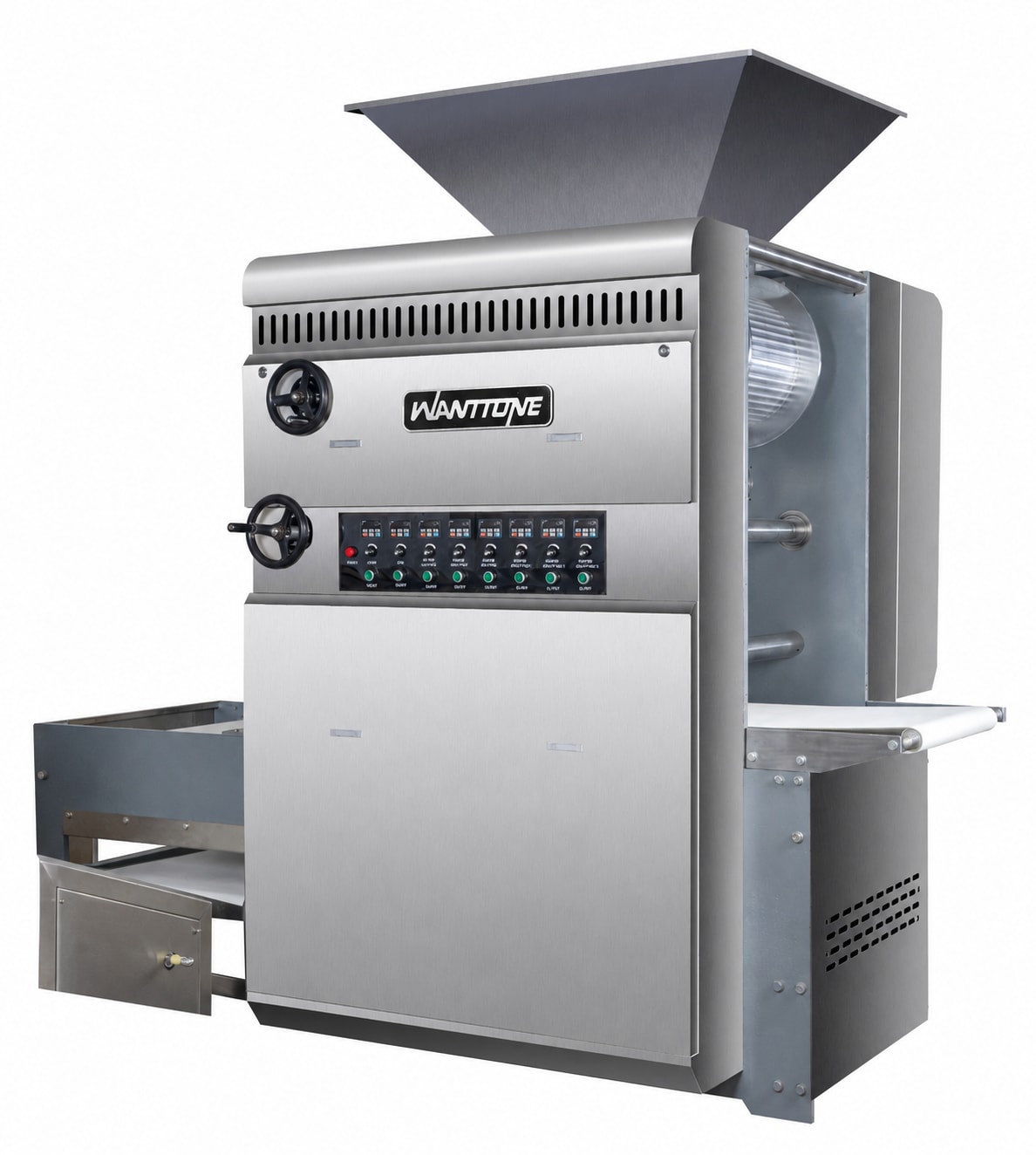
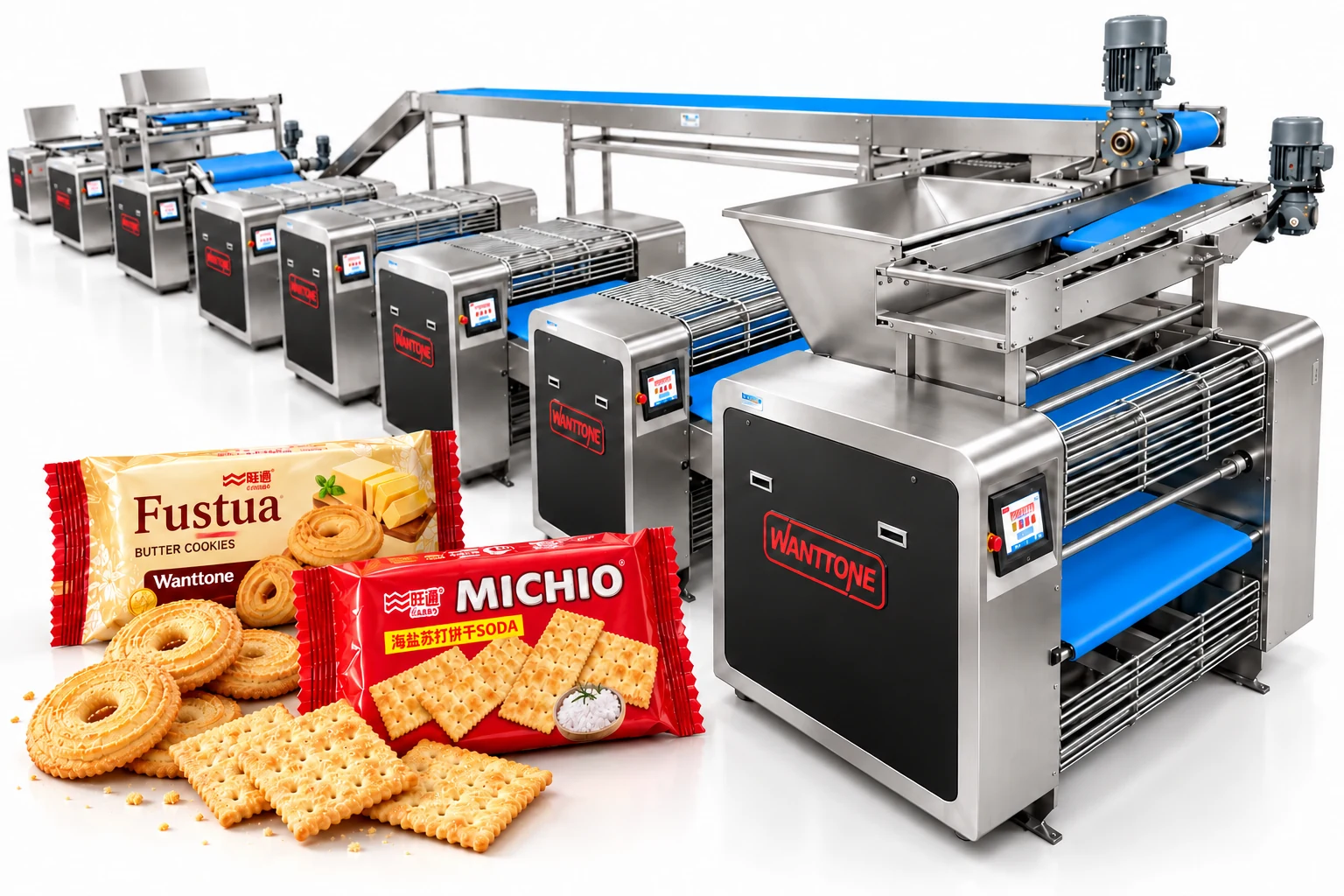
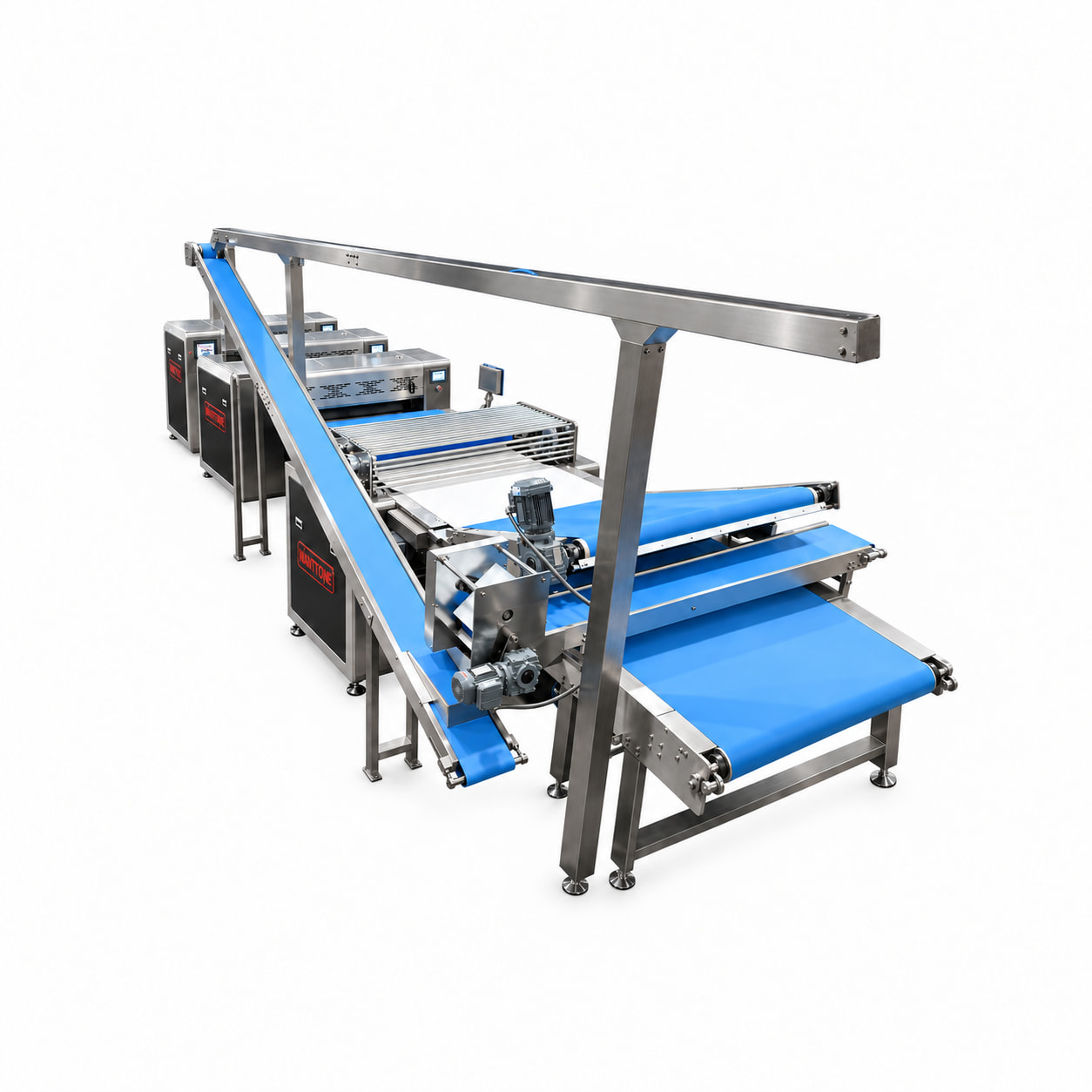
Reference illustration of Dough Scrap Recycling System

Product Overview

Combining a separator that lifts the scrap web from the cut pieces with a synchronized return conveyor, the system keeps scrap dough fresh, uncontaminated, and correctly proportioned in the new sheet. The same platform can also serve as an automatic dough feeding route for soft biscuit lines, making it a flexible, waste-cutting asset for any forming section.

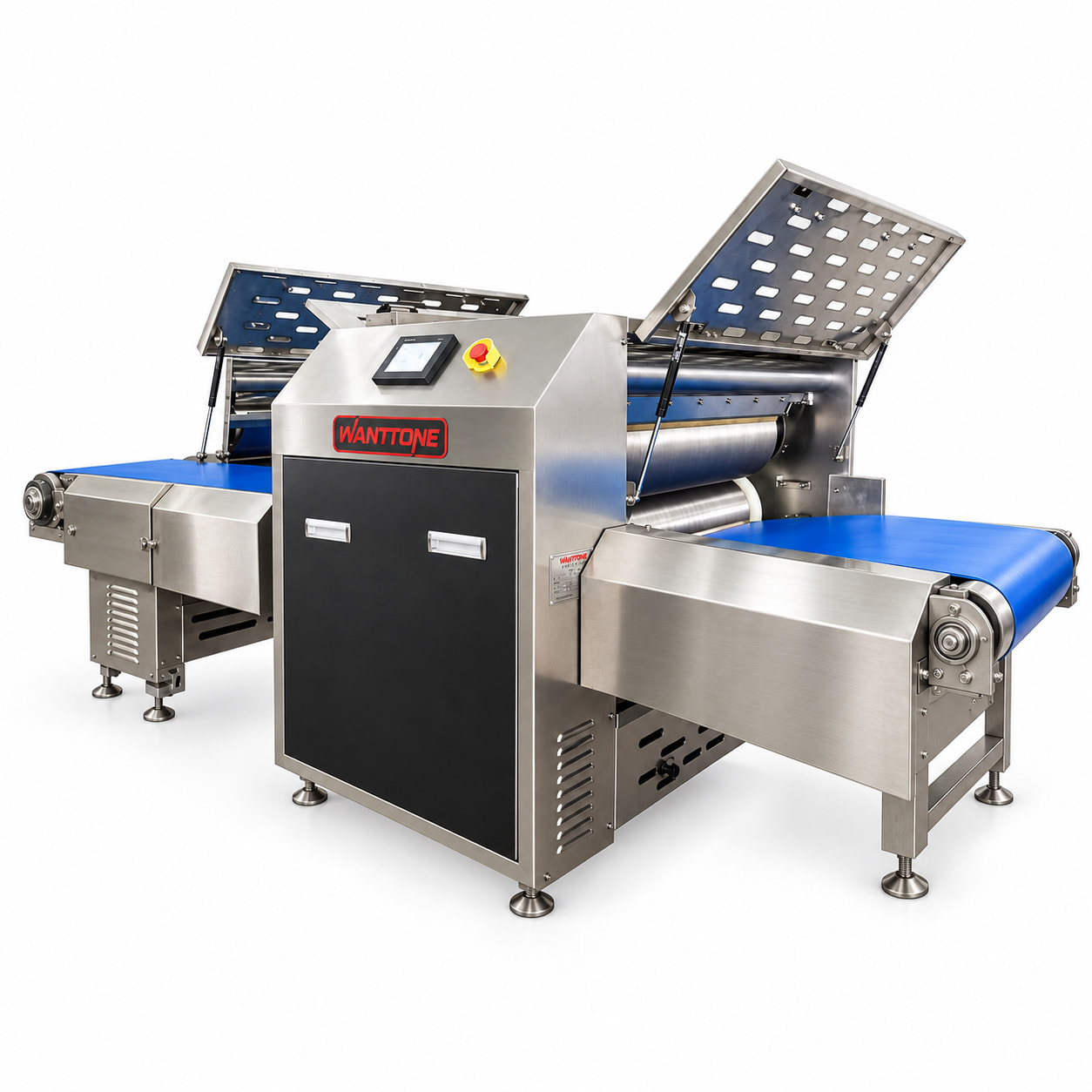
Raised sheet-separation conveyor and connected transfer section ahead of the oven infeed
Sheet separation at the oven infeed — line reference

Capabilities & Applications

Key Features

  • Near-Zero Material Waste

    Trimmings from the rotary cutter are separated and conveyed back to the sheeter automatically, cutting dough disposal costs and improving yield per batch.

  • Fresh, Hygienic Return Loop

    Scrap travels on enclosed, food-grade conveyors with 1.5 mm 304 stainless-steel covers, so returned dough stays clean and within its usable time window.

  • Smooth, Reliable Conveying

    European PU belts (1.3 mm) with pneumatic tensioning and pneumatic deviation correction (premium-brand cylinders) keep the belt centered and taut without manual intervention.

  • Independent Section Control

    Upper and lower conveyor sections run on independent motors with frequency conversion; speeds are matched from the touch screen to line rate.

  • Heavy-Duty, Corrosion-Resistant Build

    Side plates and frame in hard-chrome-plated Q235 (HRC58-62), 304 stainless pallets, and hard-chrome-plated rollers and transition knives withstand wet dough contact for years.

  • Dual-Purpose Flexibility

    Configurable for hard biscuit scrap return or for automatic feeding of soft dough to the moulder hopper — one system, two roles across different lines.

Applications

  • Installed alongside the rotary cutter in hard biscuit, soda cracker, and laminated biscuit lines, the recycling system lifts the scrap web at the separator and returns it overhead or alongside the line to the three-roll sheeter. In soft biscuit plants, the same conveying platform feeds dough from the mixer to the rotary moulder, reducing manual handling.

A Defined Role in the Line

  1. Upstream Requirements

    Confirm the incoming material or product condition, target throughput, infeed height and available utilities.

  2. Core Machine Function

    Trimmings from the rotary cutter are separated and conveyed back to the sheeter automatically, cutting dough disposal costs and improving yield per batch.

  3. Downstream Integration

    Match discharge height, line speed, control signals, guarding and cleaning access with the next operation.

Specifications & Configuration

Technical Parameters for Dough Scrap Recycling System
ConfigurationWorking WidthDimensions (L×W×H)BeltDrive & Control
Configuration 11000 mm6500×1930×1500 mmPU 1.3 mm, pneumatic tensioningIndependent motors, VFD, touch screen
Configuration 21200 mm6500×2130×1500 mmPU 1.3 mm, pneumatic tensioningIndependent motors, VFD, touch screen
Configuration 31500 mmPer layout designPU / 304 frame optionsIndependent motors, VFD, touch screen

Separation method, routing, and length are customized to the plant layout.

The Wanttone Difference

Scrap recycling only works when it is engineered as part of the whole line — and whole-line engineering is Wanttone’s core business. Since 1981 we have designed complete biscuit plants from mixer to packer, and our own biscuit factory runs the same cutter-separator-recycler loop we supply to customers, so return ratios, belt routing, and dough age control are proven in daily production rather than left to guesswork. As an ISO 9001 manufacturer we take single-supplier responsibility: the rotary cutter, separator, return conveyors, and sheeter arrive synchronized, with one control philosophy and one service team. Add our turnkey services — plant layout, installation, commissioning, operator training, and lifetime after-sales — and you get a recycling system that quietly pays for itself in saved dough, shift after shift.

Frequently Asked Questions

How much dough can the recycling system save?

On a typical hard biscuit or cracker line, the trim web can represent a significant share of the sheet. Returning it continuously keeps net dough waste close to zero, limited only by your recipe’s acceptable recycled ratio.

Does recycled scrap affect biscuit quality?

When returned promptly and blended in a controlled proportion at the sheeter, scrap dough has no noticeable effect on texture or taste. Our engineers help you set the correct recycle ratio during commissioning.

How is the scrap separated from the cut biscuits?

A separator lifts the continuous scrap web away from the formed pieces immediately after the rotary cutter; pieces continue to the oven band while the web enters the return conveyor.

Can the system fit my existing line layout?

Yes. Return routing — overhead, side-mounted, or reversed — and conveyor length are designed around your plant. We provide layout drawings before manufacture.

Can the same equipment feed soft dough to a rotary moulder?

Yes. The conveying platform is also used for automatic soft-dough feeding, with independent section drives and touch-screen speed control adapted to either duty.