Crispy Biscuit Production Line

A crispy biscuit production line is a precision biscuit-making line engineered for ultra-thin, crunchy biscuits — thin crackers, crisp wafers, and light “healthy snacking” biscuits as thin as 1 mm.

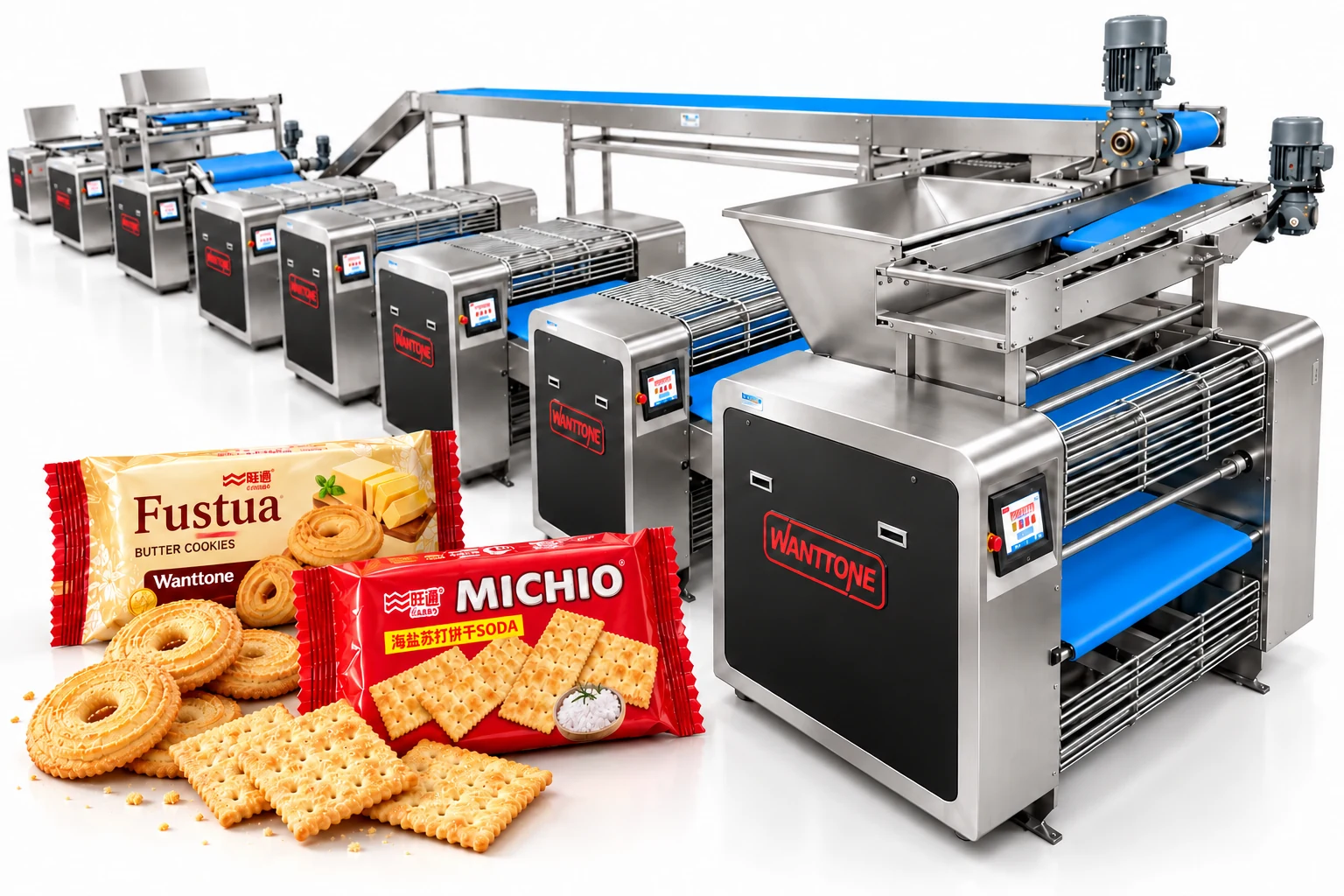
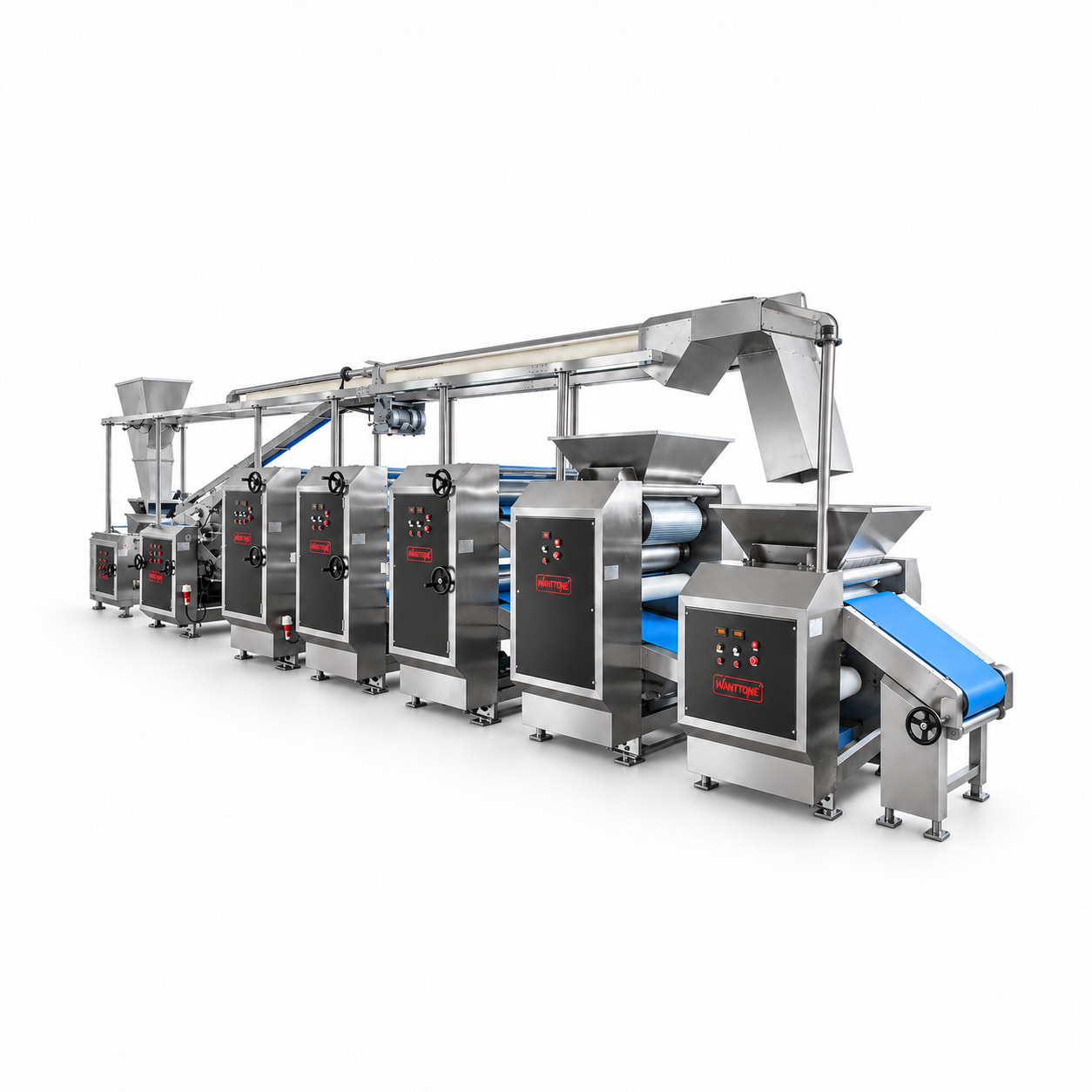
Reference illustration of Crispy Biscuit Production Line equipment

Product Overview

It is designed for manufacturers targeting the fast-growing premium and better-for-you snack segment, where consistent thinness, delicate texture, and clean flavor define product value. Wanttone’s crispy biscuit production line combines multi-stage precision sheeting, accurate forming, and tightly zoned tunnel oven baking to hold thickness and crispness uniform at full industrial speed.

Producing a 1 mm biscuit profitably is an engineering challenge: dough sheets tear, thickness drifts, and thin products burn easily. Wanttone solves this with high-precision sheeting and rolling control across multiple reduction stages, gentle dough handling to protect sheet integrity, and precise temperature zoning in the oven that dries and colors the biscuit without scorching. The result is a crisp, evenly browned product with low breakage and high pack-out rates — and by changing molds and settings, the same line can also run standard soft biscuits, cookies, and soda-type products.

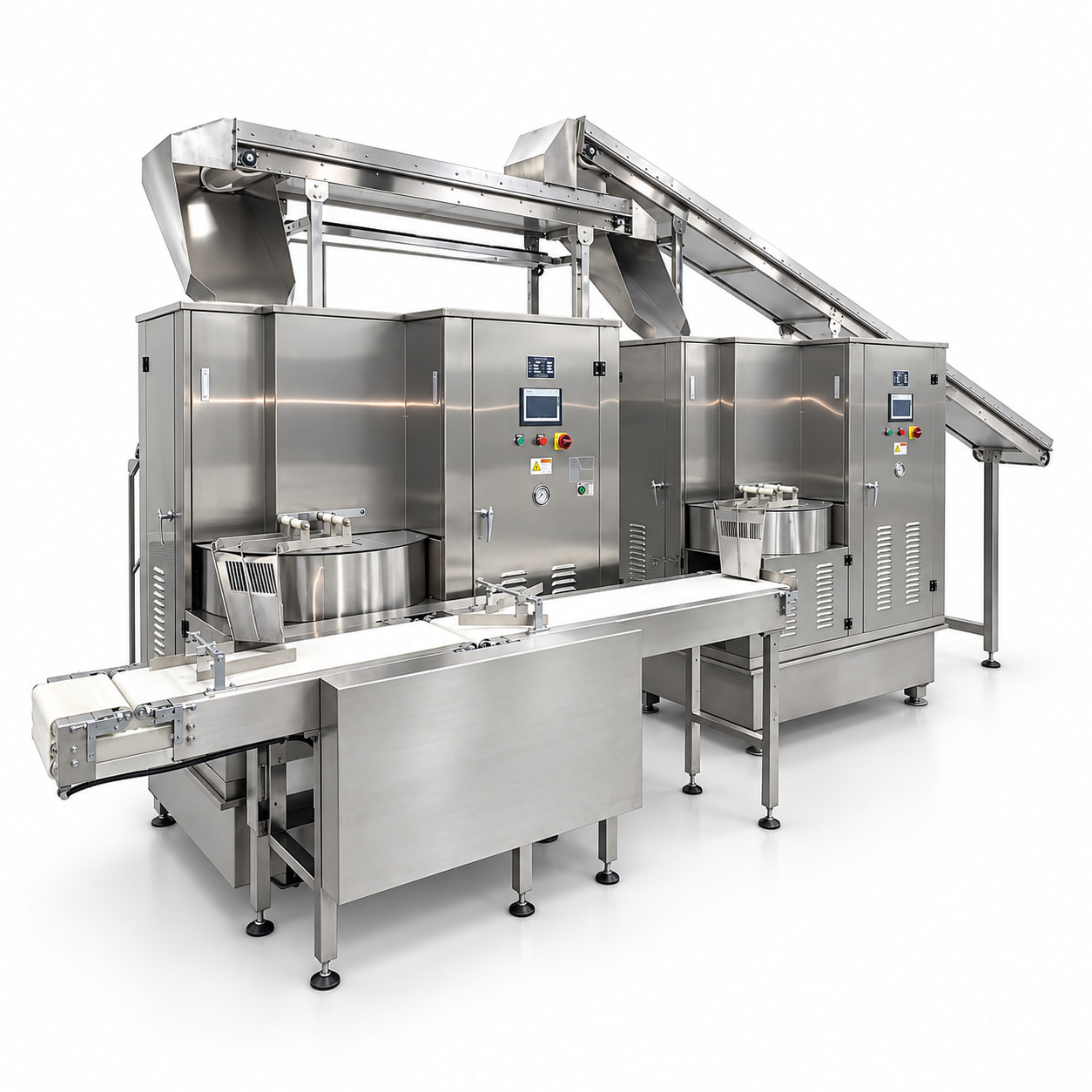
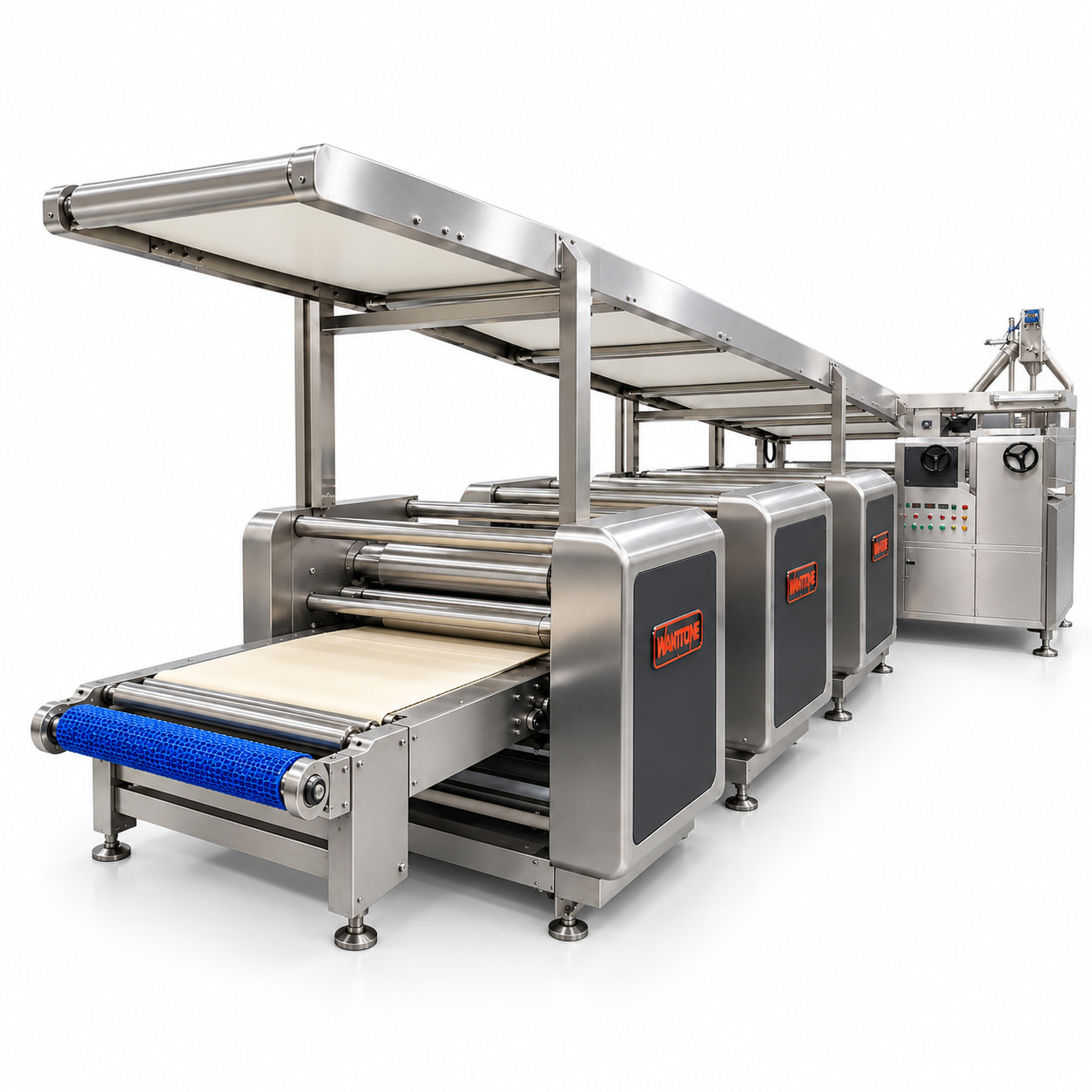
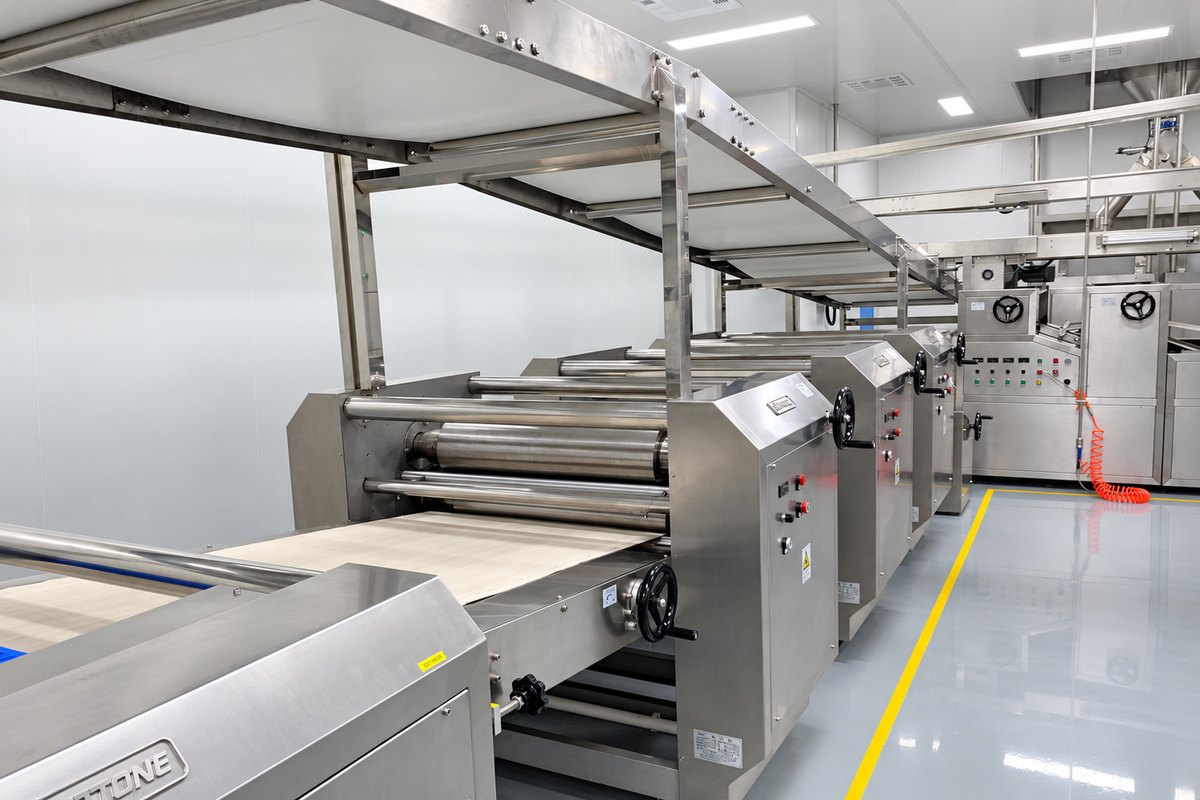
Connected dough sheeting and rotary cutting equipment for hard biscuits
Sheet forming and cutting
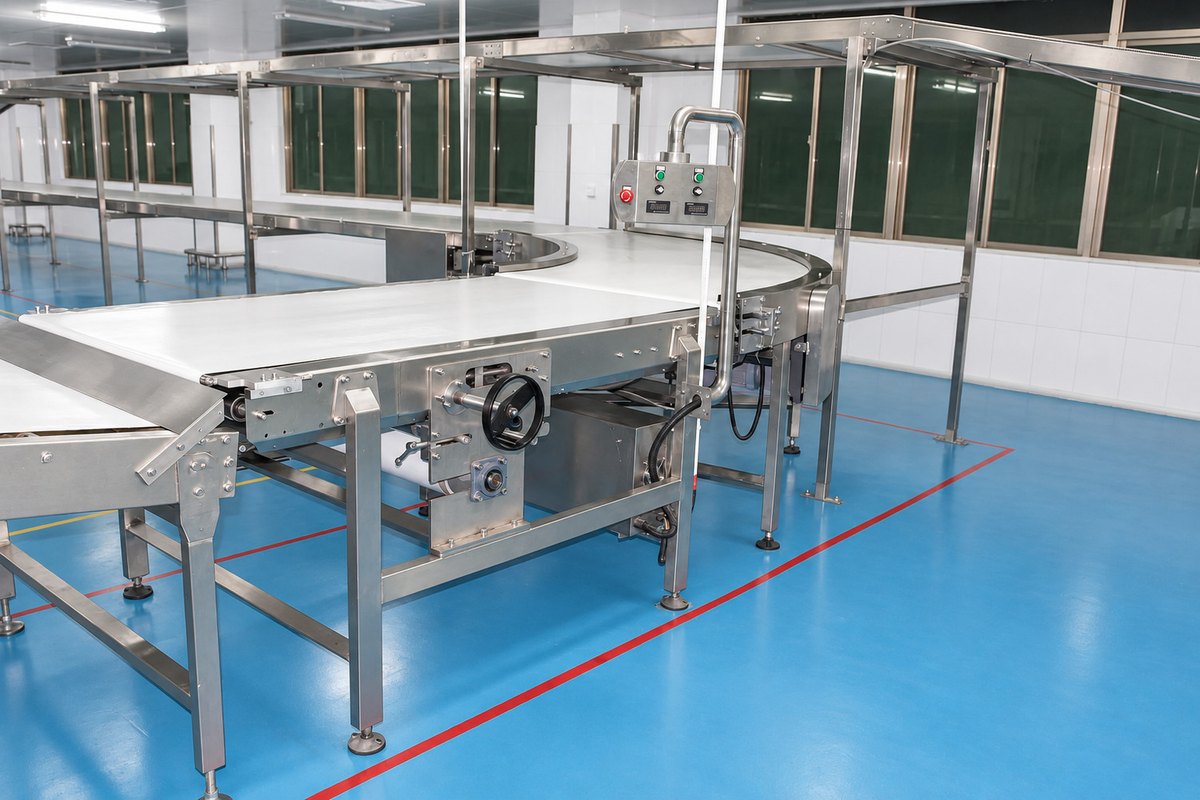
Biscuit cooling conveyor in a connected production line
Cooling conveyor

Capabilities & Applications

Key Features

  • Ultra-Thin Sheeting Down to 1 mm

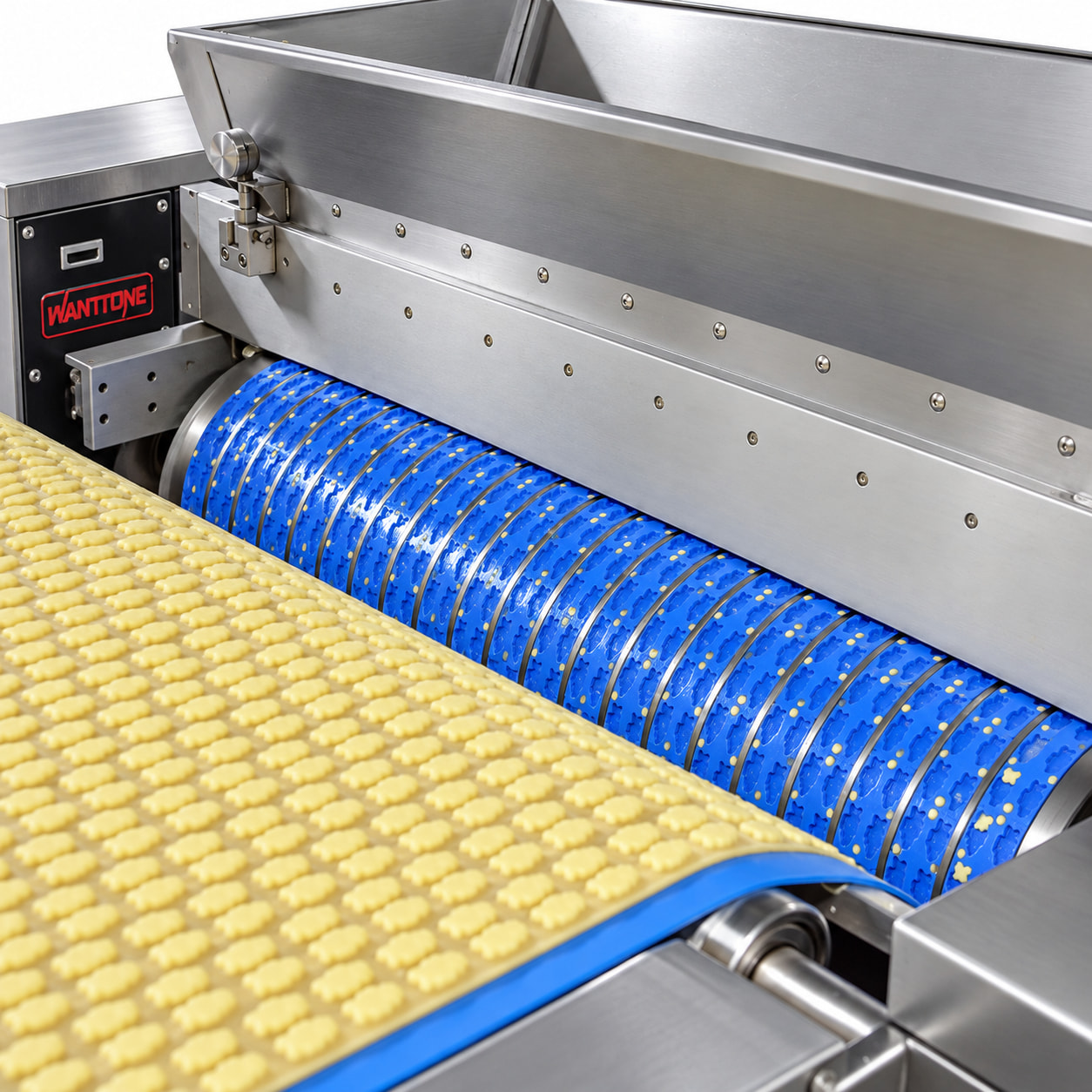
    Multi-stage high-precision rollers produce dough sheets as thin as 1 mm with consistent thickness across the full band width.

  • Guaranteed Crispness

    Precise oven temperature zoning controls moisture removal and Maillard coloring, locking in crunch and flavor without burning thin products.

  • Health-Positioned Products

    The process supports low-sugar, low-oil recipes that match modern healthy snacking trends and premium retail positioning.

  • Premium Product Flexibility

    Run vanilla, cheese, chocolate, spice, and savory flavors; switch molds to produce thin crackers, crisp cookies, or standard biscuits on one line.

  • Low Breakage, High Yield

    Gentle transfer between sheeting, forming, and oven infeed minimizes cracks and waste in fragile thin products.

  • Energy-Efficient Baking

    Insulated tunnel ovens with hot-air circulation, available in gas, electric, or thermal-oil versions, cut energy cost per kilogram.

Applications

  • Ultra-thin crispy biscuits, thin crackers, crisp savory biscuits, low-fat/low-sugar snack biscuits, and premium coffee-accompaniment biscuits for boutique snack brands, coffee and tea chains’ private labels, health-food manufacturers, and industrial biscuit plants adding a high-margin thin-biscuit range. Also suitable, with mold changes, for conventional soft biscuits, cookies, and soda biscuits.

From Preparation to Packing

  1. Dough Mixing

    Prepare and condition the recipe to the specified consistency for stable downstream processing.

  2. Sheeting

    Build and control the product layers or thickness before forming and thermal processing.

  3. Forming

    Shape and portion the product consistently to the required format and piece weight.

  4. Baking

    Control time and temperature to achieve the target structure, color, and moisture.

  5. Cooling

    Stabilize the product temperature and structure before downstream handling.

  6. Packaging

    Pack finished products in the agreed format with a consistent count and presentation.

Specifications & Configuration

Technical Parameters for Crispy Biscuit Production Line
ItemSpecification
Minimum biscuit thicknessDown to approx. 1 mm
Working width600 / 800 / 1000 / 1200 mm (customizable)
Production capacity100–1,500 kg/h typical (customizable by width and oven length)
Sheeting systemMulti-stage precision rollers with digital thickness control
Oven heatingGas / electric / thermal oil; multi-zone temperature control
Process coverageDough mixing → sheeting → forming → baking → cooling → packaging
Control systemPLC + touchscreen with recipe storage
MaterialSUS304 stainless steel food-contact parts

The Wanttone Difference

Thin biscuits leave no room for engineering error — and this is where Wanttone’s 40-plus years of biscuit machinery experience pays off. Because we run our own biscuit factory, our engineers understand dough rheology and baking behavior at a production level, not just a mechanical level: we tune roller gaps, belt tensions, and oven curves so your 1 mm product runs stably hour after hour. Wanttone is ISO 9001 certified, operates its own Foodstuff Machinery Research Institute, and provides complete turnkey support from recipe trials and layout design to installation, training, and lifetime after-sales service. For brands betting on the healthy-snack trend, we offer not just equipment but proven process know-how that shortens your time from commissioning to shelf-ready product.

Frequently Asked Questions

Can the line really hold 1 mm thickness in continuous production?

Yes — thickness stability comes from multi-stage reduction with precision gap control on each roller pair, plus tension-controlled conveying that prevents sheet stretching. Actual minimum thickness depends on your recipe; we confirm it in trial runs before shipment.

What recipes work on a crispy biscuit line?

Low-sugar, low-oil, and standard sweet or savory formulations all run well. Our food technologists can help adapt your recipe for sheeting stability and target crispness, including whole-grain and multigrain versions.

Which oven heating type is best for thin crispy biscuits?

All three options — gas, electric, and thermal oil — can bake thin biscuits well. The deciding factors are your local energy costs and the responsiveness you need for thin products; we model energy consumption per kilogram for each option in your proposal.

How do you prevent breakage of fragile thin biscuits?

We use short, synchronized transfers between machines, low-tension belt handling, and controlled cooling so biscuits reach packaging below their fragile temperature threshold. Stacking and packing units are speed-matched to avoid impact damage.

What is the typical delivery and installation timeline?

Standard configurations ship in roughly 60–90 days after order confirmation; customized lines may take longer. Installation and commissioning typically take two to four weeks on site, including operator training by our engineers.