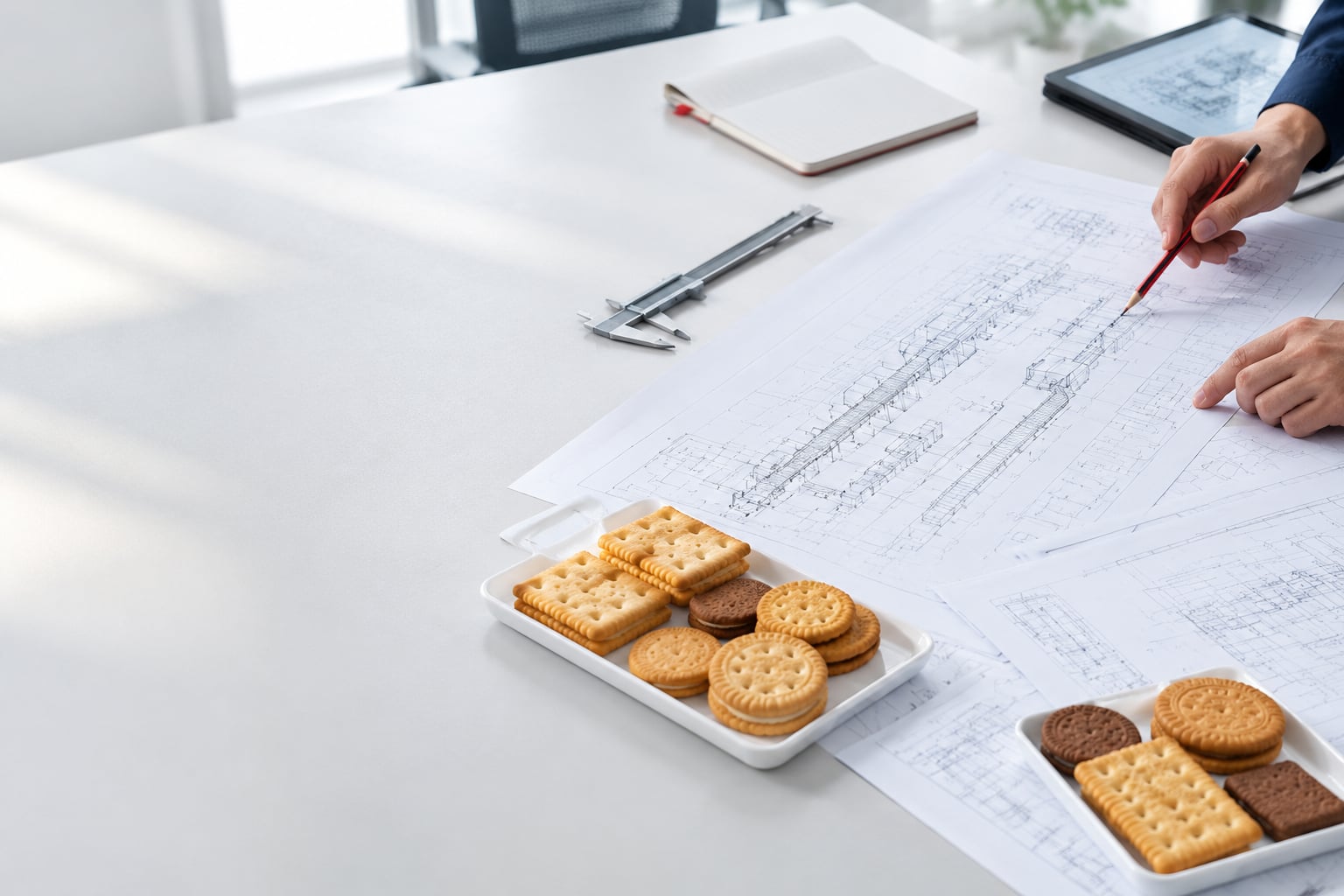
Define What the Quotation Includes
Two quotations with the same line capacity can represent very different scopes. Mixing, forming, baking and cooling may be included while packaging, utilities, installation or product trials are treated separately.
Create one scope table before comparing suppliers. It should show equipment, services, documentation, commissioning and the responsibilities that remain with the buyer.
- Process equipment and conveying
- Primary and secondary packaging
- Installation and commissioning
- Utilities, civil work and local services
Account for the Product Mix
A line dedicated to one stable product is simpler than a line expected to handle several dough systems, shapes and package formats. Flexibility usually adds tooling, controls, changeover requirements and validation work.
Prioritize the products that must launch first. Future capability can then be planned deliberately instead of being added as an undefined requirement.
- Launch products
- Changeover frequency
- Recipe and tooling differences
- Packaging combinations
Choose Automation for the Operating Model
Automation should reflect labor availability, quality targets, hygiene requirements and expected line utilization. The most automated option is not automatically the most economical option for every factory.
Map where manual handling can affect product damage, consistency or food safety. These points usually deserve attention before automating low-impact tasks.
Calculate Beyond the Purchase Price
Energy, product loss, maintenance, spare parts and changeover time shape the cost of ownership. Factory layout and access can also affect how efficiently the line is cleaned and serviced.
A useful investment review connects capital cost with expected saleable output and operating assumptions over time.
- Energy per production hour
- Expected product loss
- Maintenance access and spares
- Changeover and sanitation time
Wanttone Project Team
Wanttone’s engineering and project teams prepare practical guidance on biscuit machinery, production-line planning and factory requirements.