Wafer Biscuit Production Line

A wafer biscuit production line is a fully automatic system that bakes thin, crisp wafer sheets between heated plates, then spreads cream, laminates, cools, and cuts them into the layered wafer biscuits sold worldwide.

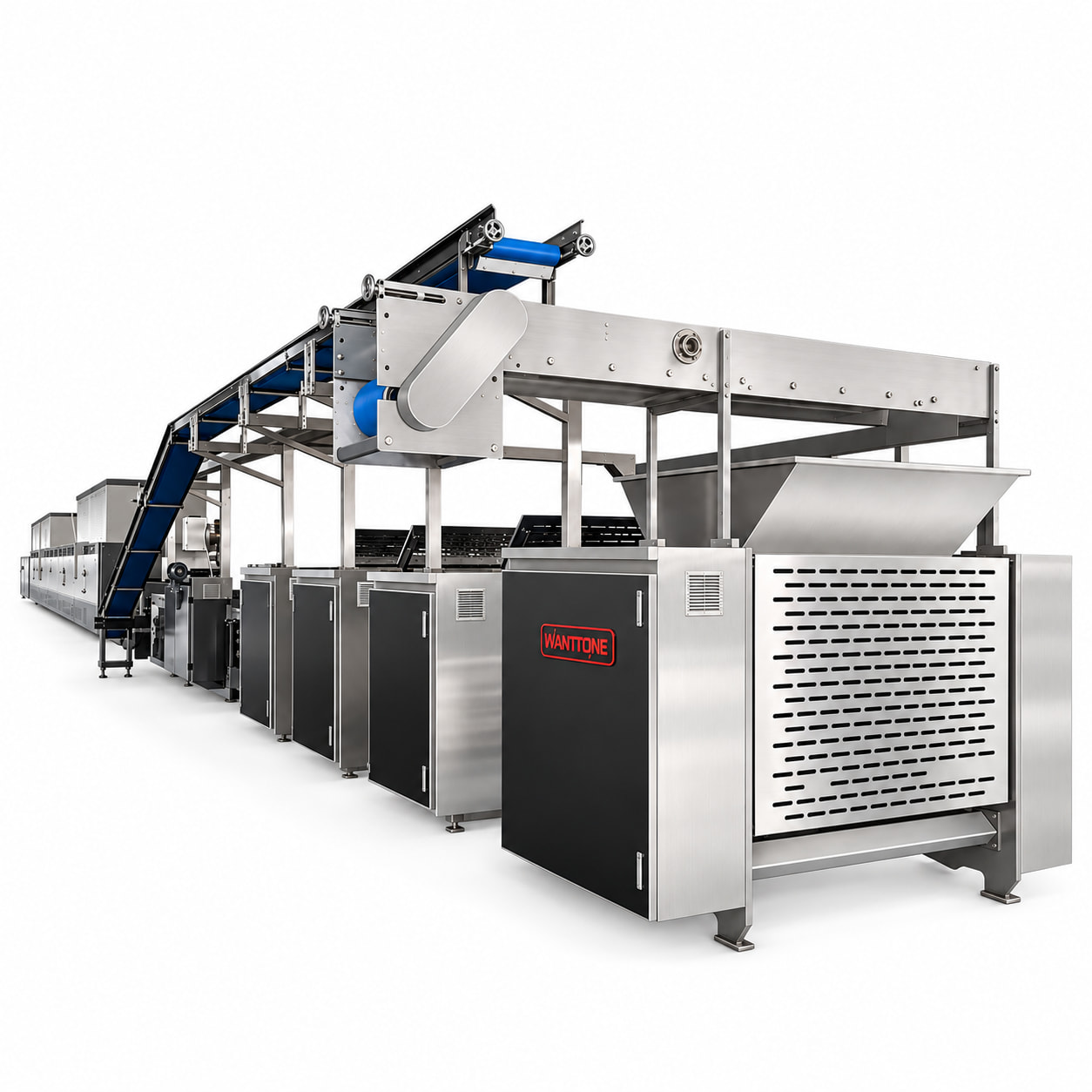
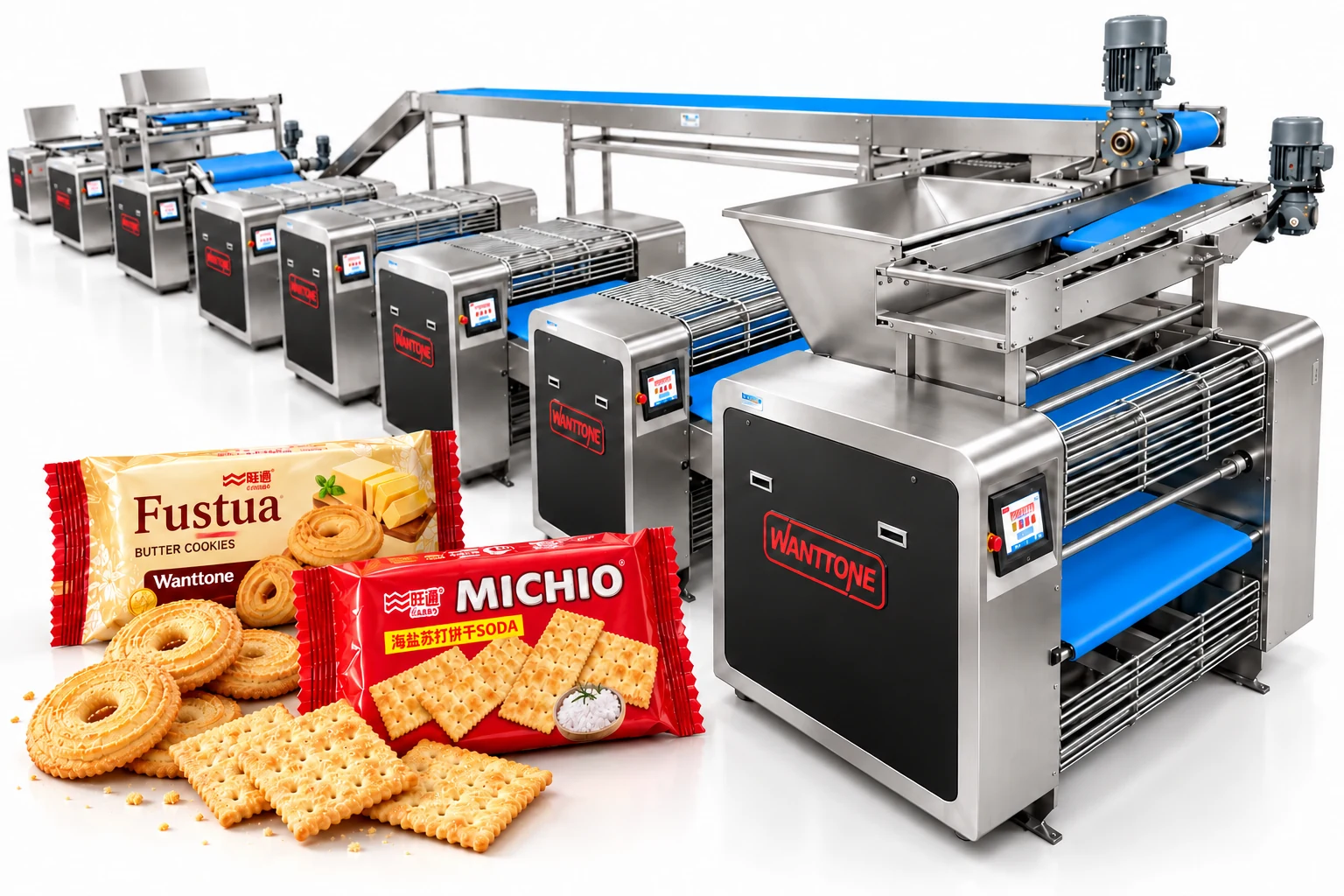
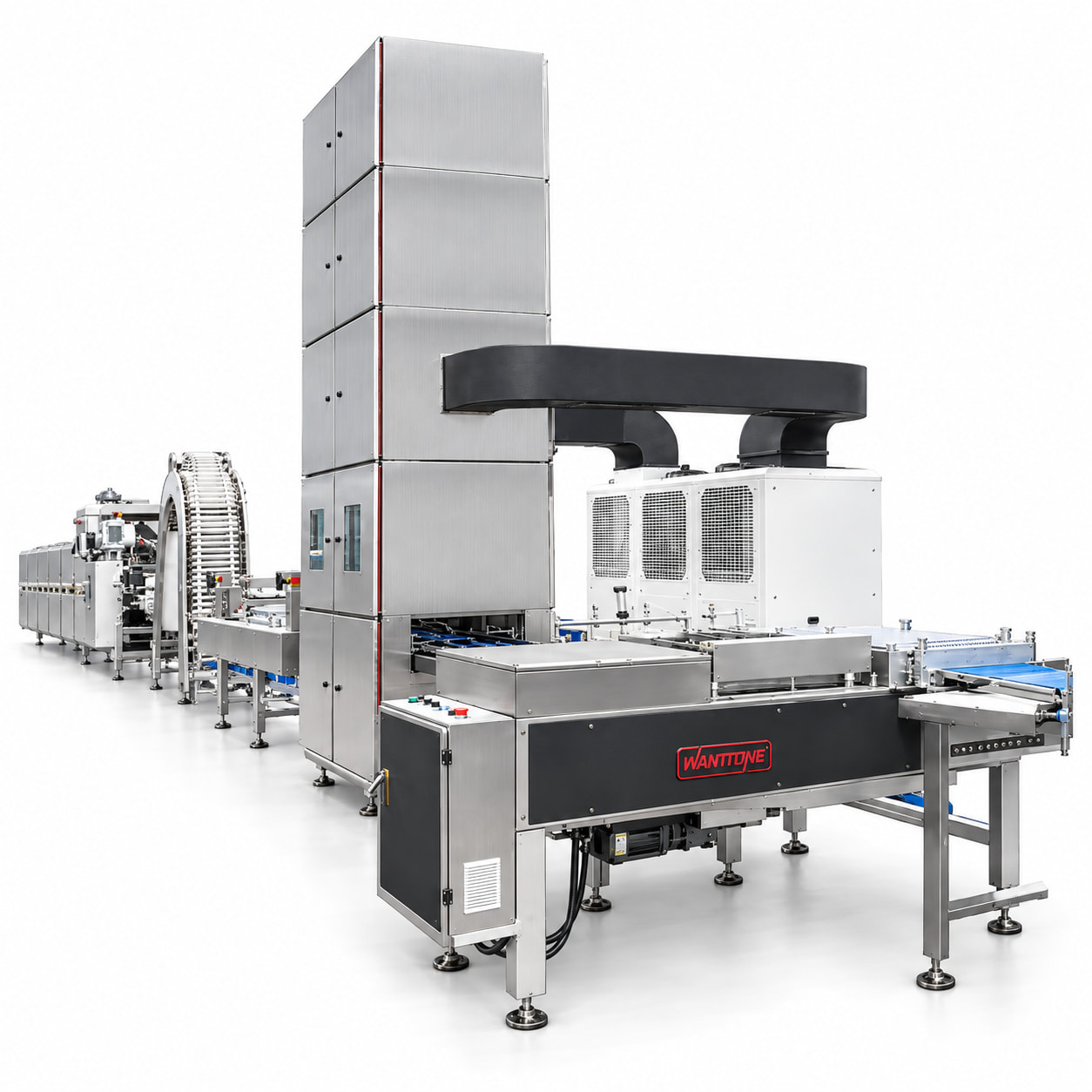
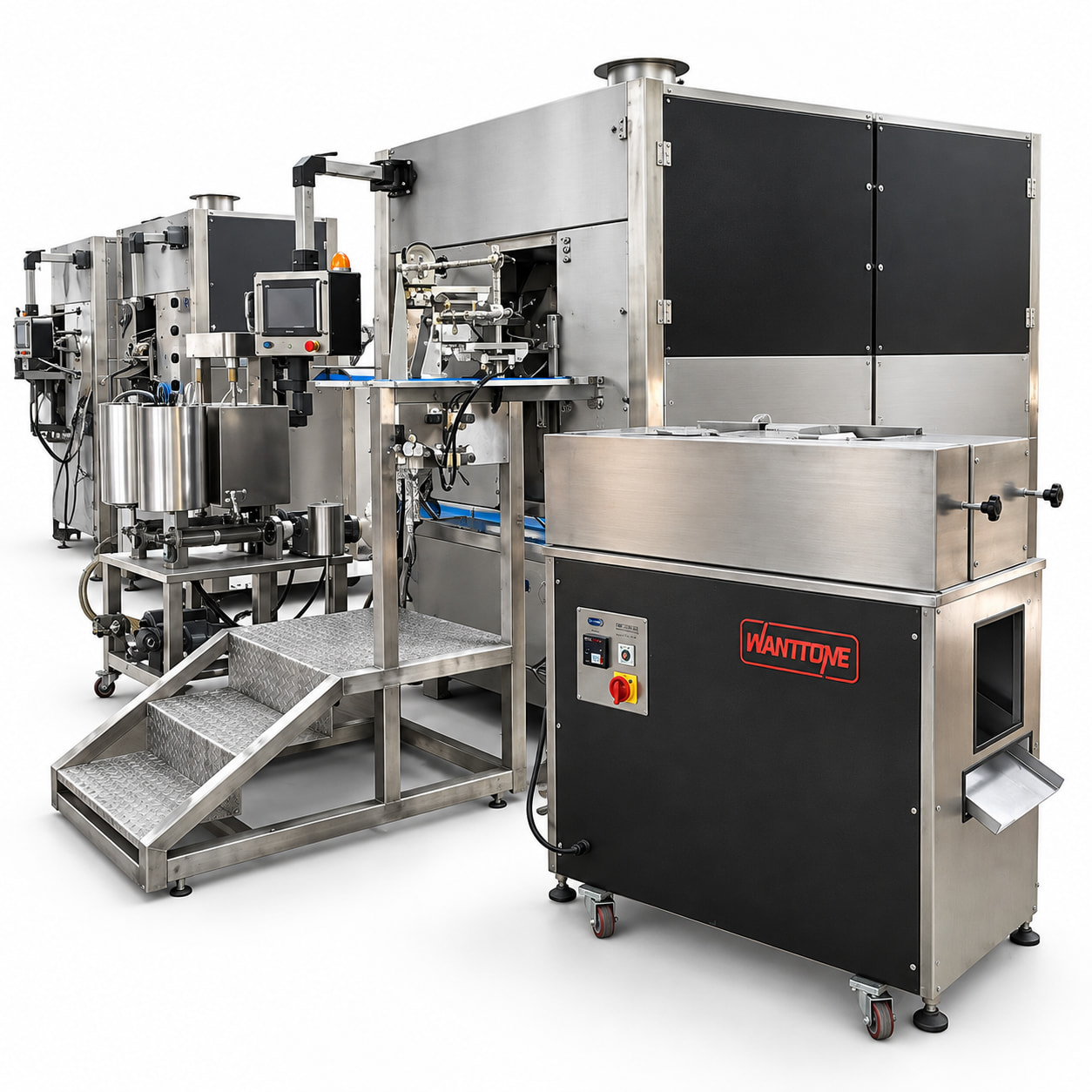
Reference illustration of Wafer Biscuit Production Line equipment

Product Overview

Wanttone’s wafer biscuit production line covers the complete process — batter mixing, automatic baking with 27 to 75 plate oven configurations, wafer sheet conditioning, cream spreading, laminating, cooling tunnel, cutting, and packaging — delivering uniform thickness, color, and crispness at industrial scale.

The line can also be configured for value-added wafer products: with dedicated forming and enrobing equipment, the same batter technology produces wafer balls, wafer rolls, and chocolate-coated wafer snacks, letting one investment serve multiple fast-moving SKUs.

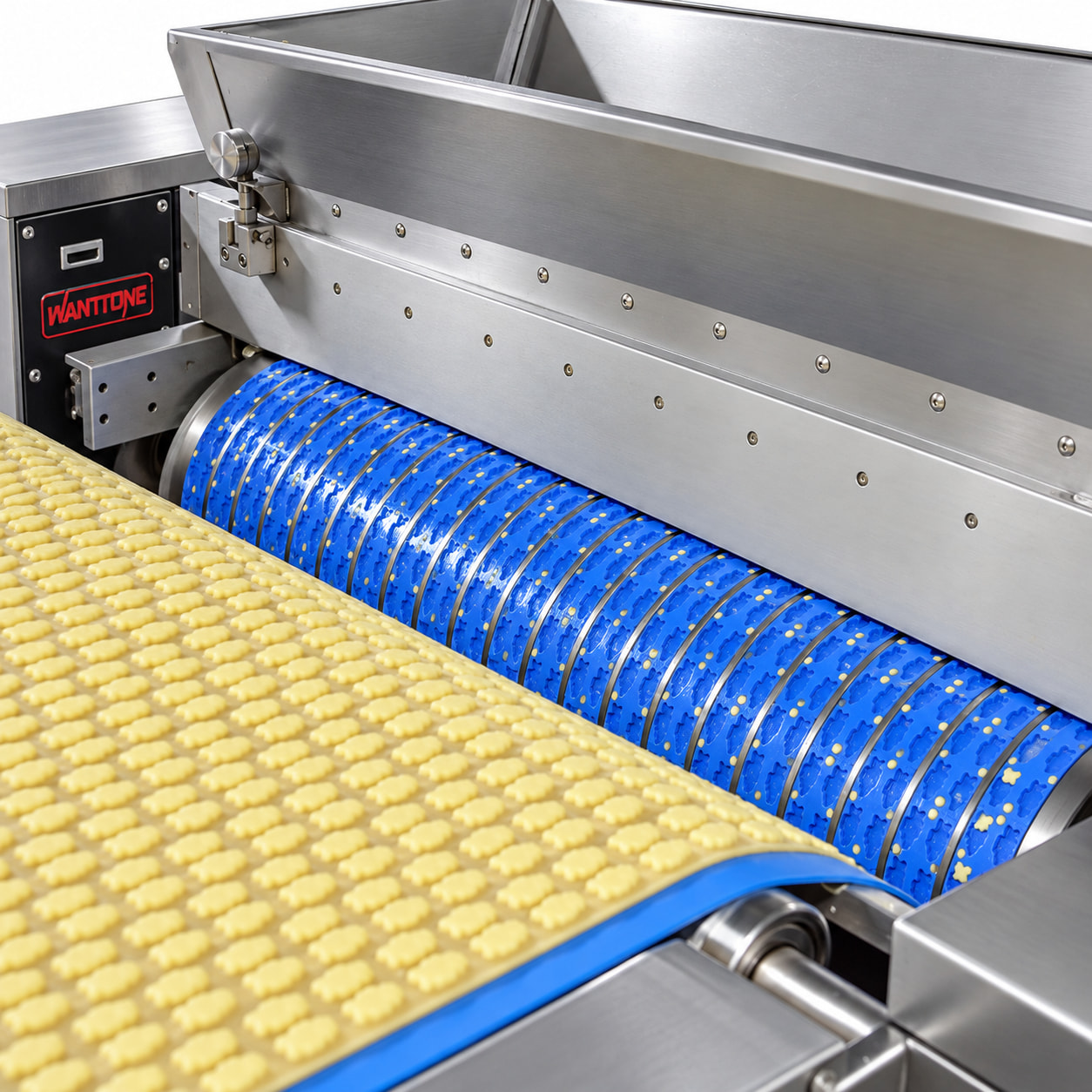
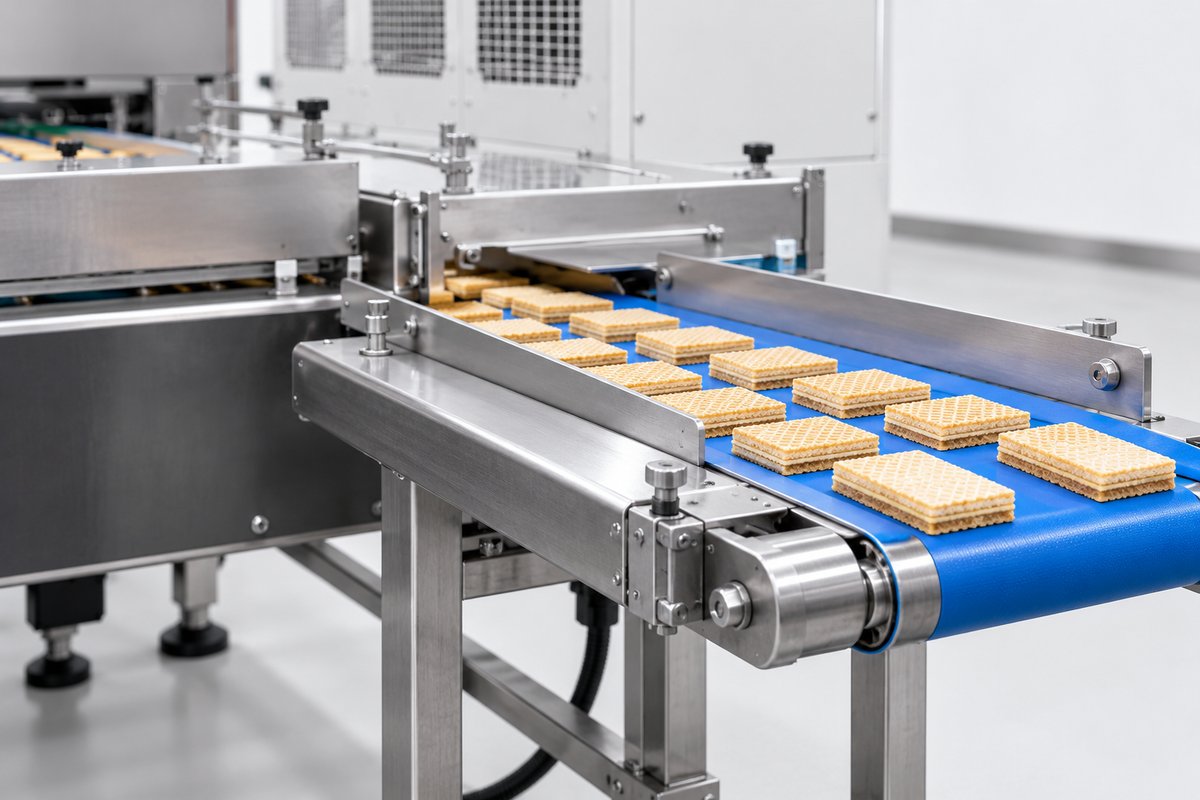
Small layered wafer biscuits on the existing wafer line's outfeed conveyor

Capabilities & Applications

Key Features

  • Scalable Plate Oven Configurations

    Baking ovens are available from 27 to 75 plates, so you match installed capacity precisely to your market size and upgrade later without redesigning the plant.

  • Uniform, Low-Waste Baking

    Precision-controlled plate temperature and batter dosing produce flat sheets with even color and thickness, minimizing trimming waste and broken sheets downstream.

  • Automatic Cream Spreading & Laminating

    A multi-layer cream spreading and sheet-laminating unit builds 3, 5, or more wafer-and-cream layers with an adjustable ratio, supporting classic, extra-cream, and flavored variants.

  • Cooling & Clean Cutting

    The cooling tunnel stabilizes the laminated block before the cutting machine divides it into fingers, squares, or family-size packs with smooth, crumb-free edges.

  • Multi-Product Platform

    Optional forming units extend the line to wafer balls, hollow wafer shells, and enrobed wafer snacks, maximizing return on one baking core.

  • Hygienic Food-Grade Construction

    Stainless steel contact parts, enclosed conveying, and easy-clean design support international food safety audits and fast flavor changeovers.

Applications

  • The line produces flat wafer biscuits (cream-filled wafer fingers, blocks, and family packs), chocolate-enrobed wafers, wafer balls, and hollow wafer shells for ice cream and confectionery fillings. Typical buyers include biscuit factories adding a wafer category, confectionery brands building layered wafer SKUs, private-label co-packers, and food groups in markets where wafer biscuits are a staple retail item.

From Preparation to Packing

  1. Batter Mixing

    Blend flour, water, and recipe ingredients into a smooth, stable batter for consistent depositing.

  2. Baking

    Deposit measured batter between heated plates and bake each sheet to the target color, thickness, and crispness.

  3. Conditioning & Cream Spreading

    Condition the baked sheets, then apply an even cream layer at the required filling ratio.

  4. Laminating

    Stack the coated sheets into a stable multi-layer wafer block with accurate layer alignment.

  5. Cooling

    Cool the laminated block so the cream sets and the wafer structure stabilizes before cutting.

  6. Cutting & Packaging

    Cut the stabilized block to the required format and transfer finished wafers cleanly into packing.

Specifications & Configuration

Technical Parameters for Wafer Biscuit Production Line
ItemSpecification
Baking oven plates27 – 75 plates (configurable)
CapacityApprox. 100 – 500 kg/h finished wafer (by plate count; customizable)
Cream layers3 – 5+ layers, adjustable ratio
Heating sourceGas / Electric (per local energy conditions)
Process flowBatter mixing → baking → conditioning → cream spreading → laminating → cooling → cutting → packaging
Optional unitsWafer ball forming, chocolate enrobing, flow packing
ConstructionFood-grade stainless steel contact parts
ControlPLC + touch screen

Note: Plate count, capacity, and layout are customized to your workshop and product range.

The Wanttone Difference

Wafer production succeeds or fails on baking uniformity and cream stability — disciplines Wanttone has refined across four decades of biscuit engineering since the 1981 Yangjiang Biscuit Equipment General Factory. As a manufacturer that also operates its own biscuit factory, we specify wafer lines against real production concerns: plate temperature recovery, batter viscosity control, changeover time, and cost per kilogram. Our in-house Foodstuff Machinery Research Institute supports wafer batter recipes and cream formulations, while ISO 9001 quality management governs materials, machining, and inspection. From whole-plant design and commissioning to operator training and lifetime after-sales service, Wanttone delivers a wafer biscuit production line built by engineers who understand both the machine and the product it makes.

Frequently Asked Questions

How do I choose the number of baking plates?

Plate count sets capacity: 27-plate ovens suit entry and mid-size plants, while 75-plate configurations serve high-volume factories. We size the oven to your target output and leave room for expansion.

What cream fillings can the line handle?

Vanilla, chocolate, hazelnut, strawberry, and other fat-based or sugar-based creams; the spreading system holds filling at stable temperature and viscosity for consistent layer weight.

Can the line also make wafer balls or enrobed wafers?

Yes — optional forming and chocolate enrobing units extend the line to wafer balls, hollow shells, and coated wafer snacks from the same batter system.

What heating sources are available?

Gas or electric heating, selected according to your local energy costs and supply conditions; oven zoning is tuned to your wafer thickness and color target.

What installation and training support is included?

Whole-plant layout design, on-site installation and commissioning, wafer batter and cream recipe guidance, operator training, and lifetime maintenance support.