Tray Rotary Oven

A tray rotary oven — also called a hot-air rotary rack oven — is a batch-type baking oven in which a full trolley of trays rotates slowly inside a forced-convection chamber, so every tray receives identical heat and airflow.

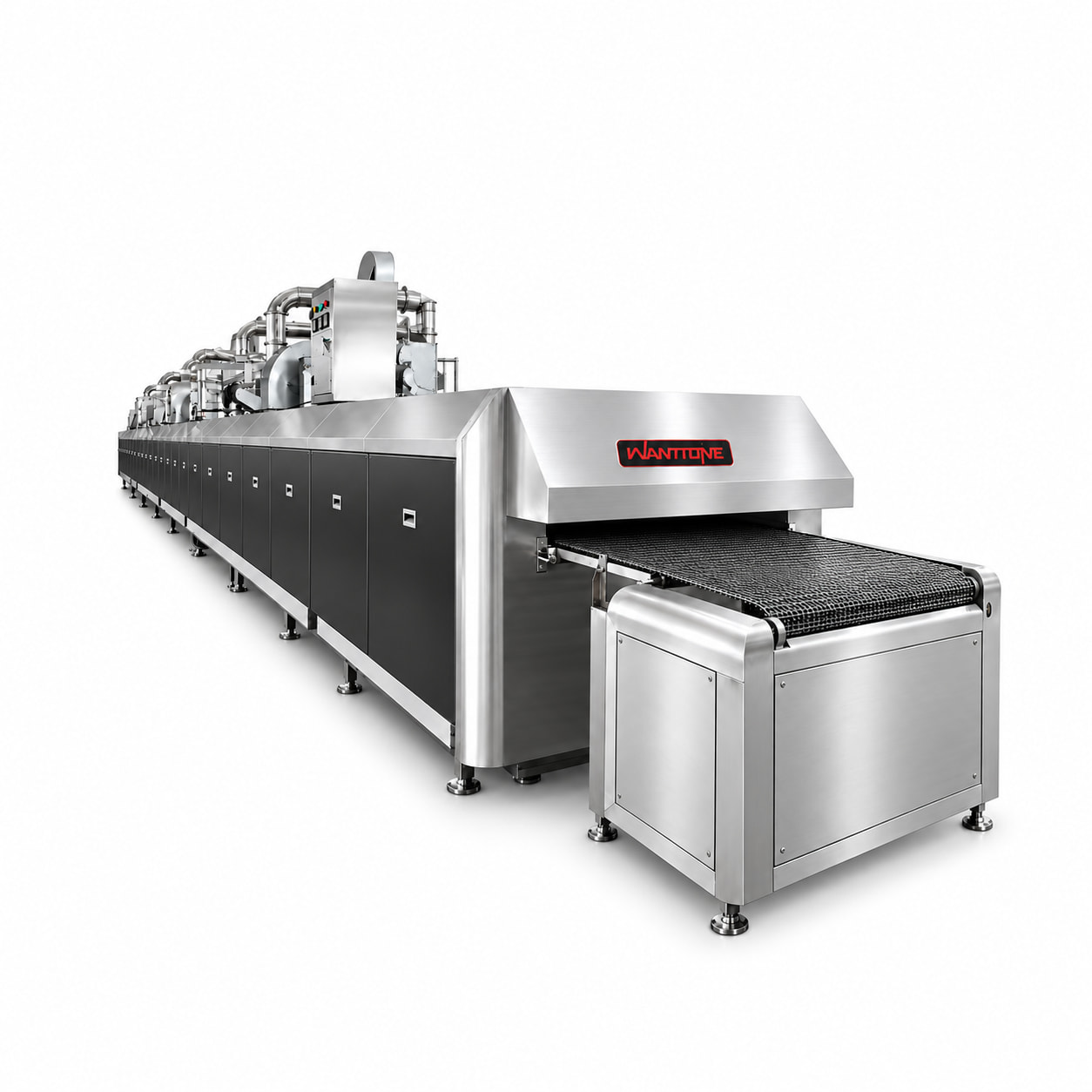
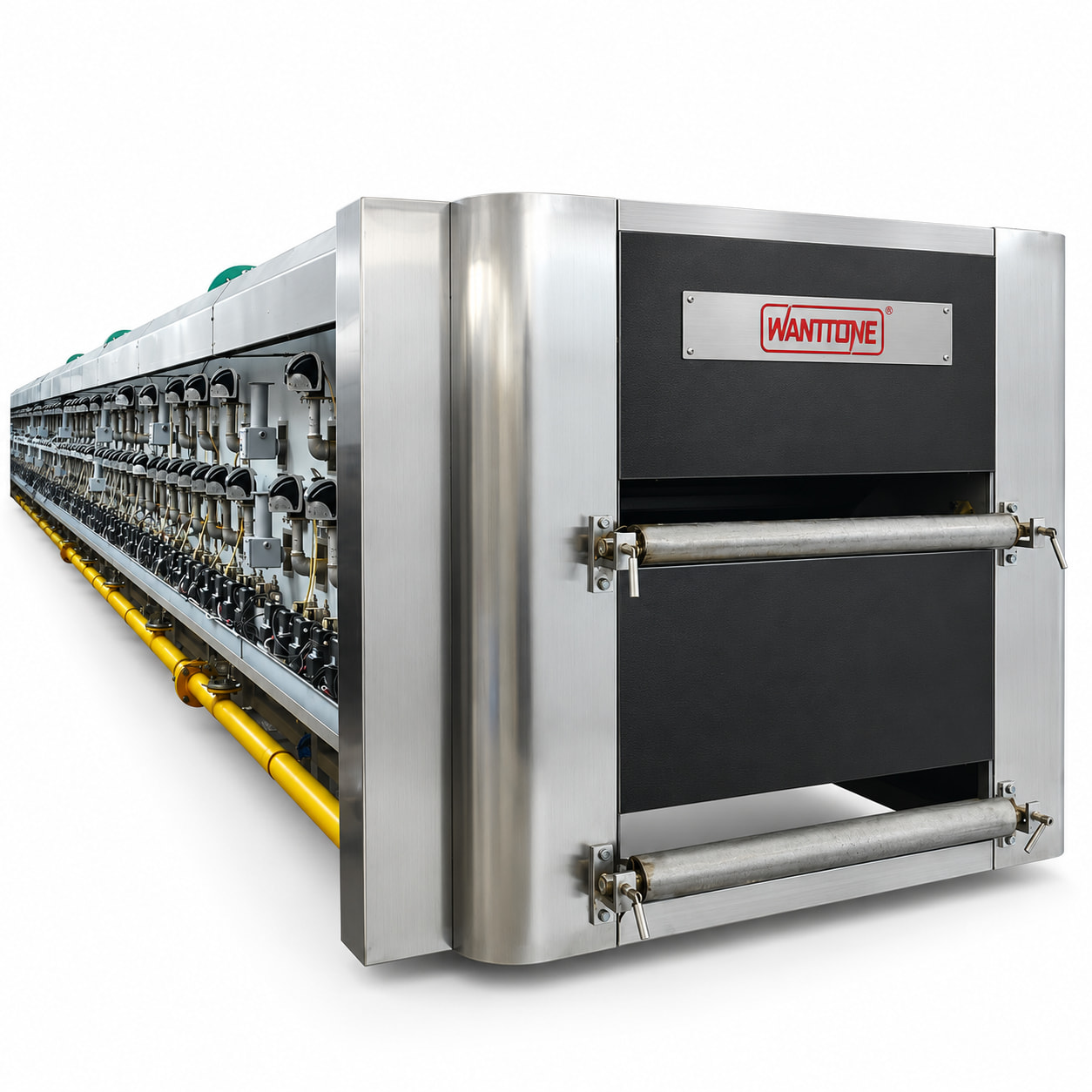
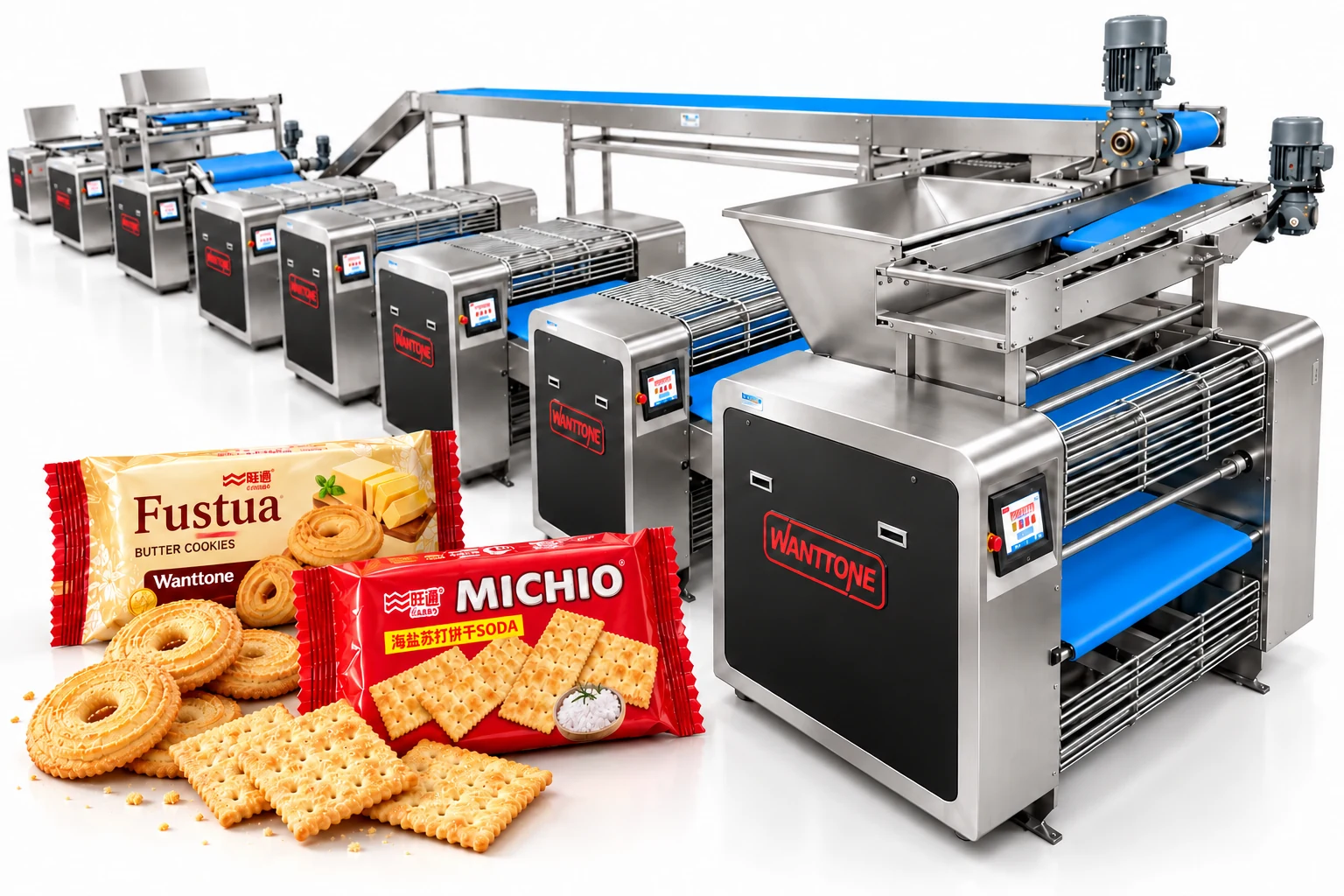
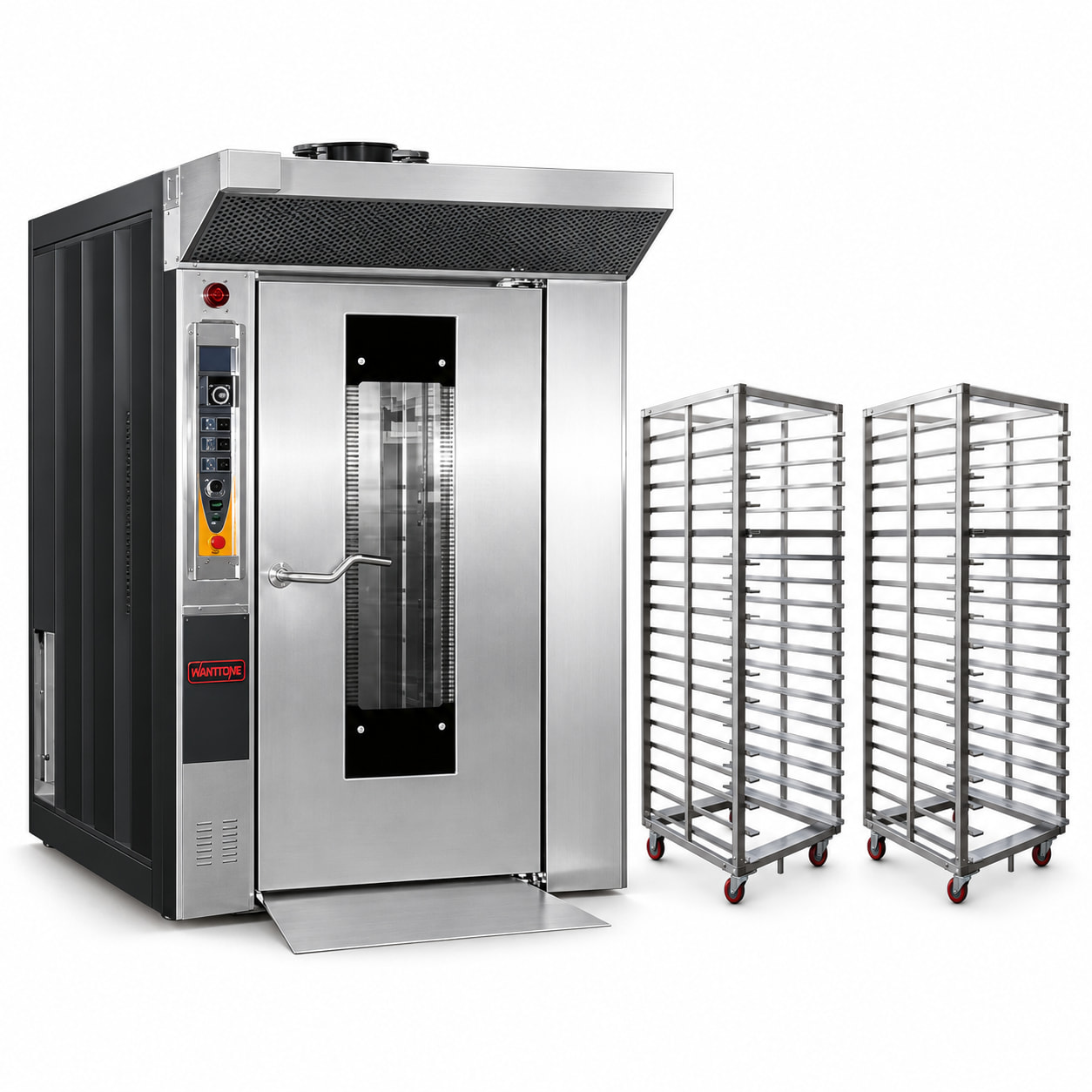
Reference illustration of Tray Rotary Oven

Product Overview

Wanttone’s tray rotary oven gives small and medium bakeries, in-store bakeries, hotels, and central kitchens industrial-grade baking quality without the footprint or capital of a continuous tunnel line: roll the loaded rack in, set the program, and roll out evenly baked bread, cookies, cakes, or pastries — top and bottom trays in the same color, no mid-bake tray swapping. Available in electric, gas, and diesel versions, the rotary rack oven is the most versatile single baking investment for growing bakery businesses.

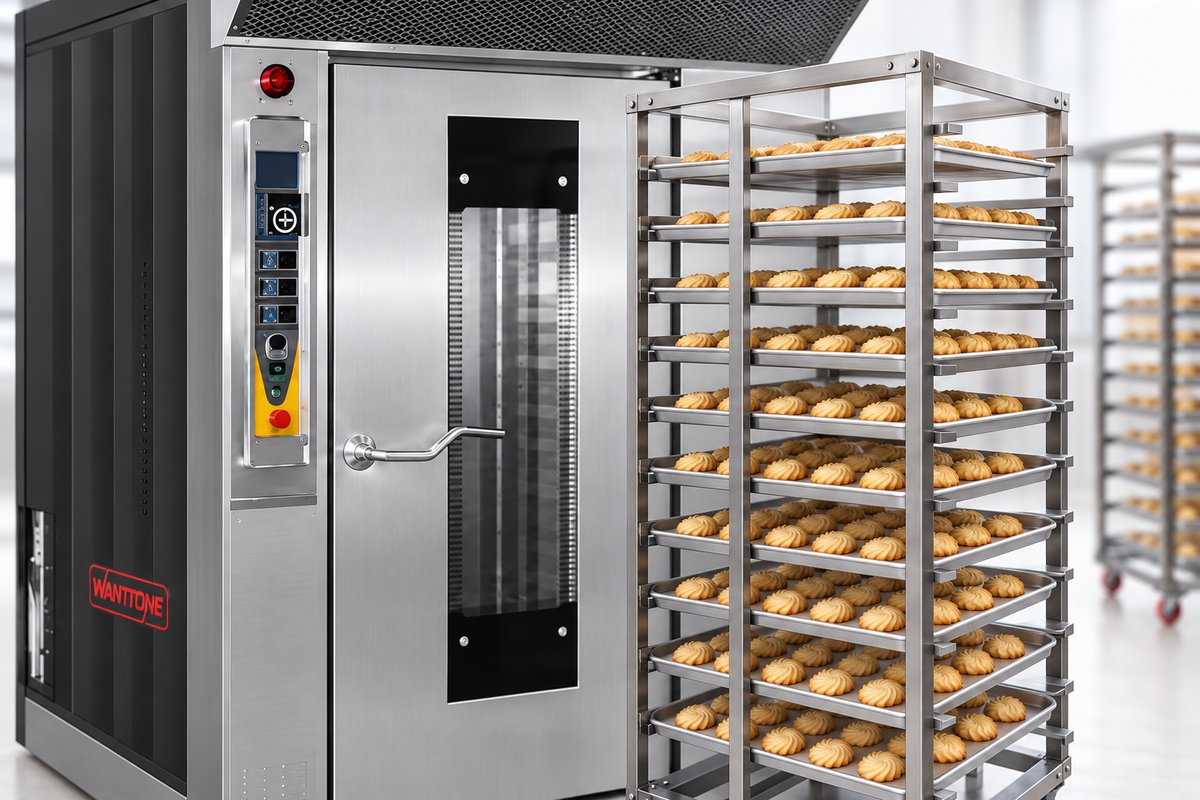
Baked cookies on trays in the existing rotary-oven rack

Capabilities & Applications

Key Features

  • Rotating Rack for Perfectly Even Baking

    The trolley rotates continuously during the bake, so every tray receives the same heat and color, eliminating manual tray rotation.

  • Powerful Hot-Air Convection

    High-volume circulation delivers fast, uniform heat transfer and shorter baking times across the full batch.

  • Multi-Product Versatility

    One oven bakes bread, buns, cookies, cakes, pastries, mooncakes, and tray-baked snacks — the ideal core oven for diversified bakery menus.

  • Compact Footprint, Full Rack Capacity

    Standard racks (400×600 mm trays, 16–32 tray racks) deliver serious output from a few square meters of floor space.

  • Flexible Energy Sources

    Electric, gas, or diesel heating matched to local energy costs; diesel and gas suit sites with limited electrical capacity.

  • Simple Program Control

    Digital or PLC touch-screen controls store time, temperature, and steam programs, so any trained operator can reproduce consistent results.

Applications

  • The Wanttone tray rotary oven serves small and medium-sized bakeries, bakery chains, in-store supermarket bakeries, hotels, and start-up food businesses. It bakes bread and rolls, cookies and biscuits, cakes and cupcakes, pastries, mooncakes, and other tray-baked products. For businesses outgrowing deck ovens, the rotary rack oven is the standard next step: continuous-quality results with batch-type flexibility and modest investment.

A Defined Role in the Line

  1. Upstream Requirements

    Confirm the incoming material or product condition, target throughput, infeed height and available utilities.

  2. Core Machine Function

    The trolley rotates continuously during the bake, so every tray receives the same heat and color, eliminating manual tray rotation.

  3. Downstream Integration

    Match discharge height, line speed, control signals, guarding and cleaning access with the next operation.

Specifications & Configuration

Technical Parameters for Tray Rotary Oven
ItemSpecification
Oven typeBatch hot-air rotary rack oven
Tray size400×600 mm standard (others on request)
Rack capacity16–32 trays per trolley (model dependent, customizable)
Heating sourceElectric / gas / diesel
Temperature rangeRoom temperature –300 °C, adjustable
SteamOptional steam injection system
Chamber constructionStainless steel interior, insulated body
ControlDigital controller or PLC + touch screen with program storage
DoorInsulated, heat-reflective viewing window

Rack size, tray dimensions, and heating power are customized to your products and daily output. Contact us for a model recommendation.

How to Choose

Is a tray rotary oven right for you?

Choose a rotary oven for batch production. If you bake a changing menu in batches, a rotary rack oven’s flexibility beats any continuous oven.

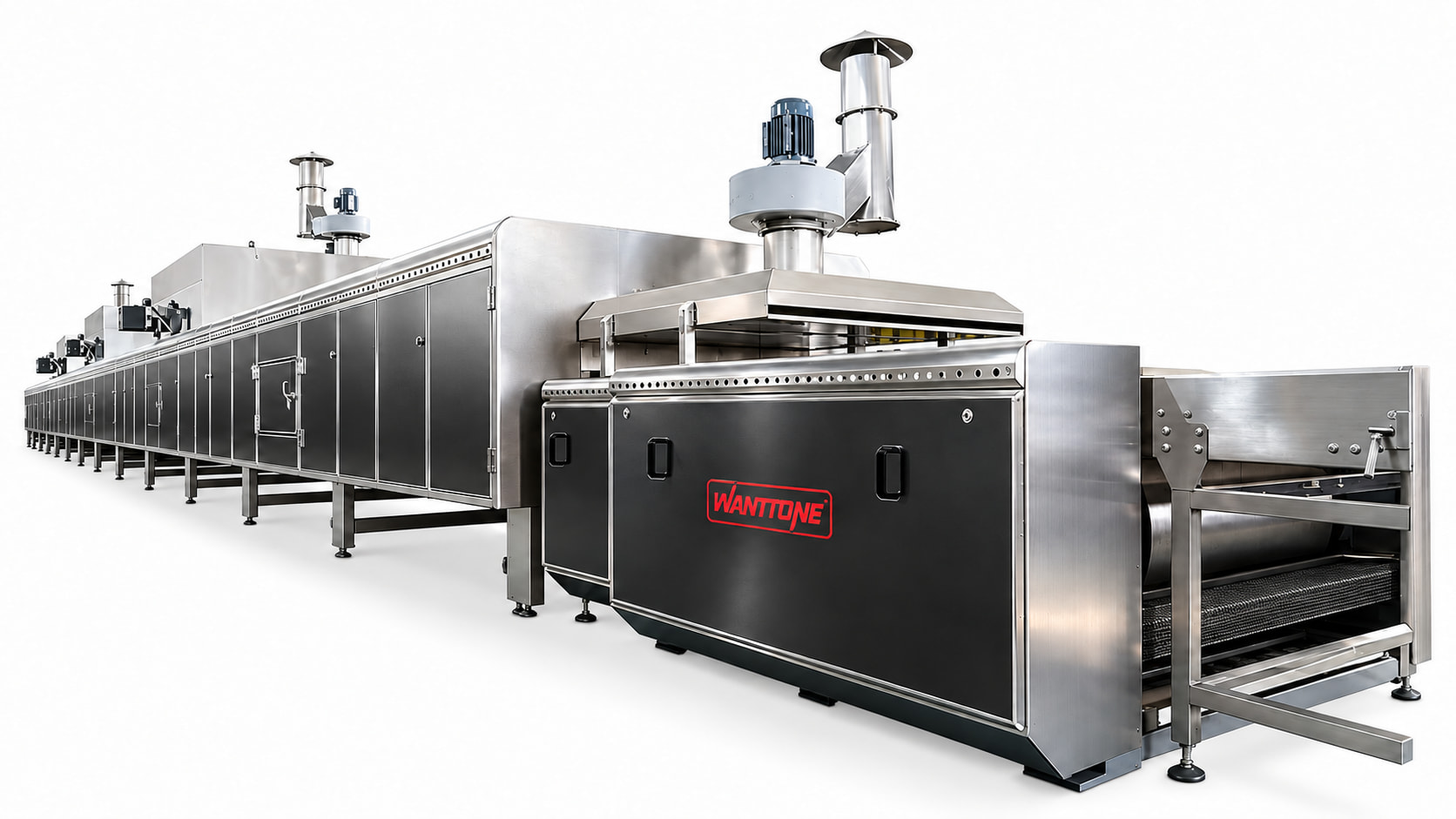
Choose a tunnel oven for continuous high volume. One product running for hours belongs on a biscuit tunnel oven; many customers also keep rotary ovens for R&D and small SKUs.

Size by racks, not by floor space. Estimate peak hourly output in trays, then select rack capacity and oven count with margin.

Match the energy source to your site. Electric suits stable, affordable power; gas and diesel cut costs where electricity is expensive or capacity-constrained.

Add steam if bread matters. Optional steam injection is a low-cost upgrade that visibly lifts bread and pastry quality.

The Wanttone Difference

Wanttone has built baking equipment since the 1981 Yangjiang Biscuit Equipment General Factory, and we operate our own food production today — so we know what a bakery needs from a rack oven: even color without babysitting, fast recovery between batches, and controls any staff member can run. As an ISO 9001-certified manufacturer with an in-house food machinery research institute, we build rotary ovens with the same discipline as our tunnel ovens. You get honest sizing advice, the right energy configuration, installation and operator training, and lifetime after-sales support — one accountable partner from the first batch to the ten-thousandth.

Frequently Asked Questions

What is the difference between a tray rotary oven and a tunnel oven?

A rotary oven bakes in batches — a loaded rack rotates inside a convection chamber, ideal for varied menus and moderate volumes. A tunnel oven bakes continuously on a moving belt for single products at high capacity.

What capacity should I choose?

Capacity is defined by rack size — typically 16 to 32 trays of 400×600 mm per batch. Share your peak daily output and we will recommend the rack size and oven count.

Which heating source is best?

The heating source is selected to match the product, production target and site energy conditions.

What products can I bake in one oven?

Bread, buns, cookies, biscuits, cakes, pastries, mooncakes, and most tray-baked products, with programs stored per product.

Is the oven difficult to operate and maintain?

No. Programmed controls make operation simple, and routine maintenance covers burner or element checks, seals, and normal cleaning. Wanttone supplies training, spare parts, and lifetime support.