Hybrid Tunnel Oven

A hybrid tunnel oven gives biscuit manufacturers something no single-energy oven can: the freedom to choose — or combine — the ideal heating method for every product and every zone.

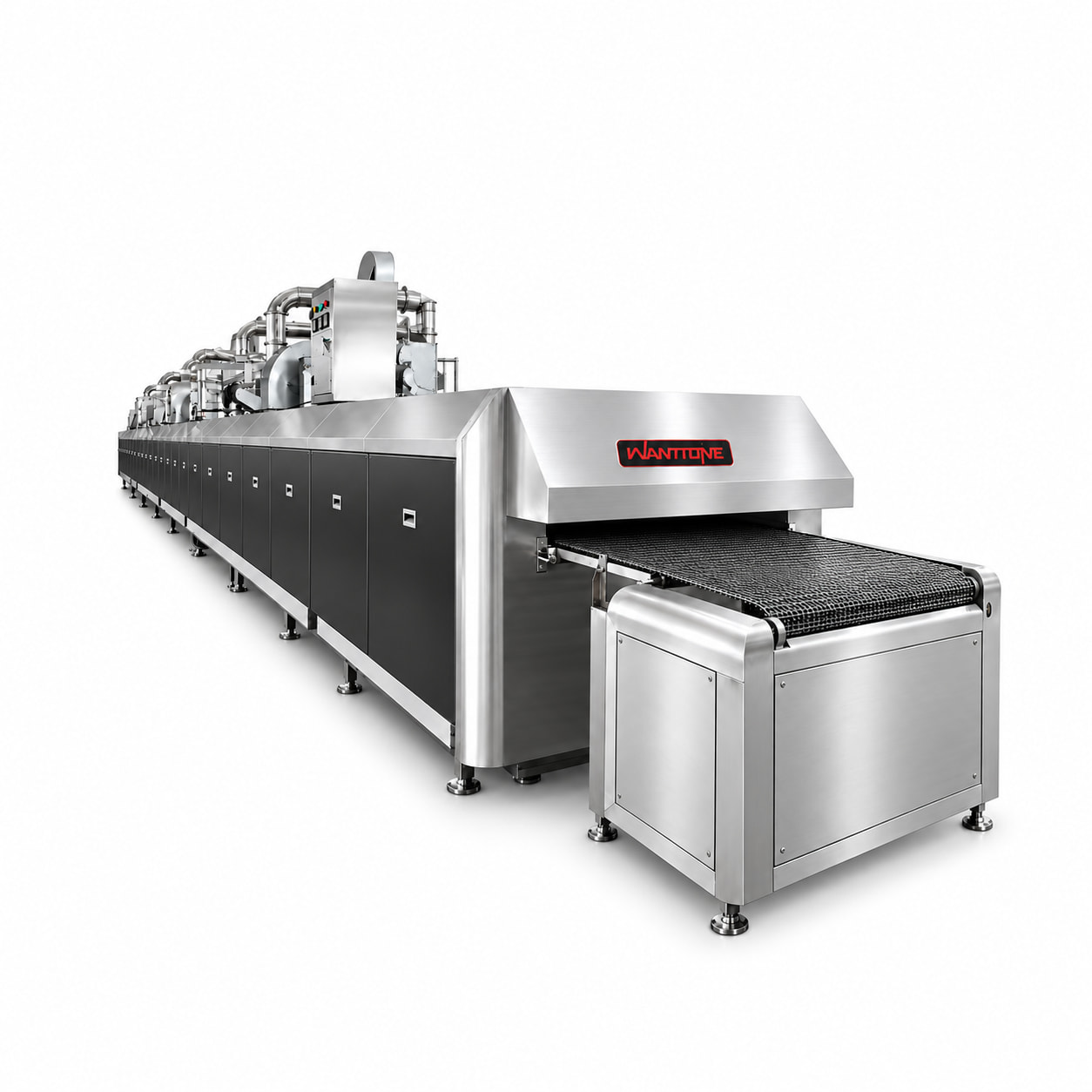
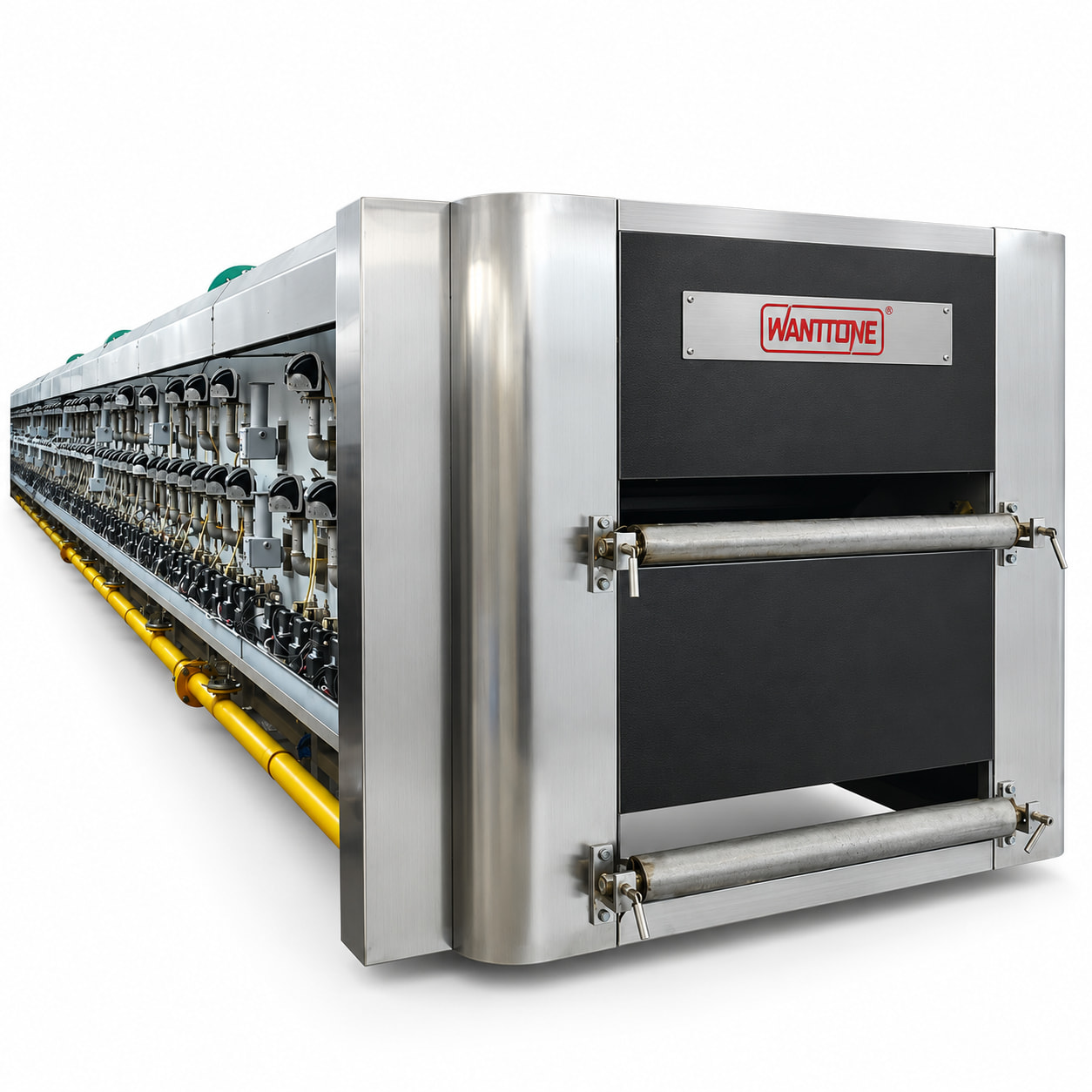
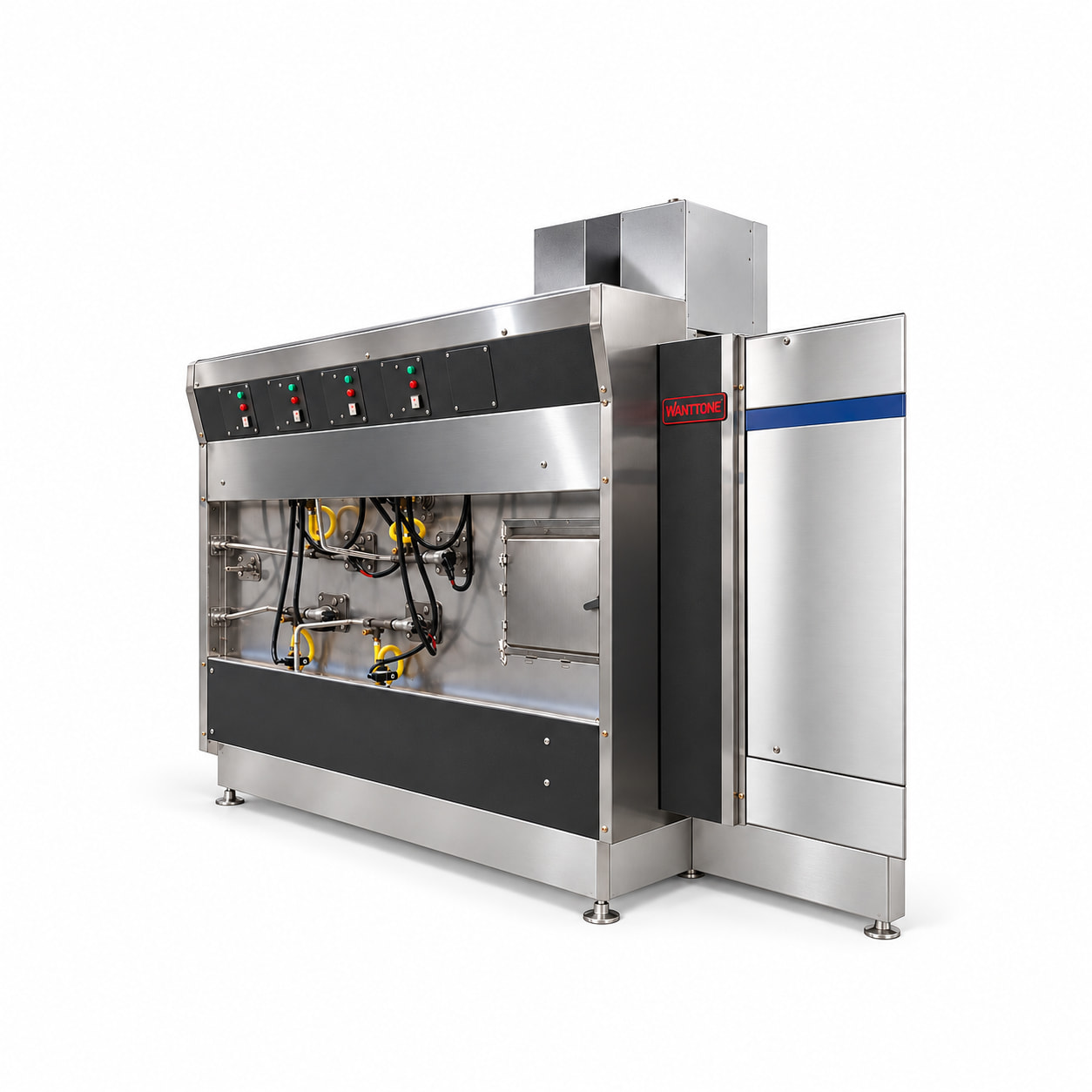
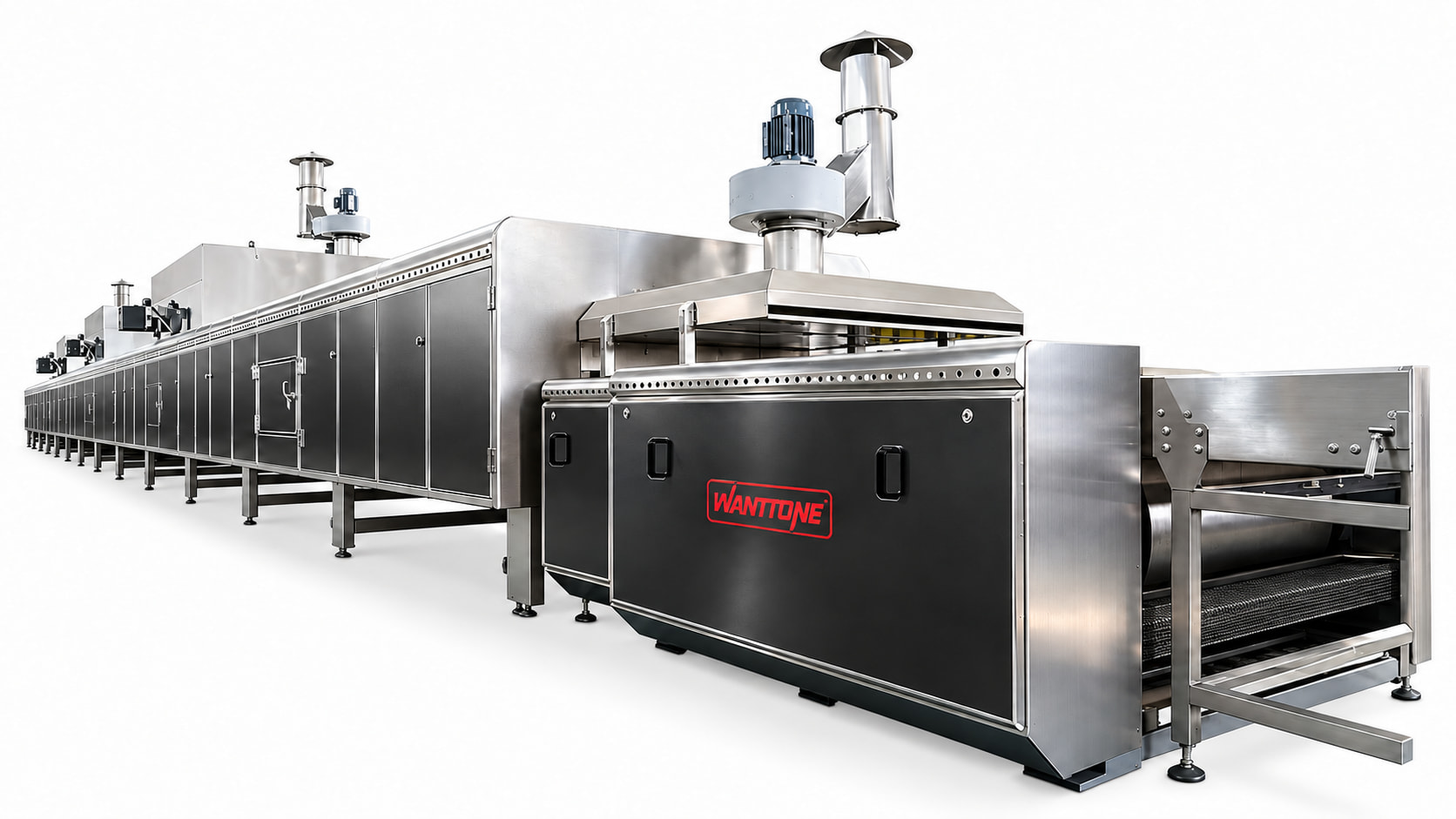
Reference illustration of Hybrid Tunnel Oven

Product Overview

Wanttone’s hybrid tunnel oven integrates gas heating, electric heating, and infrared heating in one continuous baking tunnel, letting operators assign direct-fired gas to zones that need fast, vigorous heat, hot-air or electric heating to zones that need precision, and infrared where deep, even penetration is required. The result is one biscuit baking oven that handles hard biscuits, soft biscuits, soda crackers, butter cookies, and pretzels on a single line — with energy optimization built in and an optional waste heat recovery system that recycles exhaust energy back into the process. For multi-product factories and plants facing uncertain energy prices, the hybrid tunnel oven is the most future-proof investment in the category.

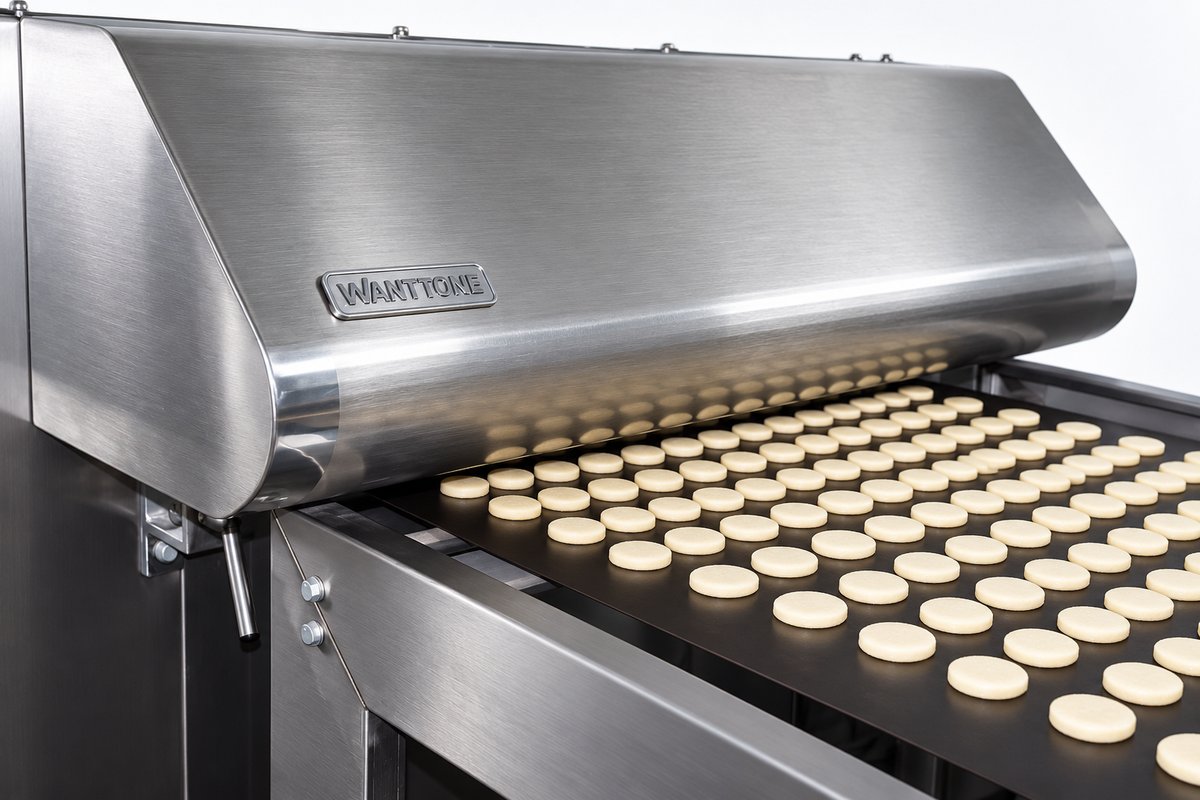
Rows of raw cookie dough discs entering a tunnel oven on a steel baking band

Capabilities & Applications

Key Features

  • Three Heating Methods, One Oven

    Gas, electric, and infrared heating can be selected or combined zone by zone, so each stage of the baking curve uses the most effective — and most economical — energy source.

  • Infrared for Inside-Out Uniformity

    Infrared heating penetrates deeper into the biscuit, achieving even baking inside and out and eliminating the “dark surface, wet core” problem on thick products.

  • Direct-Fired + Hot-Air Zone Architecture

    A proven hybrid layout uses direct combustion in the first zone (typically 9–15 m) for rapid temperature rise, followed by hot-air circulation zones for uniform heating and consistent surface color.

  • Zoned Automatic Temperature Control

    The oven body is divided into 2–4 zones according to length, each with automatic temperature control and a digital display for precise, repeatable baking curves.

  • Optional Waste Heat Recovery

    A heat-recovery system captures exhaust energy and returns it to the process, cutting fuel consumption and minimizing environmental impact.

  • Designed for 24/7 Operation

    High-power heating handles preheating; an energy-saving mode maintains constant temperature during steady baking, optimizing consumption around the clock.

  • Hot Air Circulation with Moisture Management

    The internal circulation system separates wet and dry gases, promoting even airflow so products bake uniformly with consistent color and taste.

  • Diverse Conveyor Belt Options

    Rod-type, chain plate-type, mesh, and solid steel belts are available, selected to match your product and process for stable conveying through the bake.

Applications

  • The Wanttone hybrid tunnel oven is built for multi-product factories: hard biscuits, soft biscuits, soda crackers, butter cookies, and pretzel-type products can all run on one line by re-mapping heating modes per recipe. It is particularly valuable where energy supply or pricing is uncertain — gas, electric, and infrared capacity can be rebalanced as tariffs change — and where a single oven must serve a wide product portfolio without compromising quality. High-capacity plants benefit from direct-fired front zones for throughput; premium cookie ranges benefit from the gentle, uniform finish of hot-air and infrared rear zones. Typical natural gas consumption on gas-fired zones runs approximately 40–60 m³ per ton of biscuits, varying with recipe and process.

A Defined Role in the Line

  1. Upstream Requirements

    Confirm the incoming material or product condition, target throughput, infeed height and available utilities.

  2. Core Machine Function

    Gas, electric, and infrared heating can be selected or combined zone by zone, so each stage of the baking curve uses the most effective — and most economical — energy source.

  3. Downstream Integration

    Match discharge height, line speed, control signals, guarding and cleaning access with the next operation.

Specifications & Configuration

Technical Parameters for Hybrid Tunnel Oven
ItemSpecification
Heating methodsGas (direct/indirect) + electric + infrared, combinable per zone
Fuel options (gas zones)Natural gas / LPG
Oven lengthProject-specific, modular (first direct-fired zone typically 9–15 m)
Temperature zones2–4 zones, independent automatic control, digital display
Burning rod output (direct zones)≥12 kW per rod
Burner output (hot-air zones)70–200 kW per burner
Chamber material2.3 mm aluminized plate; stainless-steel exterior
InsulationRock wool / aluminum silicate with sealed joints
Conveyor optionsRod-type, chain plate-type, mesh belt, steel belt
Heat recoveryOptional waste heat recovery system
Typical NG consumption (gas zones)40–60 m³ per ton of biscuits
OperationContinuous 24/7 design; energy-saving mode during constant baking

Every hybrid oven is engineered to order. Wanttone will propose the heating-mode map, zone layout, and belt type for your product mix — contact us for a project datasheet.

How to Choose

Deciding whether a hybrid tunnel oven fits your plant:

Choose hybrid if you run multiple product categories on one line — each product gets its own heating-mode recipe rather than a compromised single-mode bake.

Choose hybrid if energy prices or supply are unstable — the ability to shift load between gas and electricity is a hedge against tariff swings and supply interruptions.

Choose hybrid if quality is your differentiator — infrared plus hot-air finishing delivers the inside-out uniformity premium biscuits demand.

Confirm infrastructure early. Hybrid ovens need both adequate gas supply and sufficient electrical capacity; Wanttone verifies both during project design and sizes each energy system accordingly.

Single-product, single-fuel plants may be better served by a dedicated gas or electric tunnel oven — our engineers will tell you honestly which configuration minimizes your cost per ton.

The Wanttone Difference

Specifying a hybrid tunnel oven is an engineering decision as much as a purchase — and Wanttone is uniquely qualified to engineer it. Founded on the 1981 Yangjiang Biscuit Equipment General Factory and strengthened by our in-house food machinery research institute, we have spent more than 40 years studying how heat moves through biscuit dough — including a research project for the Chinese military’s Quartermaster Research Institute to develop a fully automatic production line for compressed biscuits. Because we also operate our own biscuit factory, we validate hybrid zone configurations on real production, not theory. From factory design and process optimization through commissioning, worker training, and lifetime maintenance by dispatched technicians, Wanttone delivers a complete, ISO 9001-certified, one-stop service — with dual strengths you can verify in every batch we bake ourselves.

Frequently Asked Questions

When should I choose a hybrid oven instead of a pure gas or electric oven?

Choose hybrid when you bake multiple product types on one line, when local energy prices or supplies are volatile, or when premium quality demands infrared-assisted uniformity. Single-product plants with stable, cheap gas or electricity are usually better served by a dedicated gas or electric oven.

How are heating modes assigned to zones?

Typically, direct-fired gas covers the first zone for rapid heat-up and strong structure development, while subsequent zones use hot-air circulation, electric, or infrared heating for uniform finishing and coloring. The exact map is engineered from your recipes and validated during commissioning.

Does a hybrid oven cost more to run?

Properly configured, it usually costs less. Each zone uses its most economical energy source, energy-saving mode trims consumption during steady baking, and the optional waste heat recovery system recycles exhaust energy. We model cost per ton against your local tariffs before you commit.

What is the preheating strategy?

High-power heating brings all zones to temperature quickly; the control system then switches to energy-saving mode for constant baking, so you do not pay full-power rates for the whole shift.

What maintenance does a hybrid biscuit baking oven require?

Maintenance combines the routines of gas and electric systems: burner and valve-train inspection on gas zones, element and fan checks on electric zones, plus belt tracking and insulation seals throughout. Wanttone supplies a unified preventive maintenance schedule and lifetime technical support.

Can the oven adapt if my local energy conditions change?

Yes — that is the core advantage. Gas and electric capacities are engineered with enough headroom to rebalance load between energy sources as tariffs or supply conditions evolve. Discuss your long-term energy outlook with our engineers during the design stage.