Fried Potato Chips Production Line

A fried potato chips production line transforms potato flakes and starch into crispy, uniformly shaped fried chips through fully automatic mixing, sheeting, cutting, frying, de-oiling, seasoning, and stacking.

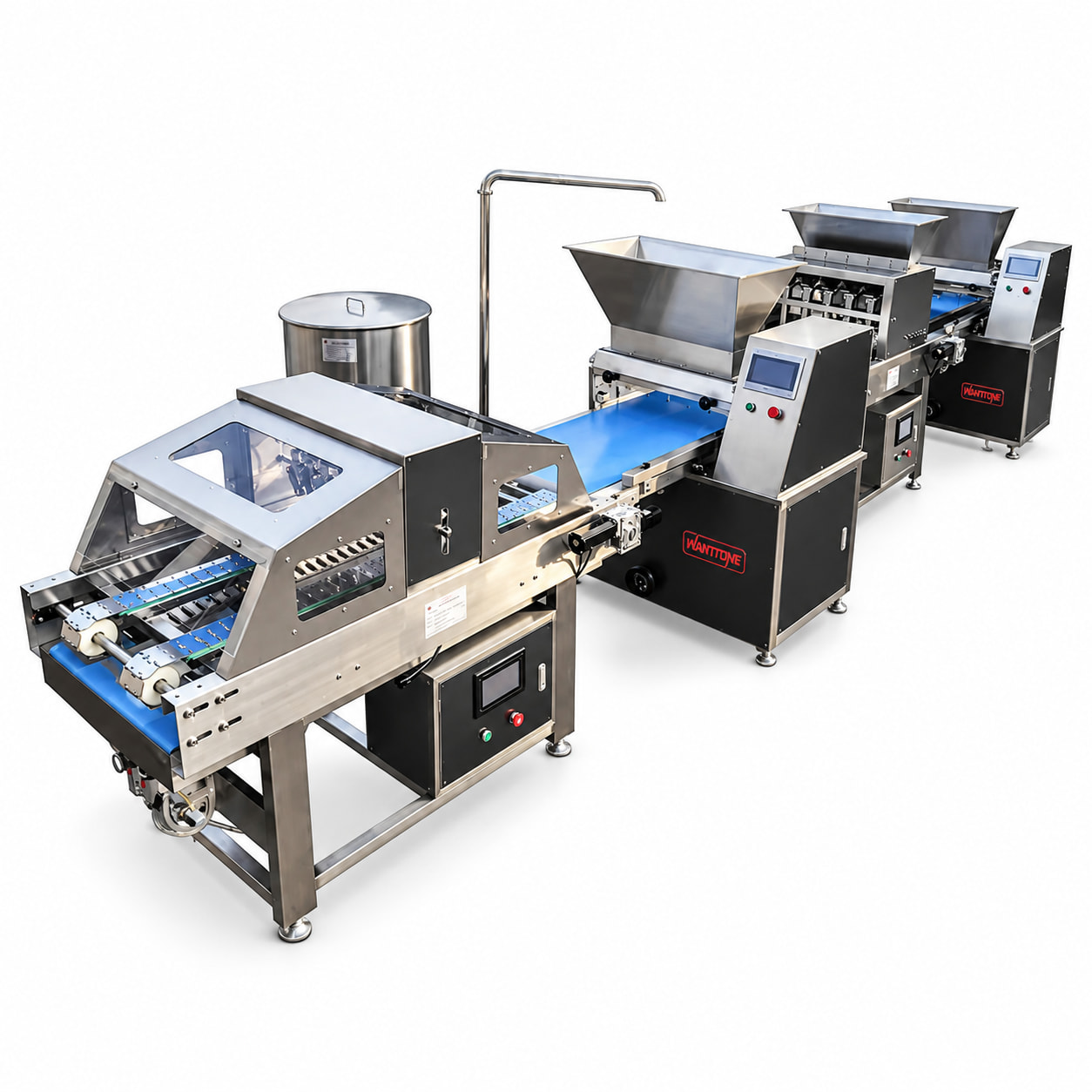
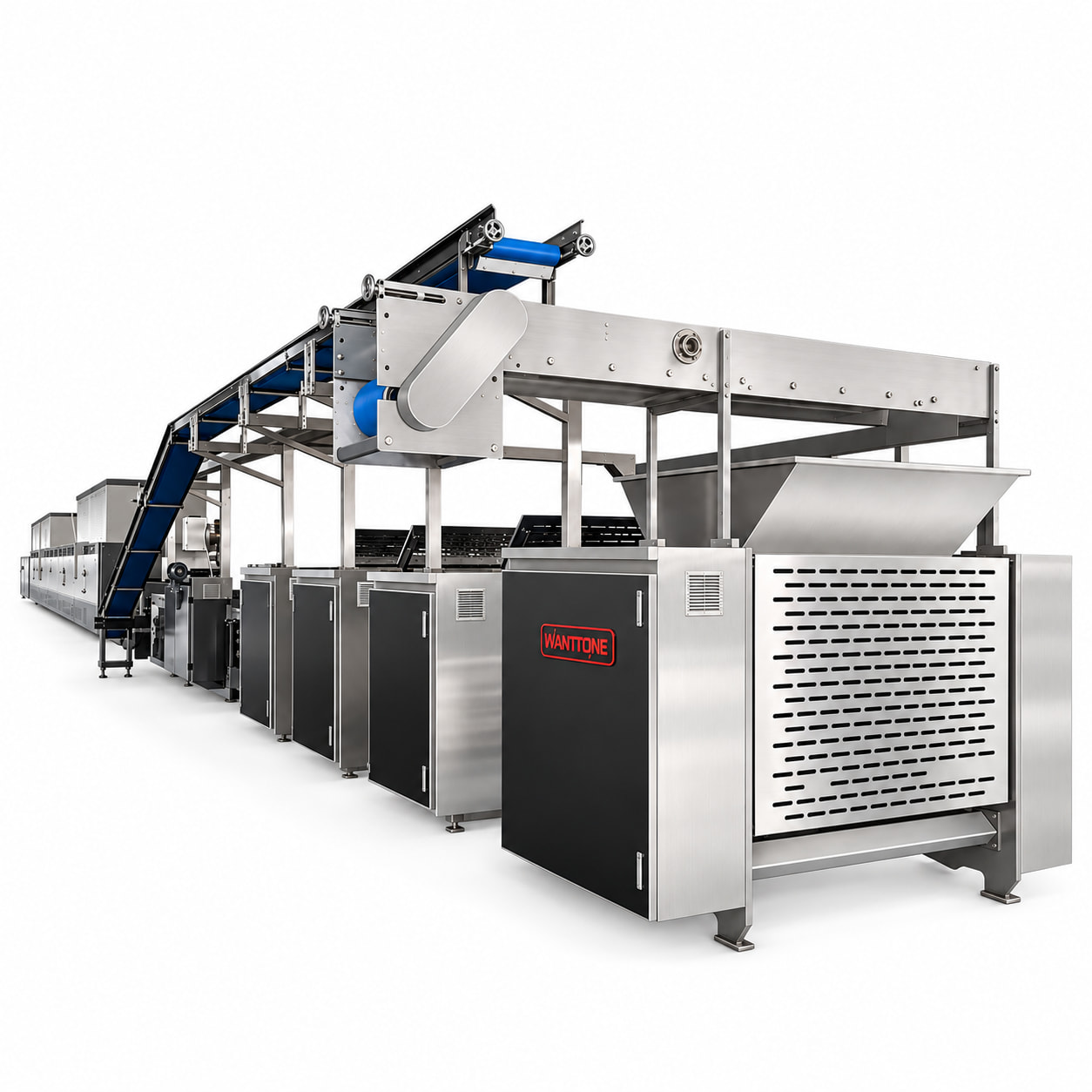
Reference illustration of Fried Potato Chips Production Line equipment

Product Overview

Wanttone’s fried potato chips production line is engineered for composite and stackable chips made from whole potato flour, tapioca starch, and corn starch, with standard capacities of 100–600 kg/h and custom plants for larger outputs.

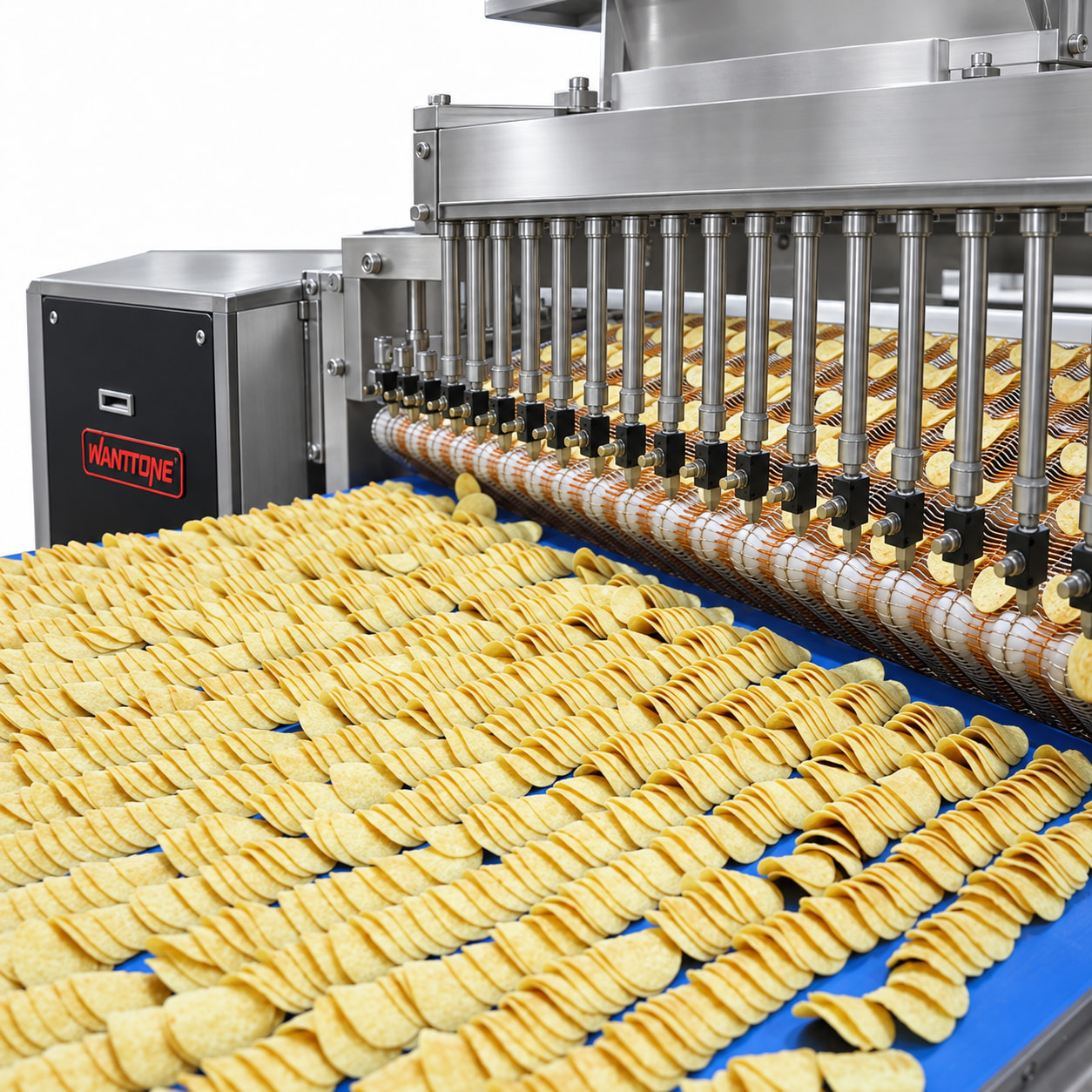
The line’s edge lies in raw material economics and consistency. Powdered materials are pressed by large-diameter chrome-plated gauge rollers into ultra-thin sheets, rotary-cut into precise shapes, and fried in molds that fix the signature curved form. A closed scrap recycling system crushes trimmings and returns them to mixing at a controlled ratio — maximizing material utilization and lowering cost per kilogram.

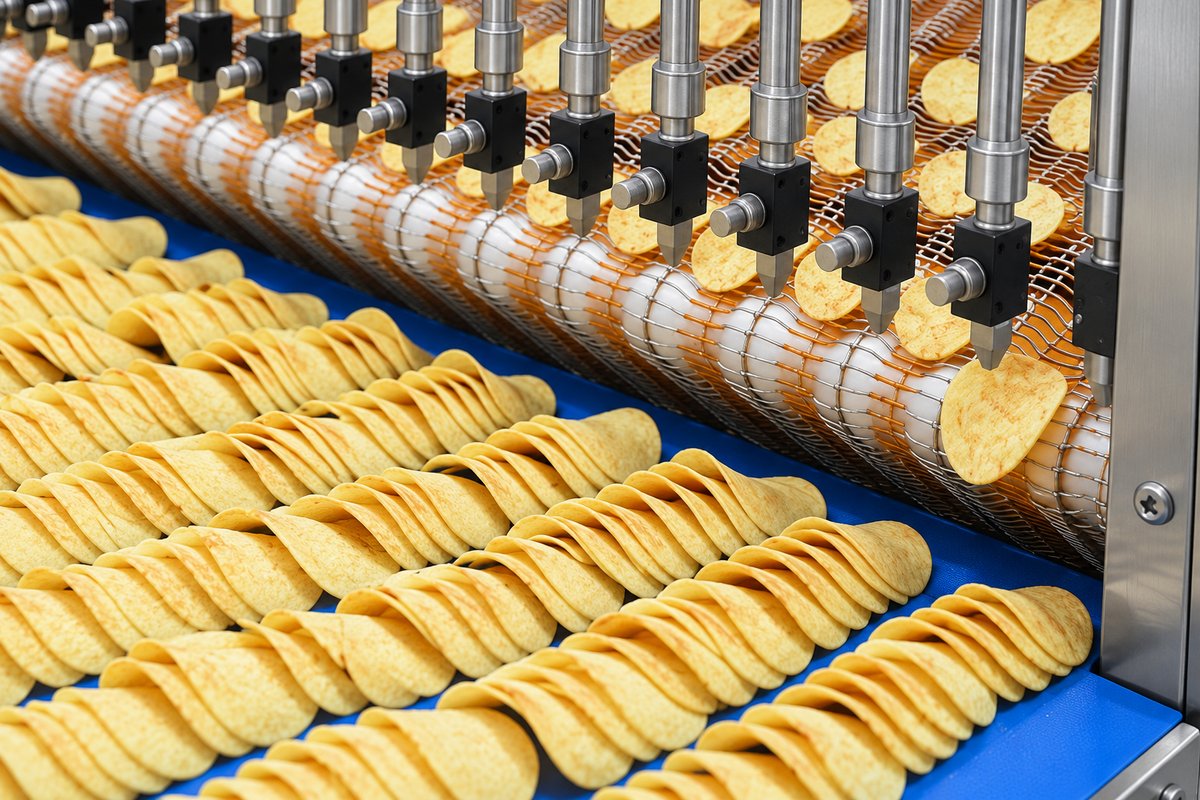
Golden curved fried chips transferring from the wire conveyor to a blue food-grade belt

Capabilities & Applications

Key Features

  • Ultra-Thin Precision Sheeting

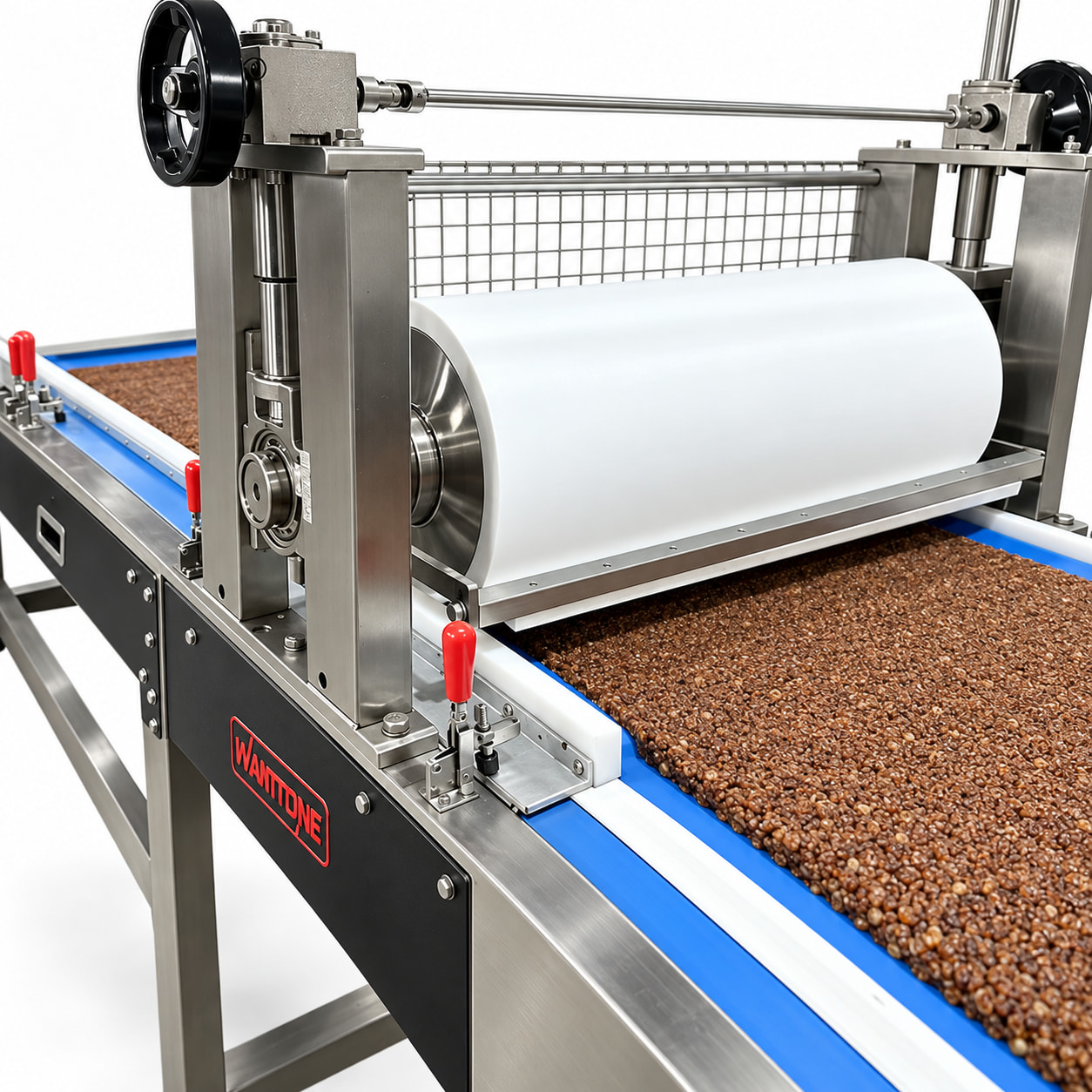
    Independently motor-driven hard-chrome gauge rollers press stable ultra-thin sheets with low weight deviation; thickness is set electrically via a touch screen.

  • Professional Frying System

    The fryer body is built from 304 stainless steel with 316 stainless frying molds; the circulating oil circuit includes automatic slag discharge and a double-layer filter to keep oil clean and chips consistent.

  • Anti-Stick De-Molding

    Vibration and pneumatic de-molding plus a sticky-mold scrap conveyor prevent chips from adhering to molds, protecting product shape and oil quality.

  • Closed-Loop Scrap Recycling

    Cut trimmings are crushed and air-conveyed back into secondary mixing for uniform old-to-new ratios and near-total raw material utilization.

  • Dust-Free Powder Supply

    An enclosed powder feeding system keeps the workshop clean, hygienic, and compliant with modern food plant standards.

  • Flexible, Budget-Matched Design

    Fully automatic or semi-automatic configurations, 100–600 kg/h capacities, layouts designed around your factory space, and chip molds customized to your shapes.

Applications

  • The line produces fried composite potato chips, stackable curved chips, and similar fried snacks such as banana chips. It suits manufacturers entering the composite chip segment, brands building canister-type products, producers replacing imports, and co-packers — with configurations scaling from compact startup plants to fully automatic lines.

From Preparation to Packing

  1. Product Preparation

    Confirm the recipe, material condition and batch sequence required for stable production.

  2. Forming & Primary Processing

    Configure the product geometry and process conditions around the agreed finished product.

  3. Thermal or Main Process

    Coordinate time, temperature, energy and line speed with the target output and quality.

  4. Cooling & Finishing

    Stabilize and finish the product before downstream handling and packing.

  5. Packing Handover

    Deliver the product in the orientation, spacing and condition required by the agreed pack format.

Specifications & Configuration

Technical Parameters for Fried Potato Chips Production Line
ItemSpecification
Working widthUp to 1,200 mm
Capacity range100 – 350 kg/h or 300 – 600 kg/h (custom plants available)
Raw materialsPotato flakes/flour, tapioca starch, corn starch
Fryer material304 stainless steel body, 316 stainless frying molds
Oil systemCirculating circuit, auto slag discharge, double-layer filter
Main unitsPowder feeding → dry/wet mixing → sheeting → rotary cutting → separating → frying → de-oiling/cooling → seasoning → stacking
ControlPLC control system

Note: Capacity, automation level, and layout are customized to budget and workshop.

The Wanttone Difference

Wanttone designs fried chip lines with the discipline of a manufacturer that has built forming and thermal-processing machinery since 1981 — and the pragmatism of a company that runs its own food production. Our rotary cutting, sheeting, and conveying technologies come directly from decades of high-output biscuit lines, while our service model was shaped by our own factory’s realities: recipe stability, oil management, and cleaning time matter as much as nameplate capacity. As an ISO 9001-certified company with a dedicated machinery research institute, we supply the crispy chip formula free of charge, plus full-course installation guidance and operator training. From layout design to lifetime maintenance by dispatched technicians, Wanttone delivers a complete, low-risk path into fried chip production.

Frequently Asked Questions

What is the difference between composite and fresh-potato chip lines?

This line uses potato flakes and starches, forming chips from sheeted dough — no fresh potato washing, peeling, or slicing, giving a more uniform shape and higher utilization.

What capacities can you supply?

Standard lines cover 100–350 kg/h and 300–600 kg/h; custom plants for higher capacities are available.

How is frying oil kept clean during production?

The circulating oil circuit uses automatic slag discharge and a double-layer filter, continuously removing residues to extend oil life and stabilize quality.

Do you provide the chip recipe?

Yes — our exclusively developed crispy chip formula is provided free of charge, with process guidance during commissioning.

Can the line be semi-automatic to fit a smaller budget?

Absolutely — fully automatic or semi-automatic versions are matched to your budget, with layouts planned around your factory space.