Automatic Flour Feeding and Weighing System

An automatic flour feeding and weighing system replaces manual bag tipping with a fully automated raw-material handling chain: dust-free unloading, online sieving, pneumatic conveying and precision weighing, delivering metered flour directly to the dough mixer.

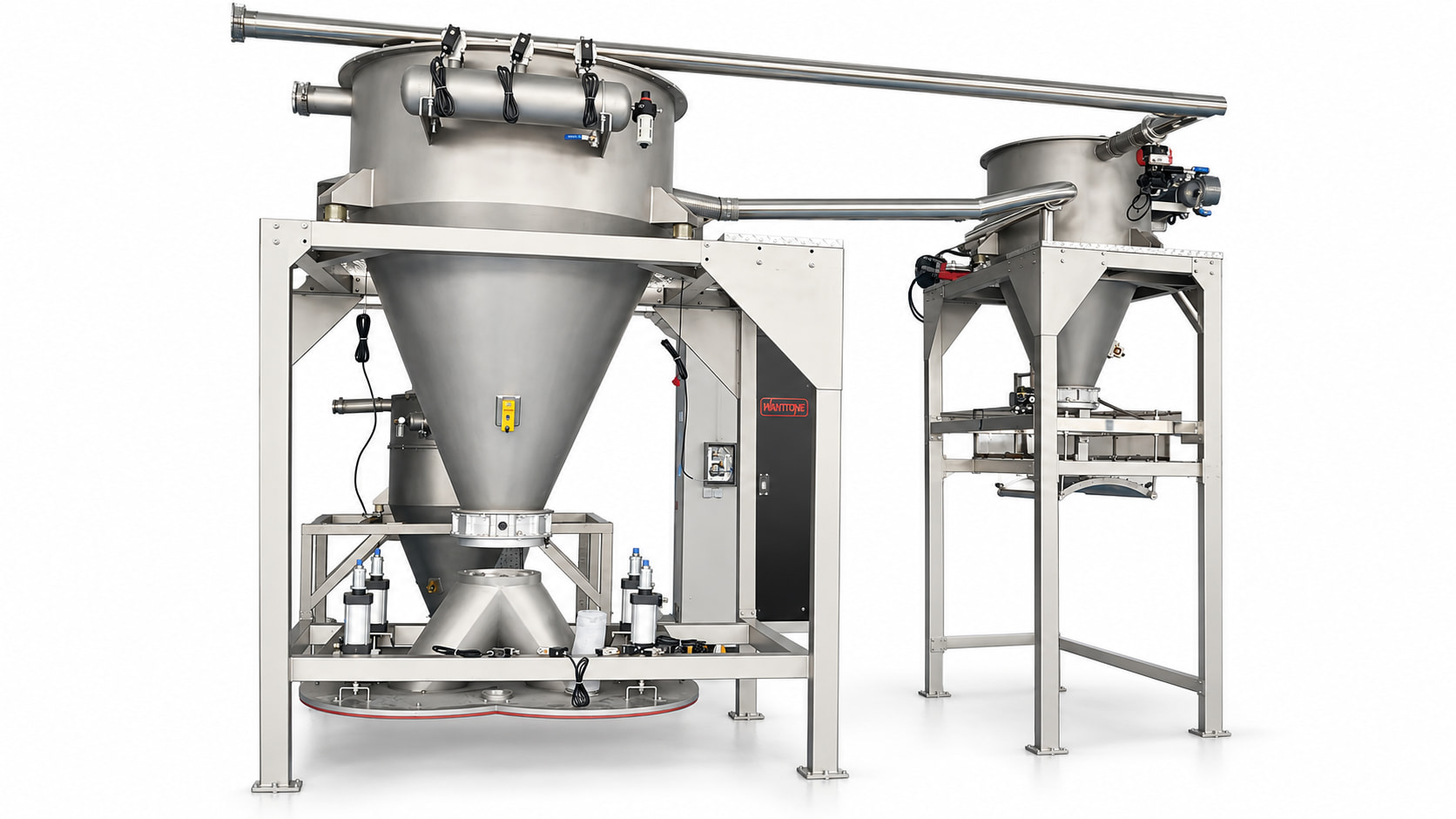
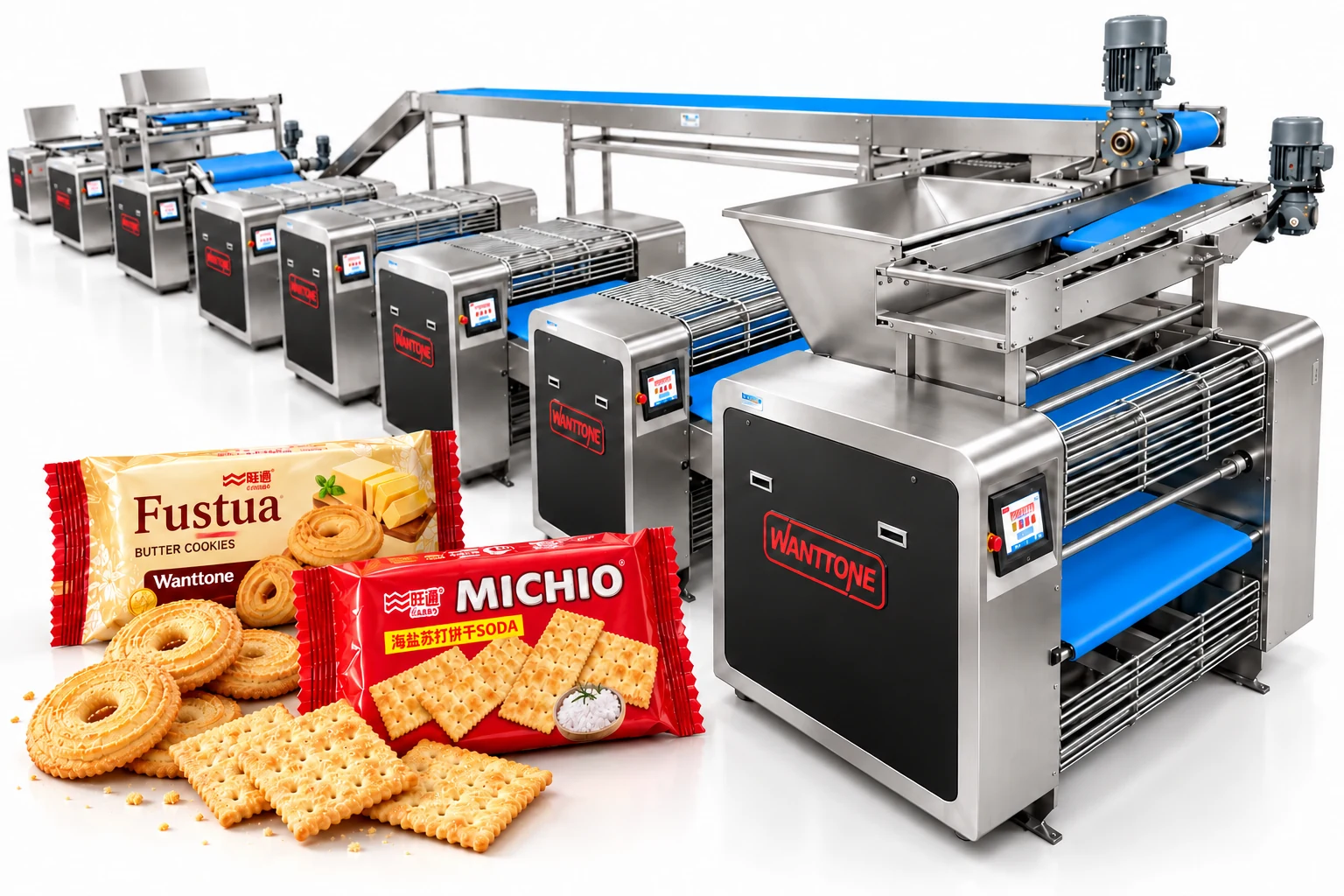
Reference illustration of Automatic Flour Feeding and Weighing System

Product Overview

Wanttone’s automatic flour feeding and weighing system handles 2,100–3,000 kg/h with a weighing accuracy of ±0.1%, built around high-precision load cells, a 15 kW vacuum fan for negative-pressure conveying and branded PLC electrical architecture. Operators simply unload bagged flour or starch at the feeding station — the system screens, conveys, weighs and delivers the material automatically, transforming working conditions, batching consistency and plant hygiene at the front end of your biscuit line.

Flour delivery pipework connecting the ingredient supply to the dough mixers
Flour delivery to mixers

Capabilities & Applications

Key Features

  • Dust-Free Unloading Station

    The feeding platform uses negative-pressure extraction with powerful dust collection, capturing airborne flour at the source and keeping the workshop clean, hygienic and safe for operators.

  • Online Sieving for Material Purity

    Integrated sieving removes lumps and impurities before conveying, protecting dough quality and downstream mixers, sheeters and moulds.

  • Precision Weighing (±0.1%)

    High-accuracy load cells guarantee recipe fidelity batch after batch, eliminating manual weighing errors and reducing raw-material giveaway at industrial scale.

  • Efficient Pneumatic Conveying

    A 15 kW vacuum fan (380 V) moves flour, sugar powder, rice flour and starch through enclosed pipelines to the mixer or day bin, with routing engineered to your plant layout.

  • Reliable Branded Electrical Architecture

    Mitsubishi-class PLC with expansion modules, Schneider-class contactors, breakers and overload relays, and Mean Well-class power supplies ensure stable operation and easy sourcing of spares worldwide.

  • Food-Grade Construction

    All material-contact parts are 304 stainless steel with smooth, crevice-free surfaces, meeting food hygiene standards and cleaning quickly between materials.

Applications

  • The system automates flour handling for biscuit and cookie production lines, cracker lines, cake and Swiss roll lines and bread plants — anywhere bagged powdered raw materials must be screened, conveyed and weighed accurately. It processes wheat flour, sugar powder, rice flour, starch, milk powder and premixes, feeding one or multiple dough mixers with automatic batching. It is the standard front-end upgrade for factories moving from manual bag handling to fully automatic dough preparation.

A Defined Role in the Line

  1. Upstream Requirements

    Confirm the incoming material or product condition, target throughput, infeed height and available utilities.

  2. Core Machine Function

    An automatic flour feeding and weighing system replaces manual bag tipping with a fully automated raw-material handling chain: dust-free unloading, online sieving, pneumatic conveying and precision weighing, delivering metered flour directly to the dough mixer.

  3. Downstream Integration

    Match discharge height, line speed, control signals, guarding and cleaning access with the next operation.

Specifications & Configuration

Technical Parameters for Automatic Flour Feeding and Weighing System
ItemSpecification
Feeding capacity2,100–3,000 kg/h (material dependent)
Weighing accuracy±0.1%
Vacuum fan power15 kW, 380 V
ConveyingNegative-pressure pneumatic, enclosed piping
PLCMitsubishi-class PLC + expansion module
Electrical componentsSchneider-class switchgear, Mean Well-class power supply
Contact materials304 stainless steel
ControlPLC + touch screen, recipe management

Conveying distance, pipe routing, sieving configuration and mixer interfaces are engineered to your factory drawing. All parameters customizable.

The Wanttone Difference

Automatic feeding only pays back when it is engineered around the whole plant — and whole-plant engineering is Wanttone’s core business. As a complete biscuit line manufacturer and an operating biscuit producer, we design the feeding station, conveying route and weighing sequence together with your mixers and forming section, rather than bolting on a standalone powder system. Our dual identity means we understand real production pains: dust control during changeovers, batch accuracy, and keeping mixers fed during peak shifts. Under ISO 9001 management, our team delivers design, manufacturing, installation, commissioning and operator training as one package, with lifetime after-sales support and regular technician visits — a feeding and weighing solution backed by 40+ years of biscuit engineering.

Frequently Asked Questions

What materials can the system feed and weigh?

Wheat flour, rice flour, starch, sugar powder, milk powder and most food-grade powders. Conveying distance, pipe routing and feeder type are engineered per material flow characteristics to avoid segregation or blockage.

How accurate is the weighing, and why does it matter?

Weighing accuracy is ±0.1% via high-precision load cells. At industrial scale this prevents recipe drift, ensures consistent dough absorption and biscuit texture, and saves significant raw-material cost compared with manual batching.

How is dust controlled at the unloading point?

The feeding station uses negative-pressure extraction with filter dust collection, capturing airborne flour at the source. This keeps the room within hygiene and occupational-health requirements and reduces housekeeping labor.

Which control and electrical components are used?

A Mitsubishi-class PLC with expansion modules, Schneider-class contactors, breakers and thermal overload relays, and Mean Well-class switching power supplies — globally recognized brands that simplify maintenance and spare-parts sourcing in any country.

Can it feed several mixers with different recipes?

Yes. The PLC manages multiple destination mixers and recipe tables, sequencing weighing and conveying so each mixer receives its own batch formulation automatically, with batch records for traceability.