Sandwich Biscuit Machine (Cookie Capper)

A sandwich biscuit machine — also known in the industry as a cookie capper — automatically feeds baked biscuit shells, deposits a precisely metered layer of cream, jam, chocolate, or peanut butter filling onto the bottom shell, and caps it with a second shell to form a finished sandwich biscuit.

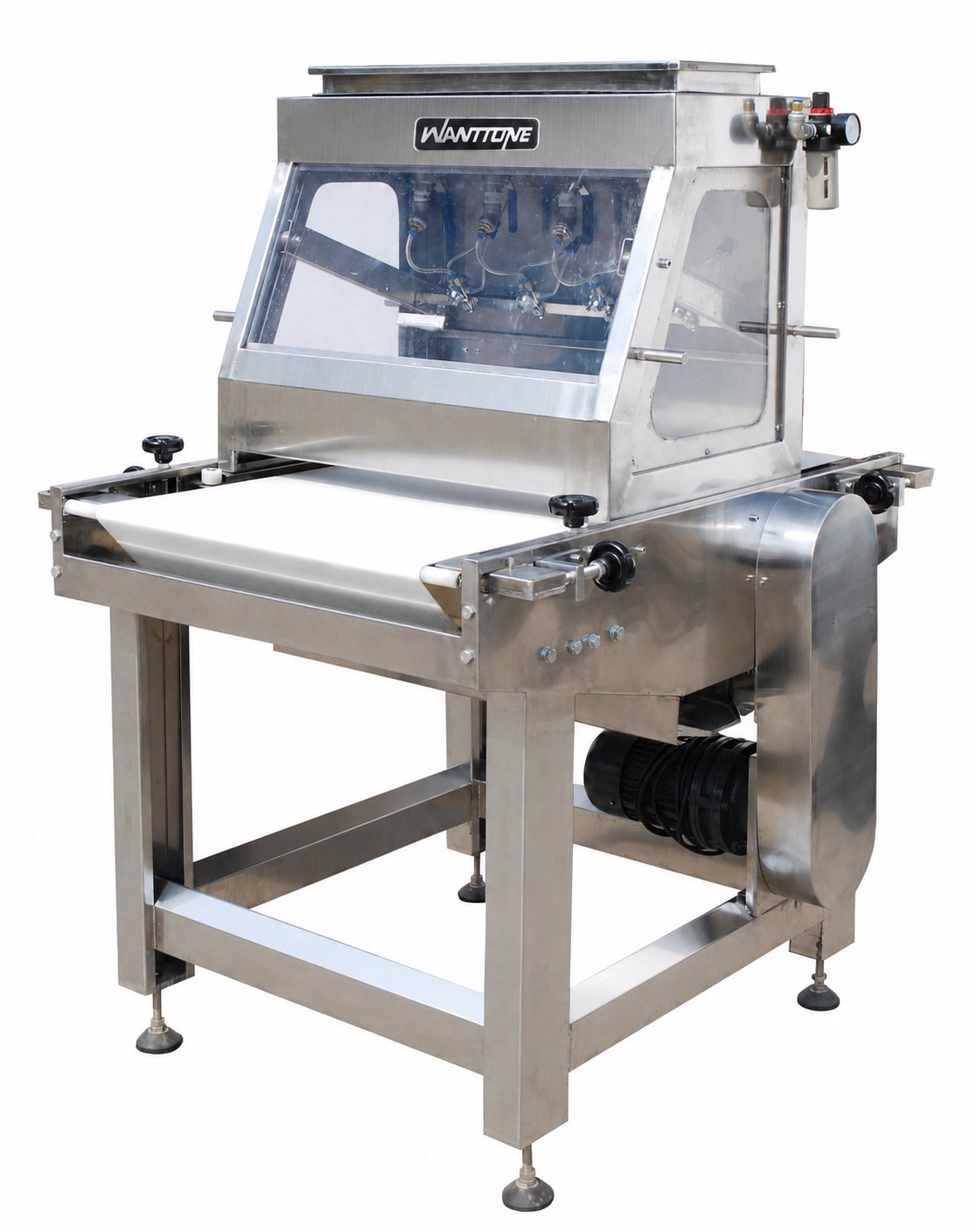
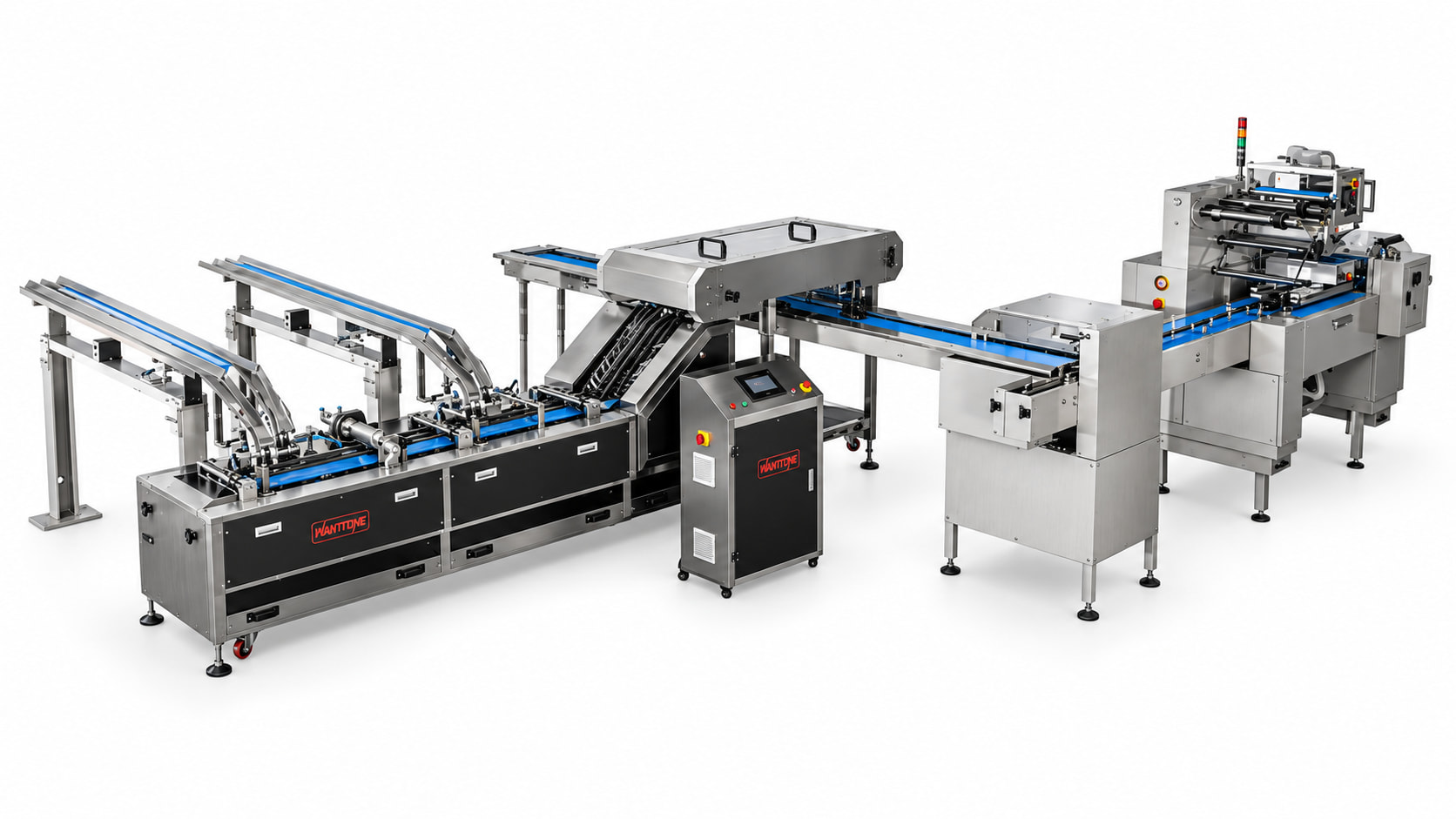
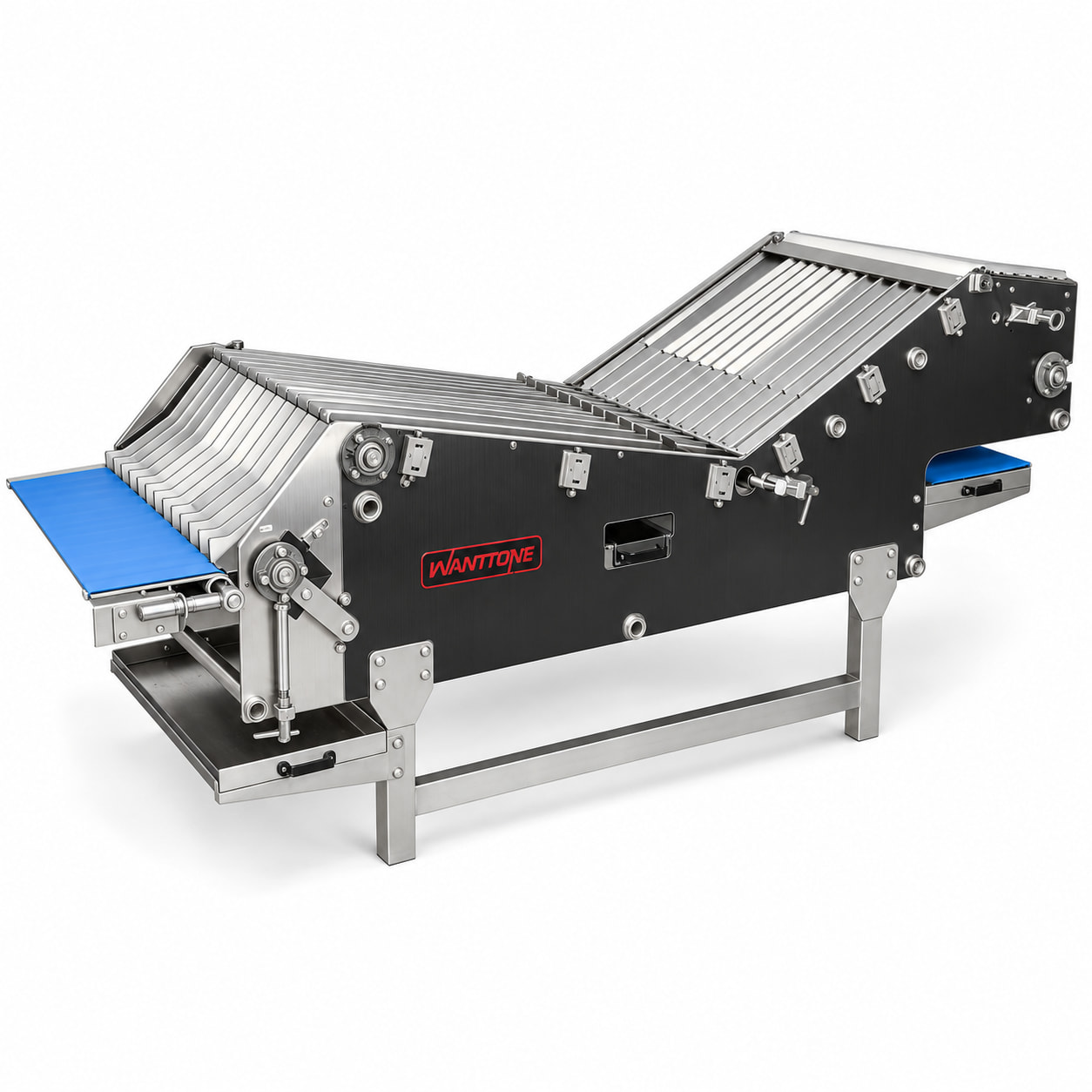
Reference illustration of Sandwich Biscuit Machine (Cookie Capper)

Product Overview

Wanttone’s sandwich biscuit machines combine pneumatic or servo-driven biscuit handling, PLC-controlled filling metering, and single-, double-, or multi-lane configurations to deliver outputs from 100 up to 900 sandwiches per minute, making them the core value-adding machines in any cream biscuit or Oreo-type production line.

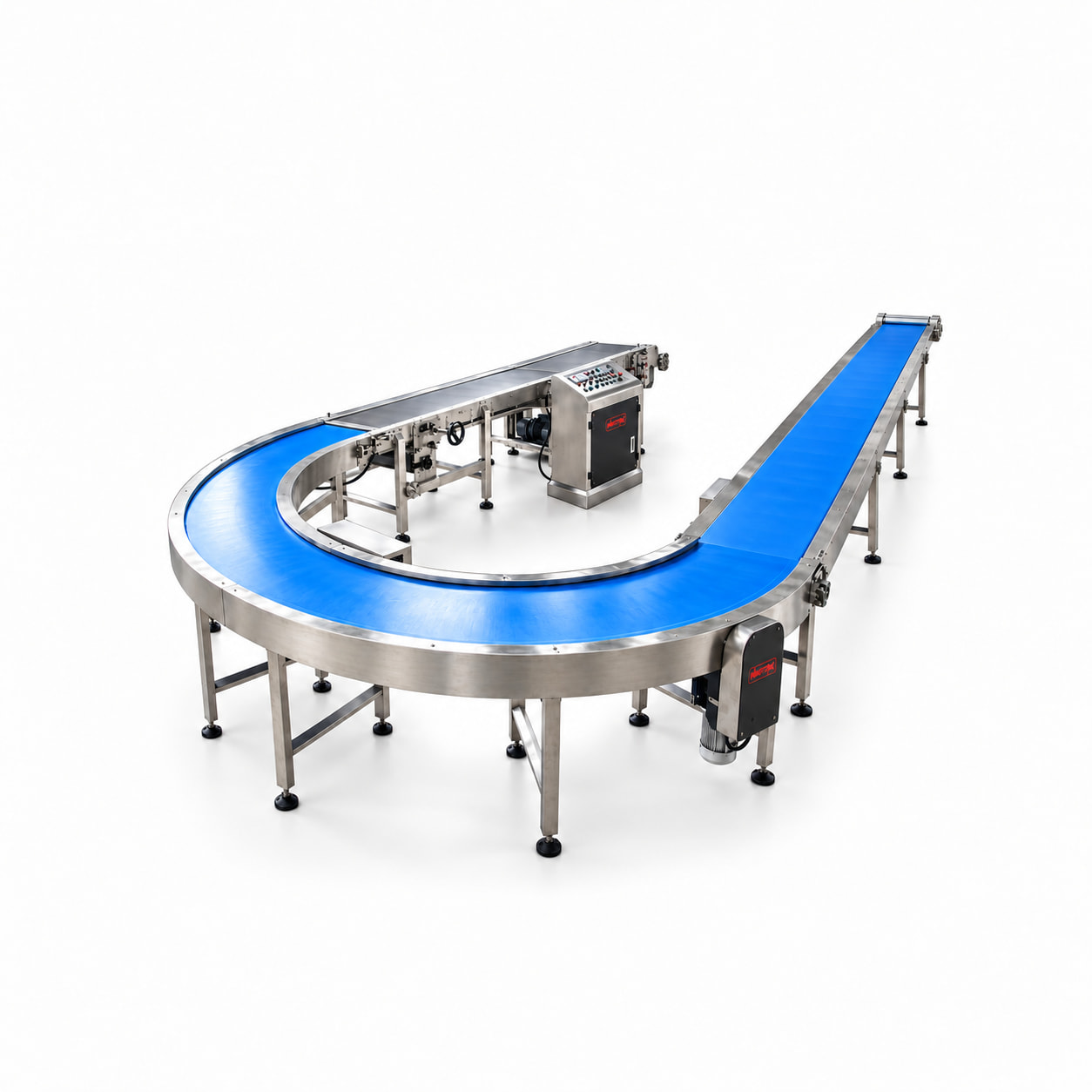
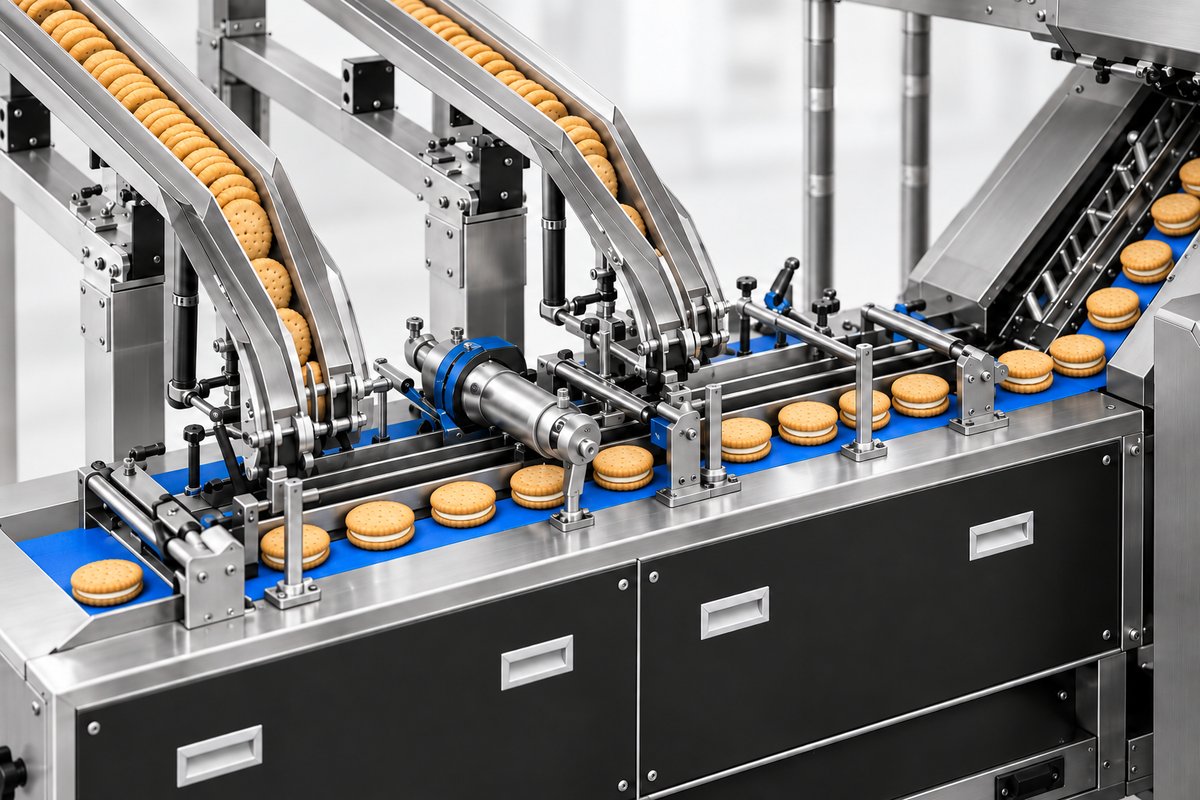
Biscuit bases and cream-filled sandwich biscuits passing through the original sandwiching conveyor

Capabilities & Applications

Key Features

  • Gentle, Precise Biscuit Handling

    Compressed-air feeding devices or programmed robotic arms pick, position, and place biscuit shells without cracking or chipping, protecting yield on fragile, thin products.

  • Accurate Filling Metering

    Filling volume is controlled by piston stroke, air pressure, and PLC recipe settings, so every sandwich carries the same gram weight of cream — critical for cost control and consistent eating quality.

  • Multi-Filling Flexibility

    One machine handles cream, fruit jam, chocolate, and peanut butter fillings; switching products is a matter of recipe recall and hopper change, not mechanical rebuilds.

  • Single to Multi-Lane Configurations

    Choose single-lane models for start-up and medium-capacity plants, or double/multi-lane high-speed systems for industrial output up to 900 pcs/min.

  • Recipe Memory & PLC Control

    Store product recipes (biscuit size, filling weight, line speed) and recall them instantly at changeover, cutting downtime between SKUs.

  • Premium Component Set

    Built with internationally recognized bearings, gearboxes, and electronics for long service life and easy global spare-parts sourcing.

  • Food-Grade Hygienic Build

    Stainless-steel contact surfaces and a frame designed for washdown and fast disassembly keep the machine compliant with modern food-safety audits.

Applications

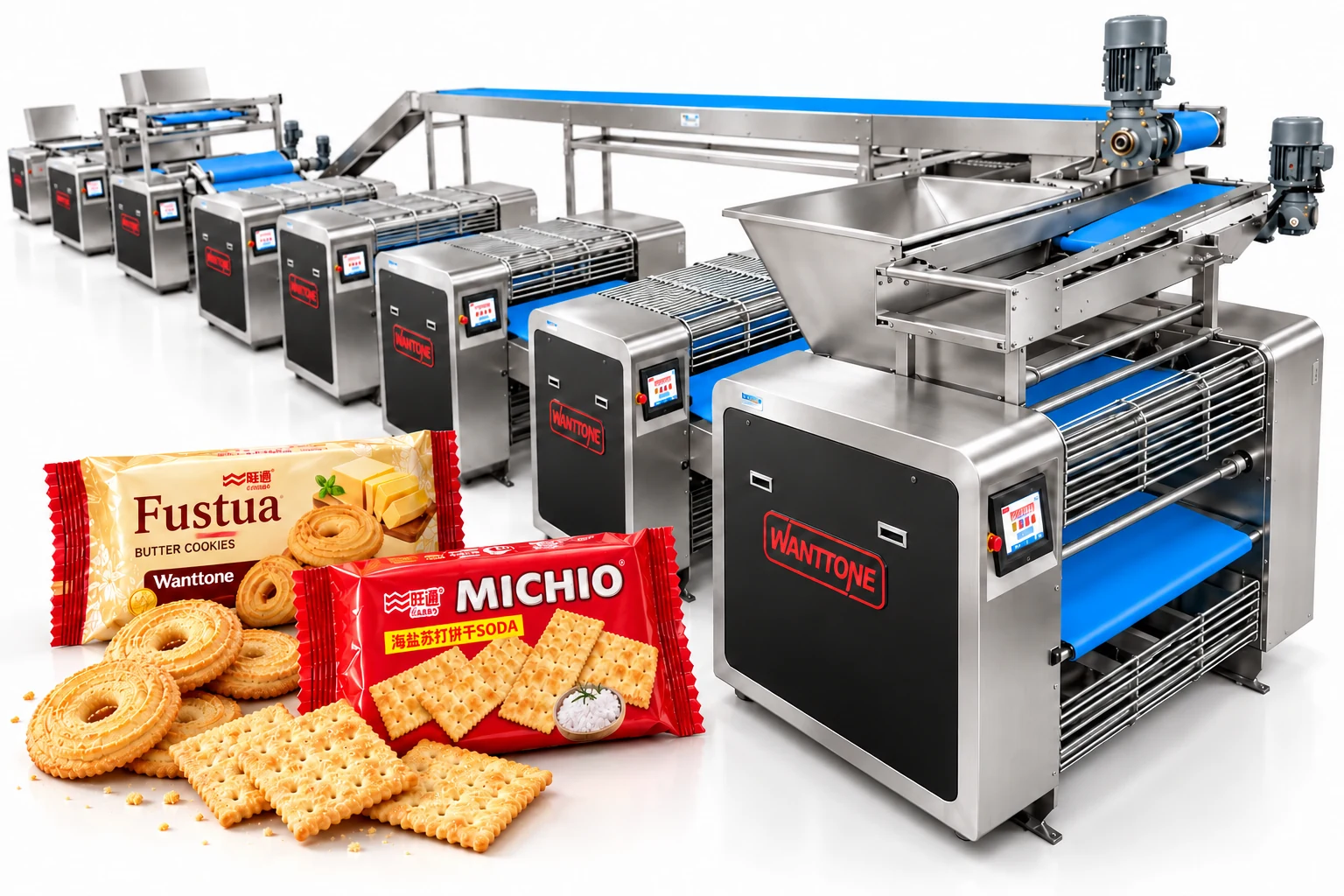
  • The sandwich biscuit machine sits downstream of the cooling conveyor and upstream of the packing system. Typical products include Oreo-type cream sandwich biscuits, chocolate-filled sandwich cookies, jam sandwich biscuits, macaron-style sandwich cookies, and two-tone or dual-flavor filled biscuits. It integrates directly with Wanttone biscuit production lines of 400–1500 mm working width and can also be retrofitted as a stand-alone unit onto existing lines.

A Defined Role in the Line

  1. Upstream Requirements

    Confirm the incoming material or product condition, target throughput, infeed height and available utilities.

  2. Core Machine Function

    Compressed-air feeding devices or programmed robotic arms pick, position, and place biscuit shells without cracking or chipping, protecting yield on fragile, thin products.

  3. Downstream Integration

    Match discharge height, line speed, control signals, guarding and cleaning access with the next operation.

Specifications & Configuration

Technical Parameters for Sandwich Biscuit Machine (Cookie Capper)
ConfigurationBiscuit DiameterCapacityDimensions (L×W×H)PowerWeight
Single Lane35–65 mm100–500 pcs/min4700×1500×1500 mm3.5 kW650 kg
Compact20–35 mm100–400 pcs/min4200×3200×1200 mm3.5 kW600 kg
Long Line35–65 mm100–450 pcs/min7000×1500×1500 mm7.5 kW1100 kg
Multi-Lane35–65 mm400–900 pcs/min7500×1650×1500 mm7.5 kW1300 kg

Voltage: 220V/380V, 50Hz. Working width, lane count, and filling system are customizable to your product.

The Wanttone Difference

Wanttone is not only an equipment builder — we run our own biscuit factory and produce sandwich and jam-filled biscuits under the Wanttone brand on the same machines we sell. That dual experience means our sandwich biscuit machines are engineered by people who understand filling behavior, biscuit fragility, and hygiene from a producer’s point of view, not just a fabricator’s. Our predecessor, Yangjiang Biscuit Equipment General Factory, has been building automated biscuit machinery since 1981, and our in-house Foodstuff Machinery Research Institute continuously refines depositing accuracy and changeover speed. Every machine ships with factory layout support, on-site installation and commissioning, operator training, and lifetime after-sales service — a one-stop partnership rather than a one-time sale.

Frequently Asked Questions

What fillings can the sandwich biscuit machine handle?

The machine handles cream, fruit jam, chocolate, and peanut butter fillings. Filling hoppers and metering systems are selected based on your filling’s viscosity and temperature requirements.

What is the difference between a sandwich biscuit machine and a cookie capper?

They are two names for the same equipment. “Cookie capper” emphasizes the capping action — placing the top shell onto a filled bottom shell — while “sandwich biscuit machine” is the more common industry term.

Can one machine run different biscuit sizes?

Yes. Biscuit diameter ranges are defined per model (e.g., 20–35 mm or 35–65 mm), and within that range changeovers are done through recipe recall and simple tooling adjustments.

How is filling weight controlled?

Filling volume is metered by piston stroke and air pressure under PLC control. Recipes store the target filling weight per product, keeping gram-weight deviation minimal across a full shift.

Can the machine connect to my existing cooling conveyor and packing line?

Yes. We customize infeed height, belt width, and line speed synchronization so the machine integrates with both new Wanttone lines and existing third-party equipment.